
Trump and Xi Strike a Trade Truce But the War Is Far From Over
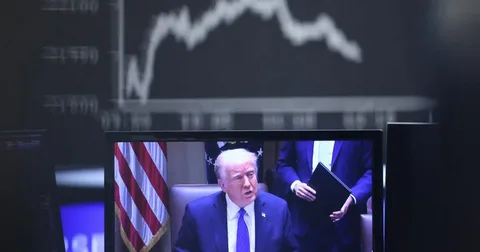
One year after President Donald Trump declared “Liberation Day” and launched one of the most aggressive tariff campaigns in modern American history, the world’s two largest economies have stepped back from the brink at least for now. The Trump-Xi trade truce reached in South Korea in October 2025 brought some relief to global markets, but experts warn that the underlying tensions remain deep and unresolved.
Background: What Is Liberation Day and How Did the Tariff War Begin?
On April 2, 2025 a date Trump himself branded “Liberation Day” the President stood in the White House Rose Garden and announced a sweeping package of reciprocal tariffs on nearly every country in the world. It was described as the most dramatic escalation in US tariffs since the Smoot-Hawley Tariff Act of 1930, which historians widely blame for worsening the Great Depression.
Trump signed Executive Order 14257, invoking the International Emergency Economic Powers Act (IEEPA) to declare a national emergency over America’s trade deficit and authorize unprecedented import taxes. A universal 10% baseline tariff was imposed on all countries, with steeper “reciprocal” tariffs ranging as high as 49% levied on major trading partners accused of unfair trade practices.
In his Liberation Day speech, Trump was characteristically bold. “My fellow Americans, this is Liberation Day,” he declared, calling it “our declaration of economic independence.” He promised factories would come “roaring back,” consumer prices would fall, and the day would go down in history. “April 2, 2025, will forever be remembered as the day American industry was reborn, the day America’s destiny was reclaimed and the day that we began to make America wealthy again,” Trump told the crowd.
He also went further, stating bluntly: “For decades, our country has been looted, pillaged, raped and plundered by nations near and far, both friend and foe alike.” The speech made global headlines instantly.
Details: The Tariff War Escalates Then Wobbles
The Liberation Day tariffs did not go unchallenged. China, one of the primary targets, retaliated immediately. The Chinese Ministry of Commerce declared that China “firmly opposes this and will take countermeasures.” The European Union, Japan, and Canada also signaled retaliation.
In the back-and-forth that followed, US tariffs on Chinese goods reached an extraordinary 145% briefly bringing imports from China to a near standstill. China responded with its own arsenal: retaliatory tariffs on a sweeping range of US agricultural products including soybeans, corn, pork, beef, wheat, chicken, and dairy. It also placed American companies on “unreliable entity” blacklists and, in a move that rattled global supply chains, announced sweeping export controls on rare earth elements minerals critical to manufacturing semiconductors, defense equipment, and electric vehicles.
Tariff policy changed more than 50 times between Liberation Day and early 2026 rate increases, rate decreases, product exemptions, and country-specific deals piling on top of each other in rapid succession. The constant volatility made planning nearly impossible for businesses across the world.
Then, in a landmark ruling in late February 2026, the US Supreme Court struck down a significant portion of Trump’s tariffs, finding that he had exceeded his authority under the IEEPA. The ruling reduced the effective tariff rate on Chinese goods by approximately 20 percentage points, though Trump responded by immediately imposing a 10% global tariff under a separate trade law. Meanwhile, the White House has been working to return tariff revenues of roughly $166 billion collected under the now-invalidated rules.
The Trump-Xi Trade Truce: What Was Agreed?
The most significant development came on October 30, 2025, when Trump and Xi Jinping met on the sidelines of the Asia-Pacific Economic Cooperation (APEC) summit at Gimhae International Airport in Busan, South Korea. It was the first summit between the two leaders in Trump’s second term.
After an hour and forty minutes of talks, the two sides emerged with what the White House described as a “trade and economic deal” and what most independent analysts called a carefully managed truce.
The key terms of the Trump-Xi trade truce included:
- The US reduced tariffs related to fentanyl trafficking on Chinese imports from 20% to 10%, bringing the overall US tariff rate on China down from 57% to 47%.
- China agreed to suspend, for one year, its sweeping export controls on rare earth elements announced just weeks earlier.
- China suspended all retaliatory tariffs announced since March 4, 2025, including duties on US agricultural products.
- China committed to purchasing at least 12 million metric tons of US soybeans in late 2025, and 25 million metric tons annually from 2026 to 2028.
- China agreed to remove certain American companies from its “unreliable entity” and end-user lists.
- The US pledged to suspend for one year certain fees on China-linked ships under a Section 301 investigation into China’s maritime and shipbuilding dominance.
Trump called the meeting “truly great” and described his rapport with Xi as that of “a friend of mine really for a long time now.” Xi, for his part, acknowledged the rivalry in more measured terms, saying through a translator: “We do not always see eye to eye with each other. And it is normal for the two leading economies of the world to have frictions now and then.”
Quotes: What Leaders and Experts Are Saying
The meeting produced very different assessments depending on who you asked.
From the Trump White House: The deal was described as “a massive victory that safeguards US economic strength and national security while putting American workers, farmers, and families first.”
Trump himself rated his meeting with Xi as “a 12 on a scale of zero to 10.”
Former US Ambassador to China Nicholas Burns offered a much colder take on CNBC: “Where we are is an uneasy truce in a long, still simmering trade war.”
Piper Sandler analysts were even blunter, writing to clients: “Xi was ready for Trump in his second term and has a powerful weapon in rare earths. China is getting the better of the US in these recent truce negotiations.”
Julian Gewirtz, a former senior China policy official in the Biden administration, told NPR: “I would be candidly quite surprised if we don’t see at some point in the next few months a return to a kind of escalation or brinksmanship that we’ve seen already this year.”
The Brookings Institution concluded that Trump and Xi “did not reach any breakthrough deal. They arrived at a shallow truce with limited deliverables.” The institution noted that prior truces reached in Geneva, London, and Madrid during 2025 had all been short-lived, adding: “The net result is more commotion than motion.”
Atlantic Council economists noted that even with the truce in place, “the scale of supply chain influence China displayed will likely remain a source of uncertainty for the private sector.”
When Was the Last Time There Was a Trade War Like This?
The last comparable trade war in modern US history was during Trump’s first term, from 2018 to 2020, when the US imposed tariffs on over $360 billion in Chinese goods, and China responded with tariffs on over $110 billion of American exports. That conflict ended with the “Phase One” trade deal signed in January 2020, in which China pledged to buy $200 billion more in US goods over two years a target it never fully met.
But the current Trump tariff war of 2025 has been considerably larger in scale. Before Liberation Day, the average US tariff rate was already around 12% the highest since World War II. At the peak of the post-Liberation Day escalation, the average applied rate topped 21%, with Chinese goods facing tariffs of up to 145%.
Going further back, the last time the US embarked on truly sweeping, across-the-board tariff hikes was with the Smoot-Hawley Tariff Act of 1930, which raised duties on over 20,000 imported goods and is widely credited with triggering a retaliatory global trade war that deepened the Great Depression.
Who Is Winning the Trade War?
This is the question on everyone’s mind and the honest answer is: nobody clearly, and both sides have suffered.
For the United States, Liberation Day tariffs did generate significant federal revenue approximately $151 billion in the first five months of the fiscal year, nearly four times the comparable period the year before. However, this fell far short of the Trump administration’s own projections, with adviser Peter Navarro having predicted $600 billion per year. Manufacturing employment, far from recovering, declined by 89,000 jobs between April 2025 and February 2026. Inflation, though not at crisis levels, remained elevated at 2.4% in February 2026, with Federal Reserve Chair Jerome Powell acknowledging that tariffs had boosted goods sector inflation. American consumers are paying higher prices on a range of everyday imports.
For China, the costs have also been real retaliatory US tariffs disrupted export industries, and the uncertainty damaged investor confidence in Chinese markets. However, China’s deployment of rare earth export controls gave Beijing powerful new leverage it did not previously have. By threatening to cut off supplies of materials essential to US high-tech and defense manufacturing, China demonstrated it could inflict significant pain across the American economy and its allies.
The broader consensus among independent economists and analysts leans toward China as having managed the trade war more adeptly not because China “won,” but because it found new pressure points, maintained discipline in its counter-moves, and negotiated multiple truces on terms that preserved its core interests.
As the Atlantic Council’s experts summarized: even after the Busan deal, “China still faces higher tariffs than it did when Trump came into office,” but Washington has so far failed to extract the structural economic reforms it originally demanded from Beijing.
Global and Regional Impact
The US-China tariff war has not stayed bilateral. Its ripple effects have reached every corner of the global economy.
European manufacturers, particularly in the automotive and defense sectors, faced sudden shortages of rare earth materials after China’s export controls took effect in October 2025 before the Trump-Xi truce paused them. Germany’s Henkel was among companies forced to invoke “force majeure” clauses due to supply disruptions.
Emerging economies in Southeast Asia, including Vietnam, Cambodia, the Philippines, and Indonesia, found themselves caught in the crossfire some benefiting from companies seeking to diversify supply chains away from China, while others faced their own US tariffs under Liberation Day’s sweeping scope.
Brazil, notably, emerged as a major beneficiary, gaining near-monopoly status on soybean exports to China as American agricultural exports were shut out of Chinese markets during periods of peak retaliation. US farmers in soybean-heavy states felt the impact directly.
Global food prices also spiked. According to analysis by the Center for Strategic and International Studies, Liberation Day tariffs drove food prices up 1.6% immediately equivalent to an entire prior year’s grocery inflation creating food security concerns particularly in import-dependent developing nations.
Conclusion: What Happens Next?
The Trump-Xi trade truce has bought time, but analysts are skeptical it represents a durable resolution. The one-year pause on rare earth export controls expires, and the two sides must renegotiate. Trump has said he plans to visit China in 2026 for a follow-up summit, though the timing is uncertain amid other foreign policy pressures.
As of April 2026, US and Chinese economic officials have been meeting in Paris to review progress under the Busan truce and lay the groundwork for a potential presidential summit in Beijing. Analysts at CSIS describe the likely outcome as a meeting that “superficially suggests progress but that really just leaves things about where they’ve been.”
The bigger picture is this: one year after Liberation Day, the tariff war has reshaped global trade patterns, strained alliances, generated legal battles all the way to the US Supreme Court, and left both the American and Chinese economies navigating uncertainty. The question is no longer whether tariffs changed the world they clearly did. The question is whether the changes were worth the price.
FAQs
What trade agreement did Trump reject?
Trump rejected the existing framework of the World Trade Organization (WTO) and its rules-based system of multilateral trade. He also effectively repudiated the “Phase One” deal from his first term by dramatically escalating tariffs on China far beyond any agreement reached during 2018–2020. His administration has prioritized bilateral deals over multilateral frameworks, rejecting the idea that free trade agreements automatically benefit the US.
What countries did Trump start a trade war with?
Trump’s tariff war under Liberation Day targeted virtually every country in the world, with a 10% baseline tariff applied universally. The most severely affected nations included China (facing tariffs as high as 145% at peak), the European Union (20% reciprocal tariff), Japan, South Korea, Vietnam, Cambodia, and many others. Canada and Mexico were largely exempted from the Liberation Day round but faced separate tariffs on steel, aluminum, and automobiles. In total, approximately 60 countries faced individualized “reciprocal” tariff rates above the 10% baseline.
Who will benefit from the trade war?
The trade war has created winners and losers across the global economy. Among the clearest short-term beneficiaries are Brazil (which captured Chinese agricultural demand lost by American farmers), some Southeast Asian manufacturers (who gained US supply chain business previously based in China), and US federal tax revenue (which surged in the short term from tariff collection). Domestic US producers in some sectors such as steel and aluminum received protection from foreign competition. However, most mainstream economists conclude that American consumers and manufacturers broadly bear the cost of tariffs through higher prices and disrupted supply chains. China, by developing its rare earth leverage, has strengthened its long-term negotiating position.