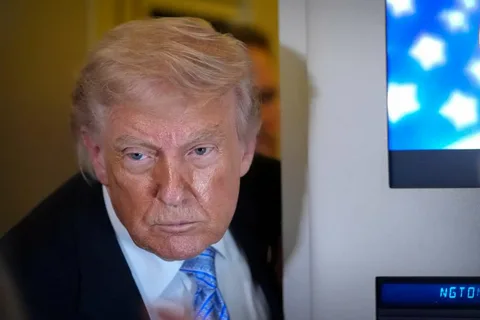
The fragile ceasefire between the United States and Iran is under its most severe pressure yet. In a blunt Sunday night post on Truth Social, President Trump issued his starkest Trump Iran peace talks warning to date telling Tehran that time is running out and consequences would be severe if a deal is not reached immediately.
“For Iran, the Clock is Ticking, and they better get moving, FAST, or there won’t be anything left of them. TIME IS OF THE ESSENCE!” Trump wrote echoing the language he used just before the ceasefire was first announced in April.
What Trump Said And What He Told Axios
The Trump Iran peace talks warning on Sunday came on two simultaneous tracks. The Truth Social post was public and blunt. Separately, Trump told Axios by phone that if the Iranian regime did not improve its peace offer, “they are going to get hit much harder.” The dual messaging one for mass consumption, one for direct diplomatic signalling reflects a deliberate strategy of maximum pressure. Trump also shared a cryptic AI-generated image captioned “The Calm Before the Storm” a phrase that immediately triggered widespread speculation about imminent US military action. The Trump latest news on Iran war signals were coordinated and deliberate, designed to force movement from Tehran before the week begins.
Iran’s Response “Reasonable and Generous”
Tehran’s reading of the situation could not be more different. The Iran response to US proposal from Iran’s foreign ministry described its own offer as “reasonable” and “generous” a direct contradiction of Trump’s characterisation of it as “garbage.” Iranian state media reported that Tehran’s proposal called for an end to the war and the US naval blockade which Iran described as “maritime piracy” along with the release of frozen Iranian assets, recognition of Iran’s control over the Strait of Hormuz, and compensation for war damage. Crucially, the proposal did not address Iran’s nuclear programme the central demand from Washington. Iran’s semi-official Mehr news agency warned that a lack of compromise from Washington would lead to an “impasse in the negotiations.”
The Nuclear Impasse The Deal-Breaker
The breaking news on Iran war negotiations keeps returning to the same fundamental gap. The US demands a complete halt to Iranian uranium enrichment and the dismantling of key nuclear infrastructure. Iran has repeatedly and flatly refused to put its nuclear programme on the table in peace talks insisting that nuclear discussions must be conducted separately from war-ending negotiations. Trump rejected this framework last week, calling it “totally unacceptable” and accusing Iran of “playing games.” He warned: “They will be laughing no longer” without specifying what action would follow. The Situation Room meeting planned for Tuesday will reportedly include a briefing on military options targeting underground nuclear material if the ceasefire collapses.
Pakistan Still Mediating Naqvi in Tehran
Despite the public escalation, back-channel diplomacy has not stopped. Iran’s Parliament Speaker Mohammad Bagher Qalibaf met Pakistan’s Interior Minister Mohsin Naqvi in Tehran on Sunday a meeting that signals Islamabad’s continued effort to keep both sides engaged even as the Trump Iran peace talks warning hardens the public atmosphere. Pakistan has hosted both rounds of talks, and the Islamabad process remains the only mutually agreed diplomatic framework. Pakistani sources confirmed that discussions covered the path to a third round of negotiations though no date has been set and Iran has not confirmed any delegation. Pakistan’s mediation role is the single most important diplomatic thread still running between Washington and Tehran.
Trump-Netanyahu Call Israel Presses for Action
The Trump latest news on Iran war picture was further complicated by Trump’s Sunday phone call with Israeli Prime Minister Benjamin Netanyahu. Israel has consistently pushed for a harder line against Iran throughout the ceasefire period and Netanyahu has been publicly critical of what he views as insufficient US pressure on Tehran’s nuclear programme. The two leaders discussed the situation in the Middle East and Trump’s recent Beijing visit, where Xi Jinping offered to help broker a peace deal. Israel’s military has signalled readiness for renewed strikes, with Israeli media reporting that defence officials described the current period as a “window” before Iran potentially reconstitutes damaged military infrastructure.
Ceasefire on Life Support What the Phrase Means
When Trump described the ceasefire as being on “life support” in a recent interview, markets and diplomatic observers took the phrase as a precise and deliberate signal not casual rhetoric. The ceasefire agreed on April 8 has been extended multiple times without a substantive breakthrough on any of the three core issues: the nuclear programme, the Strait of Hormuz status, and the US naval blockade. Each extension has come with a softer deadline than the last and each missed deadline has eroded the credibility of the process. The Iran attack on Israel today update risk is also rising, with Iranian proxy forces in Lebanon continuing to exchange fire with Israeli positions in the south a pattern that could escalate rapidly if the main ceasefire breaks down.
What Comes Next Tuesday’s Situation Room Meeting
The most consequential event of the coming 48 hours is Trump’s planned Situation Room meeting on Tuesday, where he will be briefed on new military options against Iran. US military aides have already drafted plans for high-precision bombing runs targeting underground nuclear facilities and potential Special Operations ground actions. Whether Trump authorises any of these options depends on whether Iran signals movement on the nuclear question before the meeting begins. The breaking news on Iran war will likely emerge from that meeting either a renewed strike authorisation that ends the ceasefire, or a signal that talks will continue with a new framework. There is no middle ground left in this negotiation.
Frequently Asked Questions
Why did Trump warn Iran that the “clock is ticking”?
The Trump Iran peace talks warning was triggered by Iran’s latest peace proposal which Trump called “garbage” and “totally unacceptable.” Tehran’s offer demanded recognition of its control over the Strait of Hormuz, compensation for war damage, and the lifting of the naval blockade but deliberately excluded its nuclear programme from the framework. Since dismantling Iran’s nuclear capability is Washington’s primary war objective, a proposal that removes it entirely from the table was never going to be accepted. Trump’s clock warning signals that the ceasefire extension period is ending and Iran must submit a fundamentally different offer or face resumed strikes.
What caused the US-Iran peace talks to stall?
The Iran response to US proposal created an unbridgeable gap on two core issues. First, Iran insists its nuclear programme is non-negotiable and must be handled separately from war-ending talks a position Washington flatly rejects. Second, Iran demands the US lift its naval blockade before negotiations can resume, while Washington says the blockade stays until a final deal is signed. Both sides are simultaneously applying maximum economic pressure through competing blockades of the Strait of Hormuz and Iranian ports making the atmosphere for compromise exceptionally difficult. Pakistan’s continued mediation has kept channels technically open, but no substantive movement has occurred since the first Islamabad talks collapsed on April 12.
How could stalled Iran peace talks affect global stability?
The consequences of a complete breakdown in the Trump Iran peace talks warning process extend far beyond the Middle East. The Strait of Hormuz through which roughly 20% of global oil and gas normally moves has been effectively closed for over ten weeks, pushing Brent crude above $111 per barrel. Global oil inventories are drawing at a record pace, with the IEA warning that continued disruptions could trigger severe price spikes ahead of peak summer demand. A resumption of US-Israeli strikes on Iran would likely close the strait indefinitely, push oil above $130, and trigger a global recession according to most major bank forecasts. The breaking news on Iran war in the coming 48 hours will have direct and immediate consequences for energy prices, inflation, and economic growth in every major economy worldwide.