
Trump unchecked power has reshaped the United States and the world in ways that historians, constitutional scholars, and foreign policy analysts are only beginning to fully comprehend — with a president who has systematically dismantled the institutional constraints that his predecessors accepted as the boundaries of executive authority and replaced them with a governing style that concentrates decision-making in a single person to a degree unprecedented in modern American history.
Trump unchecked power in his second term has operated across 3 simultaneous dimensions — the domestic political environment in which Republican congressional deference has eliminated meaningful legislative oversight, the legal dimension in which a Supreme Court shaped by Trump appointments has significantly expanded presidential immunity and executive authority, and the international dimension in which Trump’s willingness to abandon traditional alliance commitments and multilateral institutions has reordered global relationships in ways that will outlast his presidency.
Trump approval rating data provides the political context for this power accumulation — with a base of support sufficiently large and sufficiently loyal to insulate Trump from the political consequences that previous presidents faced when they exceeded constitutional norms, creating a political environment in which the normal accountability mechanisms of American democracy have been significantly weakened.
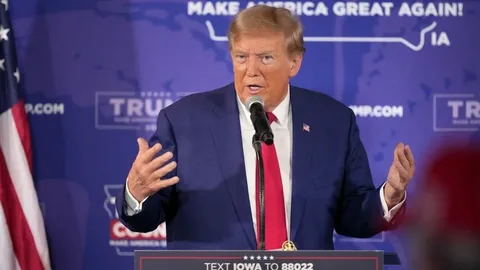
Background: Trump Unchecked Power — How Did America Get Here
The Constitutional Design and Its Erosion
The United States Constitution was designed by its framers with a specific and explicit purpose — to prevent the concentration of power in any single person or institution. The separation of powers between the executive, legislative, and judicial branches, the system of checks and balances that gives each branch tools to constrain the others, and the Bill of Rights that protects individual liberties from government overreach together constitute what the founders called a machine that would go of itself — a self-correcting system of accountability that would prevent tyranny without requiring virtuous leaders.
Trump unchecked power represents the most significant stress test that constitutional design has faced since the Civil War — not because Trump has formally abolished the Constitution but because he has exploited the gaps, ambiguities, and norm dependencies in the constitutional system in ways that the founders did not fully anticipate and that previous presidents chose not to exploit even when they legally could.
The constitutional design assumed that presidents would be constrained not only by legal rules but by political norms — the unwritten expectations about presidential behaviour that governed everything from the independence of the Justice Department to the acceptance of unfavourable election results. Trump unchecked power has been built largely by discarding these norms — demonstrating that they were conventions rather than enforceable rules and that a president willing to break them faced fewer consequences than the constitutional design assumed.
Trump Unchecked Power — The Second Term Difference
Trump unchecked power in his second term is qualitatively different from his first — for reasons that go beyond his personal willingness to push boundaries.
In his first term, Trump was constrained by a White House staff that included significant numbers of career officials, military officers, and political appointees with independent institutional loyalties who were willing to slow-walk, modify, or refuse to implement presidential directives they considered unconstitutional or dangerous. The so-called adults in the room — figures like General John Kelly, James Mattis, and H.R. McMaster — provided an internal check on Trump unchecked power impulses that his second-term White House largely lacks.
The second-term Trump administration has been deliberately staffed with loyalists whose primary qualification is personal fidelity to Trump rather than independent institutional expertise. This staffing approach has eliminated the internal constraints on Trump unchecked power that partially moderated his first term — creating an executive branch that executes presidential directives with a speed and completeness that the first-term White House often prevented.
How Trump Unchecked Power Developed
Congressional Deference
Trump unchecked power could not have developed to its current extent without the near-total deference of the Republican congressional majority — whose willingness to abandon oversight responsibilities in favour of partisan loyalty has eliminated one of the Constitution’s primary checks on executive power.
The Republican-controlled House and Senate have declined to exercise meaningful oversight of Trump administration actions that would have triggered investigations, hearings, and legislation in any previous era of American politics. Power of the purse Trump has been exercised in ways that previous Congresses would have challenged — with the administration impounding appropriated funds, redirecting spending without congressional authorisation, and using executive orders to implement fiscal decisions that the Constitution assigns to Congress.
Power of the purse Trump represents one of the most constitutionally significant dimensions of Trump unchecked power — with the administration asserting that the president has broader authority to control federal spending than the appropriations power granted to Congress by Article I of the Constitution. Courts have pushed back on some power of the purse Trump assertions — but the pace of legal challenges has consistently lagged behind the pace of executive action.
Judicial Deference
The Supreme Court’s 2024 ruling on presidential immunity — which granted presidents broad immunity from criminal prosecution for official acts — represents the judicial contribution to Trump unchecked power that has most fundamentally altered the constitutional landscape.
The immunity ruling effectively eliminated the most powerful legal constraint on presidential behaviour — the threat of criminal prosecution for abuse of power. With presidential immunity established as a broad constitutional principle, Trump unchecked power acquired a legal protection that previous presidents never sought and that the constitutional design never intended to provide.
Trump’s 3 Supreme Court appointments — Neil Gorsuch, Brett Kavanaugh, and Amy Coney Barrett — created the 6-3 conservative majority that produced the immunity ruling and has consistently ruled in ways that expand executive power, limit regulatory authority, and reduce the legal constraints on Trump unchecked power across multiple domains.
Trump Unchecked Power — Domestic Consequences
Institutional Degradation
Trump unchecked power has produced measurable institutional degradation across the federal government — with the independence of previously non-partisan institutions compromised in ways that will be difficult to restore regardless of who occupies the White House in future.
The Department of Justice — whose institutional independence from direct presidential control has been a cornerstone of the rule of law since Watergate — has been subjected to direct Trump intervention in ongoing investigations and prosecutions. Trump unchecked power over the DOJ has been exercised through the appointment of loyalists to senior positions, the dismissal of prosecutors pursuing cases Trump disfavours, and direct presidential commentary on ongoing legal matters that previous presidents avoided to preserve DOJ independence.
The Federal Reserve — whose independence from presidential interference in monetary policy is considered essential to economic stability and investor confidence — has been subjected to Trump pressure over interest rate decisions in ways that have raised concerns among economists and market participants about the long-term credibility of US monetary policy independence.
Federal agencies across the executive branch have been subjected to power of the purse Trump directives that have reduced their staffing, restricted their regulatory activities, and redirected their resources in ways that reflect political rather than policy rationales — degrading government capacity in areas from environmental protection to public health to financial regulation.
Civil Liberties and Rule of Law
Trump unchecked power has produced documented consequences for civil liberties and the rule of law — with immigration enforcement conducted in ways that courts have partially restrained but that have nonetheless resulted in deportations and detentions that legal scholars have described as inconsistent with due process requirements.
The weaponisation of federal law enforcement against political opponents — investigations and prosecutions of individuals and organisations that Trump has identified as enemies — represents a Trump unchecked power application that strikes at the foundational principle that the law applies equally regardless of political alignment.
Trump Approval Rating — The Political Arithmetic
Trump Approval Rating — Current Data
Trump approval rating figures provide the political foundation that makes Trump unchecked power possible — with a base of support sufficiently large to prevent the political consequences that constitutional norm violations would have triggered in earlier eras.
Trump approval rating has consistently tracked between 42 and 48 percent in major polling averages throughout his second term — figures that represent the most stable and loyal presidential base in modern polling history. The remarkable characteristic of Trump approval rating data is not its level but its resistance to events — with major policy failures, constitutional controversies, and international crises producing smaller approval rating movements than equivalent events produced for previous presidents.
Power of the purse TrumpThe Iran war has produced the first significant Trump approval rating pressure of his second term — with a CNN poll showing 60 percent opposition to military action and a Fox News poll showing 61 percent disapproving of Trump’s economic management creating the most challenging Trump approval rating environment since his second inauguration.
Trump Approval Rating — The Base Loyalty Factor
Trump approval rating stability reflects the transformation of Republican politics from a policy-based coalition into a personality-based movement in which loyalty to Trump himself rather than support for specific policies defines membership.
This Trump approval rating dynamic means that congressional Republicans face minimal electoral incentive to exercise oversight of Trump unchecked power — because their base voters would punish deviation from Trump loyalty more severely than any institutional or constitutional concern. The Trump approval rating therefore functions as a political shield for Trump unchecked power that is more effective than any legal protection in preventing accountability.
Power of the Purse Trump — Fiscal Dominance
Power of the Purse Trump — Constitutional Conflict
Power of the purse Trump represents one of the most constitutionally significant and practically consequential dimensions of Trump unchecked power — with the administration asserting spending and fiscal authorities that the Constitution explicitly assigns to Congress.
Article I of the Constitution grants Congress the exclusive power to appropriate federal funds — the power of the purse that the founders deliberately placed in the legislative branch as a check on executive power. Power of the purse Trump challenges have included the impoundment of congressionally appropriated funds for programmes the administration disfavours, the redirection of military construction funds to border wall construction, and the use of emergency declarations to access spending authorities without congressional appropriation.
Power of the purse Trump legal challenges have been filed across multiple federal courts — with judges issuing injunctions against specific actions while the broader constitutional questions work their way through a judicial system that has been reshaped by Trump appointments in ways that favour expansive executive authority.
Power of the Purse Trump — DOGE and Federal Spending
The Department of Government Efficiency — DOGE — led by Elon Musk has become the primary instrument of power of the purse Trump in the second term — implementing spending cuts, agency reductions, and workforce eliminations at a speed that has bypassed the normal congressional budget process and raised fundamental questions about the limits of executive spending authority.
Power of the purse Trump through DOGE has eliminated or drastically reduced funding for programmes ranging from USAID international development assistance to domestic regulatory agencies — with the stated rationale of efficiency masking what critics describe as the ideologically motivated dismantling of government capacity that Trump unchecked power has made possible.
Trump Unchecked Power — Global Consequences
Alliance Relationships
Trump unchecked power has fundamentally altered US alliance relationships — with NATO partners, Asian allies, and traditional US security partners all recalibrating their defence postures and foreign policies in response to the uncertainty created by a US president who treats alliance commitments as transactional rather than foundational.
NATO has been subjected to the most sustained Trump unchecked power pressure of any international institution — with Trump’s repeated suggestions that the US might not defend NATO members who fail to meet the 2 percent GDP defence spending target creating an alliance credibility crisis that adversaries including Russia and China have explicitly sought to exploit.
European nations — responding to Trump unchecked power uncertainty about US security commitments — have accelerated defence spending increases, begun developing EU-level defence coordination mechanisms that reduce dependence on the US, and started building the strategic autonomy that European leaders have discussed for decades but never previously had the political urgency to implement.
International Institutions
Trump unchecked power has accelerated US withdrawal from or marginalisation within the international institutions that the United States built after World War Two and that have structured international relations for 80 years.
The Paris Climate Agreement, the World Health Organisation, the UN Human Rights Council, and multiple international trade agreements have all been subjected to Trump unchecked power withdrawal decisions that have reduced US influence within these institutions while creating space for China and other powers to increase theirs.
The Iran War Global Impact
The Iran war represents the most dramatic global consequence of Trump unchecked power — a unilateral military decision made without congressional authorisation, without meaningful allied consultation, and without a war termination framework that has produced an oil price shock, a Strait of Hormuz closure, and a regional conflagration whose global economic and security consequences are still accumulating.
Trump unchecked power to launch and conduct the Iran war without congressional declaration or meaningful oversight represents the most consequential single exercise of unilateral executive military authority in US history — exceeding even the post-9/11 authorisations in its geographic scope, its economic consequences, and its potential to reshape the international order.
Quotes on Trump Unchecked Power
Former President Barack Obama stated in a widely circulated speech that what was happening in Washington represented a stress test for American democracy that the founders had designed the Constitution to prevent — adding that the concentration of power in the executive without meaningful congressional oversight was precisely the pattern that the separation of powers was designed to stop.
Yale constitutional law professor Bruce Ackerman described Trump unchecked power as the most significant constitutional crisis since the Civil War — stating that the combination of congressional deference, Supreme Court immunity rulings, and the systematic dismantling of institutional norms had created an executive power environment that the Constitution’s framers would not recognise as the system they designed.
German Chancellor Friedrich Merz told the Bundestag that Europe could no longer rely on the United States as the automatic guarantor of European security — citing Trump unchecked power over alliance commitments as the reason Europe needed strategic autonomy and adding that Germany would meet its NATO obligations regardless of US pressure but would build European defence capacity as insurance against US unpredictability.
Former Republican Senator Jeff Flake stated that the Republican Party’s abandonment of its constitutional oversight responsibilities had made Trump unchecked power possible — adding that history would judge harshly those Republican lawmakers who chose party loyalty over their oath to the Constitution.
Trump himself, when asked about concerns regarding Trump unchecked power, stated that the president needed to be strong to get things done — adding that the people had given him a mandate in the 2024 election and that he intended to use every power available to him to deliver on that mandate regardless of what critics in Washington and the media said.
A senior European Union diplomat told the Financial Times that Trump unchecked power had fundamentally changed the US’s role in the world — stating that the question European capitals were now asking was not whether America would lead the international order but whether America still believed in an international order at all.
Impact: What Trump Unchecked Power Means for the Future
For American Democracy
Trump unchecked power has demonstrated that the constitutional system’s dependence on norms rather than enforceable rules creates vulnerabilities that a determined president willing to break conventions can exploit — leaving American democracy in a structurally weaker position than it occupied before his second term began.
The institutional damage — to DOJ independence, Federal Reserve credibility, congressional oversight capacity, and civil service non-partisanship — will persist beyond Trump’s presidency and will require sustained political will to repair in ways that future administrations may or may not possess.
For the International Order
Trump unchecked power has accelerated the transition from a US-led unipolar international order to a multipolar world in which US leadership can no longer be assumed — with consequences for international institutions, alliance relationships, and the rules-based order that will shape global politics for decades.
China has been the primary beneficiary of the international order disruption produced by Trump unchecked power — gaining influence in institutions the US has abandoned, deepening relationships with allies uncertain about US commitments, and positioning itself as a more reliable international partner than an unpredictable America.
For Future Presidents
Perhaps the most lasting consequence of Trump unchecked power is the precedent it establishes for future presidents — demonstrating that the constitutional constraints on executive power are significantly weaker than previously assumed and that a president willing to break norms faces fewer consequences than the constitutional design intended.
Future presidents — of either party — will inherit a significantly expanded conception of presidential power shaped by Trump unchecked power precedents, Supreme Court immunity rulings, and the demonstrated weakness of congressional oversight as a check on executive behaviour.
Frequently Asked Questions
Can a US President Be Stripped of Power?
Yes — a US president can be stripped of power through several constitutional mechanisms. Impeachment by the House of Representatives followed by conviction by two-thirds of the Senate removes a president from office entirely. The 25th Amendment allows the vice president and cabinet majority to declare the president unable to discharge his duties — transferring power to the vice president. Congressional legislation can restrict specific exercises of presidential power — though Trump unchecked power legal challenges have demonstrated that courts may not always uphold such restrictions. Constitutional amendments can formally reduce presidential authority — though the amendment process requires two-thirds of both congressional chambers and three-quarters of states, making it extremely difficult to achieve. The most practical check on Trump unchecked power remains the electoral process — with the 22nd Amendment’s two-term limit ensuring that no president can serve more than 8 years regardless of their accumulation of power.
How Could Trump Be Removed From Office?
Trump could be removed from office through 2 constitutional mechanisms. The first is impeachment — a process in which the House of Representatives votes by simple majority to impeach the president on grounds of treason, bribery, or other high crimes and misdemeanours, followed by a Senate trial in which a two-thirds majority is required for conviction and removal. Trump has been impeached twice — in 2019 and 2021 — but was acquitted by the Senate on both occasions. Given the current Republican Senate majority and the Trump approval rating loyalty dynamic, impeachment removal is not a realistic prospect. The second mechanism is the 25th Amendment — which requires the vice president and a majority of the cabinet to declare the president incapacitated, subject to congressional override. Neither mechanism is likely to be invoked given current political alignments — making the 2028 election the most realistic constitutional mechanism for ending Trump unchecked power.
What Kind of Power Does Donald Trump Have?
Donald Trump exercises the constitutional powers of the US presidency — which are among the most extensive of any democratic leader — amplified by the specific Trump unchecked power dynamics of his second term. Constitutional presidential powers include commander-in-chief authority over the US military, the power to conduct foreign policy and negotiate treaties, the power to appoint federal judges and executive branch officials, the veto power over legislation, and the pardon power. Trump unchecked power in his second term has expanded the practical exercise of these authorities through congressional deference that has reduced oversight, Supreme Court immunity rulings that have reduced legal accountability, power of the purse Trump assertions that have expanded fiscal control, and the systematic replacement of independent-minded officials with loyalists who implement presidential directives without the internal constraints that moderated his first term. The result is a presidency that operates with fewer practical checks than any in modern American history — making Trump unchecked power not just a description of his governing style but an accurate characterisation of the constitutional moment the United States currently occupies.
Conclusion
Trump unchecked power has changed the world — not through a single dramatic act of authoritarian consolidation but through the patient, systematic exploitation of every gap, ambiguity, and norm dependency in the American constitutional system.
The domestic consequences — institutional degradation, DOJ politicisation, power of the purse Trump fiscal dominance, and the erosion of civil service independence — will outlast his presidency and define the challenges facing whoever follows him. The international consequences — alliance uncertainty, institutional withdrawal, and the Iran war launched without congressional authorisation — have already reshaped the global order in ways that cannot be reversed by a single subsequent presidential term.
Trump approval rating stability has provided the political insulation that makes Trump unchecked power possible — demonstrating that a sufficiently loyal political base can substitute for the constitutional norms that the founders assumed would constrain presidential behaviour without requiring enforcement.
The question that Trump unchecked power leaves for American democracy is the most fundamental in the country’s history — whether a constitutional system designed by men who feared concentrated power can survive a leader determined to accumulate it, and whether the institutions they built are strong enough to recover from the stress test they are currently enduring.