

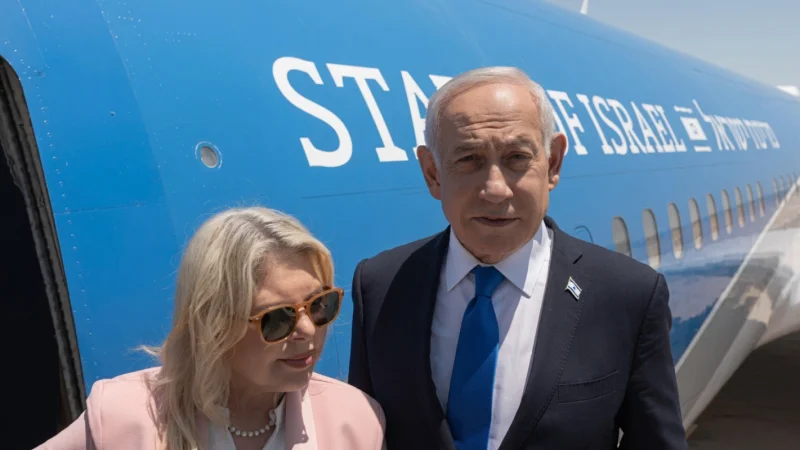

Israeli Prime Minister Benjamin Netanyahu arrived in Washington for a high-stakes Trump Netanyahu meeting today at the White House, their first face-to-face talks in more than five months. The Trump Netanyahu meeting time was set for 11 a.m. local time in the Oval Office, with the ongoing war against Iran expected to dominate discussions.
Background
The Trump Netanyahu relationship has been central to US Middle East policy since Trump’s return to office, with Netanyahu having now visited the White House seven times during that period. This latest trip, however, arrives at what officials describe as a politically fraught moment for the Israeli leader, who is simultaneously managing an active war footing against Iran and a domestic corruption trial back home.
Netanyahu departed Israel from Nevatim Air Force Base rather than the usual civilian airport, a decision reportedly tied to security concerns following a wave of Iranian strikes on countries hosting US military installations. He and his wife Sara traveled aboard Israel’s official aircraft, the Wing of Zion, with the Prime Minister’s Office declining to publicize the takeoff time in advance.
Before departing, Netanyahu confirmed in a video statement that Iran would top the agenda, saying the moment called for both determination and wisdom as Israel navigated an especially complex period. The trip also coincides with his attendance at a memorial service for the late Senator Lindsey Graham, one of Israel’s most vocal supporters in Washington.
Details
According to a White House official, the Trump Netanyahu meeting today will focus on three main issues: the ongoing conflict with Iran, a proposed peace framework for Lebanon, and efforts to expand the Abraham Accords to include additional countries. Trump is also scheduled to meet separately with Ukrainian President Volodymyr Zelenskyy later the same day.
The talks come during a rare pause in US and Iranian strikes, following nearly two weeks of intensifying exchanges that included American attacks on Iranian territory and Iranian retaliation against US-linked targets across the Gulf. Both sides have said they will hold their fire only for as long as the other side does the same, leaving the ceasefire on uncertain footing.
Gaza is also expected to feature prominently in the discussions. Israel’s security cabinet voted over the weekend to approve limited entry of the International Stabilization Force into the Gaza Strip, a move seen as a step toward supporting Trump’s 20-point plan for the territory. However, the plan remains stalled in several respects, since Hamas continues to refuse disarmament and Israel has withheld approval for some of the plan’s key provisions, including reconstruction efforts.
This also marks the first Trump Netanyahu meeting since the International Criminal Court issued an arrest warrant against the Israeli leader in 2024 over alleged war crimes, a legal cloud that continues to complicate his international travel and diplomatic standing.
Quotes
Netanyahu, speaking before boarding his flight to Washington, said Israel would discuss every item on the agenda, first and foremost Iran, and stressed that navigating the current period required both firm resolve and careful judgment.
Trump has repeatedly used past encounters and public statements to defend Netanyahu on a separate front, his ongoing corruption trial in Israel. In a formal letter to Israeli President Isaac Herzog last November, Trump wrote that he considered the case against Netanyahu a political, unjustified prosecution and called on Herzog to fully pardon him.
In that same letter, Trump praised Netanyahu as a formidable and decisive wartime leader who was now steering Israel into a period of peace, and argued that ending what he called “lawfare” would allow Netanyahu to help unite the country going forward.
Impact
The outcome of the Trump Netanyahu meeting carries significant weight for the broader region. Continued US backing for Israel’s position on Iran could shape whether the current pause in strikes holds or breaks down into renewed fighting, with direct consequences for Gulf states already caught in the crossfire of recent exchanges.
The visit also underscores growing questions about the Trump Netanyahu relationship tension building beneath the surface, particularly around Trump’s direct involvement in Netanyahu’s domestic legal troubles. Critics, including some Israeli commentators, have raised concerns about a foreign leader intervening so directly in another country’s judicial process, even as Netanyahu himself has embraced the support.
Domestically in Israel, the visit lands at a sensitive moment. Netanyahu’s pardon request, submitted to President Herzog in November, remains unresolved, and a verdict in his five-year corruption trial isn’t expected before 2026 at the earliest, meaning the political and legal uncertainty surrounding him is unlikely to lift soon regardless of what’s agreed in Washington.
Conclusion
With Iran, Gaza, and Lebanon all on the table, the Trump Netanyahu meeting today is being widely viewed as a pivotal moment for the region’s near-term trajectory. Whether the current pause in US-Iran hostilities holds, and whether progress is made on Gaza’s stalled reconstruction plan, will likely become clearer in the days following the talks.
For now, both leaders are leaning on a relationship built over multiple White House visits and years of close coordination, even as each navigates significant political pressure back home.
Frequently Asked Questions
Does Netanyahu support Trump?
Benjamin Netanyahu has consistently expressed strong support for Donald Trump throughout his time in office, frequently praising Trump’s handling of Middle East policy, including his role in ceasefire negotiations and efforts to expand the Abraham Accords. Netanyahu has also welcomed Trump’s public backing during his corruption trial, citing Trump’s support when submitting his own pardon request to Israel’s president in November. The two leaders have described their relationship in warm terms on multiple occasions, though some analysts note the closeness partly reflects Netanyahu’s reliance on continued US military and diplomatic backing during Israel’s ongoing conflicts.
What did Donald Trump do in Israel?
During visits to Israel, Trump has taken an active role well beyond typical diplomatic protocol, including delivering a speech to the Knesset in which he directly urged Israel’s president to pardon Netanyahu over his corruption charges. Trump has also been closely involved in shaping a broader peace framework for Gaza, pushing his 20-point reconstruction and stabilization plan, and has taken credit for helping secure the return of hostages held since the October 2023 Hamas attacks. His interventions have extended to Israel’s judiciary as well, with formal letters to President Isaac Herzog explicitly requesting clemency for Netanyahu, an unusual level of involvement in another country’s internal legal affairs for a sitting US president.
When did Netanyahu first meet Trump?
Benjamin Netanyahu and Donald Trump have a relationship stretching back to Trump’s first term as president, when Netanyahu was among the first foreign leaders to align closely with Trump’s Middle East approach, including the relocation of the US embassy to Jerusalem and the negotiation of the original Abraham Accords. Since Trump’s return to office, the two leaders have met repeatedly, including a notable visit to Mar-a-Lago and now seven separate White House meetings, reflecting how central the US-Israel relationship has remained across both of Trump’s terms in office.