
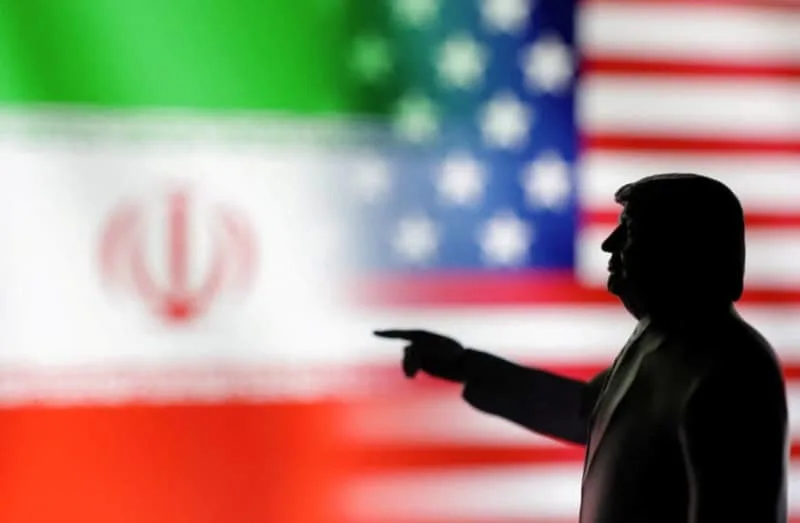
A reported diplomatic framework between the United States and Iran is generating the kind of reaction that always accompanies major Middle East policy moves intense support from those who see an opening, intense skepticism from those who have watched previous openings close, and intense scrutiny from every government in the region that has skin in the game.
What is being described variously as an Iran MOU, a potential Iran-US agreement, or simply the Trump Iran deal has become one of the most closely watched geopolitical stories of the year. The debate is happening simultaneously in Washington’s political circles, in Jerusalem’s security establishment, in Gulf capitals, and in international policy analysis each of those conversations shaped by different interests and different readings of what is actually being proposed.
Background
Decades of US-Iran antagonism do not resolve themselves easily, and anyone who understands the history approaches any new diplomatic opening with the kind of caution that the record fully justifies. Nuclear disputes, sanctions cycles, proxy conflicts across the Middle East, and the wreckage of previous agreements that seemed promising at the time have all contributed to a relationship that has very little trust as its foundation.
What is different about the current moment is the combination of pressures converging on both sides. Regional instability is real and costly. The prospect of military escalation is genuinely alarming to governments across the Middle East and beyond. And the economic pressures on Iran from sustained sanctions have created conditions where Tehran has some incentive to engage even with an administration whose previous Iran policy was defined by maximum pressure rather than diplomacy.
The diplomatic conversation that has emerged from these conditions has taken the form of what reporters and analysts are describing as an Iran MOU — a framework document intended to outline principles and commitments rather than constituting a final formal agreement. Whether that framework can survive the political pressures arrayed against it on both sides is the question that dominates every serious analysis.
What Is the Reported Iran MOU?
A memorandum of understanding is a document that occupies a particular space in diplomatic practice — more formal than a conversation, less binding than a treaty, and more useful than either as a tool for establishing shared principles before more detailed negotiations begin. The term Iran MOU in the current context is being used to describe exactly this kind of document: a structured statement of where the two sides see potential agreement and what kind of framework might guide more formal negotiations.
According to the reporting that has been done on the current diplomatic effort, the discussions have focused on a range of issues that are genuinely central to the US-Iran relationship. Security guarantees what assurances Iran needs about its own security and what assurances the United States needs about Iran’s regional behavior. Sanctions-related issues — which sanctions might be suspended or lifted under what conditions. Mechanisms designed to reduce the risk of military confrontation through misunderstanding or miscalculation.
Supporters of the MOU approach argue that establishing this kind of shared framework is valuable in itself, regardless of whether it leads immediately to a comprehensive formal agreement. Creating channels for structured communication, establishing that both sides can agree on basic principles, and reducing the immediate risk of escalation are all real benefits even before any final deal is reached.
Critics make the opposite argument that an MOU without clear enforcement mechanisms and verifiable commitments gives Iran the credibility benefit of appearing to engage diplomatically without requiring any concrete change in the behavior that created the security concerns in the first place.
Both positions are being argued forcefully, and neither is obviously wrong.
Trump Iran Deal Becomes a Political Flashpoint
Whatever the diplomatic merits or risks of the reported Trump Iran deal, its political dynamics are unmistakable. Any US diplomatic engagement with Iran is going to generate strong reactions in Washington that has been true for decades and a framework associated with the Trump administration is generating reactions that are shaped as much by domestic political alignments as by the actual content of what is being proposed.
Supporters of the diplomatic approach make arguments that cut across partisan lines. Direct engagement creates communication channels that reduce the risk of escalation during crises. Diplomacy costs less than military conflict in every measurable way. The alternative to engagement is not a guarantee of better outcomes it is simply continued uncertainty with higher risks.
Opponents have focused their criticism on the compliance question, which is genuinely important. Iran’s track record on previous diplomatic commitments is the central exhibit in every argument against engagement, and the critics who raise this point are not wrong to raise it they are asking a legitimate question about whether any framework can produce durable change in Iran’s behavior rather than a temporary suspension of the worst elements of it.
The Trump Iran deal has therefore become a domestic political issue as much as a foreign policy one, with the debate in Congress, in media, and in political commentary reflecting alignments that have as much to do with views of the Trump administration as with views of Iran policy.
Israel News Dominates Regional Discussion
Israel’s reaction to the reported Iran framework has been prominent in Israel News coverage in ways that reflect the depth of Israeli security concerns about Iran. No other country’s leadership has been more consistent or more vocal about the dangers of diplomatic arrangements with Tehran that do not include robust verification and meaningful restrictions on Iranian regional military activity.
Israeli officials have made their positions known through multiple channels. The core concern is not abstract it is about the specific capabilities and activities that Iran has been developing and the specific threats that those capabilities and activities pose to Israeli security. From Jerusalem’s perspective, a diplomatic framework that reduces international pressure on Iran without producing verifiable limits on its most threatening programs is not a de-escalation it is a concession that changes the strategic balance without improving the security situation.
The Israel News coverage of the Iran MOU discussions has consequently been extensive and largely critical, reflecting the Israeli government’s public position while also reflecting the genuine security calculations that underlie it. Israel’s influence on US Iran policy has historically been significant, and the current diplomatic effort is being watched in Washington with full awareness of how Jerusalem is reacting.
Regional Reactions to the Iran-US Agreement Discussion
Beyond Israel, the Gulf states and other regional actors are watching the Iran-US agreement discussions through their own strategic lenses, and the reactions are varied in ways that reflect genuinely different interests.
Gulf states that have spent years managing the threat posed by Iranian-backed militia activity in their neighborhood have mixed feelings about a diplomatic framework that might reduce international pressure on Tehran. They want stability, but they are not confident that the proposed framework actually delivers it in ways that address their specific concerns.
European governments, which have generally favored diplomatic engagement with Iran more consistently than US administrations have, are watching the current discussions with cautious interest. A framework that creates the conditions for broader multilateral engagement would be welcomed by European capitals that have struggled to maintain any meaningful diplomatic architecture since the collapse of the previous nuclear deal.
International organizations have emphasized the desirability of reduced tensions while being careful not to prejudge the outcome of negotiations that are still in progress.
The overall picture is of a region watching carefully, hoping that something constructive emerges, and prepared to respond in very different ways depending on what the framework actually contains and whether it holds.
Reports of a 14-Point Plan Iran Proposal
The reference in media reporting to a 14-point plan Iran framework has added a layer of detail to the public discussion though the reporting on what this framework actually contains remains uneven, with some elements described with confidence and others clearly speculative.
The general concept of a structured multi-point framework for Iran negotiations is familiar from diplomatic history. Such frameworks typically address the core security concerns that motivated the engagement in the first place, the economic measures sanctions relief that constitute Iran’s primary incentive to participate, verification mechanisms, timelines for implementation, and provisions for what happens if commitments are not kept.
Whether the specific 14-point plan Iran document that has been referenced in reporting accurately captures what is being discussed between the parties is something that official confirmation would clarify. In the absence of that confirmation, the most honest position is that some elements of what has been reported reflect real negotiating positions and others may be speculation, advocacy, or deliberate leaking intended to shape public or political reaction.
Diplomatic experts consistently note that frameworks evolve through negotiation, and what looks like a specific proposal at one stage of a diplomatic process often looks quite different after the back-and-forth of actual negotiation has done its work.
Trump News Coverage Focuses on Foreign Policy
The Iran diplomacy story has become a central element of Trump News coverage in ways that reflect its genuine importance while also reflecting the particular dynamics of how the Trump administration’s foreign policy decisions get processed in American media.
Supporters of the diplomatic initiative use Trump News platforms to argue that the administration is demonstrating a willingness to pursue unconventional foreign policy approaches that direct engagement with adversaries reflects strategic creativity rather than weakness. The argument is that a leader willing to negotiate directly has more flexibility and more potential leverage than one who restricts engagement to allies and multilateral frameworks.
Critics use the same platforms to raise questions about whether the administration has the strategic patience and institutional knowledge to follow through on complex diplomatic processes, and whether the desire for a visible diplomatic achievement might produce a deal that looks impressive in headline terms but creates problems in implementation.
Both of these arguments are being made in Trump News coverage, and the disagreement between them reflects genuine uncertainty about what the diplomatic initiative will actually produce.
Global Economic Implications
The financial markets and energy sector analysts who track Middle East developments for purely economic reasons are paying close attention to the Iran-US agreement discussions, and for straightforward reasons.
Iran’s oil and gas resources are significant, and the sanctions regime that has restricted Iran’s ability to sell those resources on international markets has had real effects on global energy supply. A diplomatic framework that leads to sanctions relief even partial or gradual sanctions relief would affect the availability of Iranian oil exports and therefore affect global energy pricing.
This economic dimension is part of what makes the Iran MOU politically complicated within the United States. Industries and governments that benefit from current oil pricing would be affected by changes in Iranian export volumes. The interaction between diplomatic objectives and economic interests adds another layer to an already complex political calculation.
Investors are treating the reported framework as a signal worth monitoring without treating it as a confirmation of outcomes that remain genuinely uncertain. The relationship between diplomatic progress and sanctions relief, and between sanctions relief and actual changes in Iranian oil export behavior, involves too many intervening variables for financial markets to price in confidently at this stage.
Expert Perspectives
The foreign policy experts who have spent careers studying US-Iran relations are not speaking with one voice about the reported framework, and the disagreement among them reflects genuine uncertainty about whether diplomacy can work in this particular context.
Those who support engagement consistently make the argument that the alternatives are worse. Without diplomatic channels, misunderstandings escalate unchecked. Without economic incentives, Iran has no reason to modify its behavior. Without a framework for structured negotiation, disputes that could be managed become crises that have to be contained through other means. From this perspective, the Iran MOU represents an opportunity that should be developed rather than rejected because it falls short of what a perfect agreement would look like.
Those who are more skeptical make their arguments at the implementation and verification level. The history of Iran’s compliance with previous agreements is not reassuring. The domestic political pressures within Iran that push against meaningful compliance are real and durable. And the track record of US-Iran diplomacy suggests that agreements that look promising at the framework stage often fail at the implementation stage. From this perspective, proceeding without much stronger guarantees and verification mechanisms is imprudent.
The honest conclusion from this disagreement is that both sets of concerns are legitimate, and that the quality of the actual agreement if one is reached will determine which concerns prove more prescient.
Impact on Future Middle East Stability
The stakes of getting this right or wrong extend well beyond the US-Iran bilateral relationship. A successful Iran-US agreement that genuinely reduces Iranian regional military activity, provides credible verification of nuclear commitments, and creates sustainable economic incentives for Iran to maintain compliance would have positive implications for stability across a region that has experienced extraordinary instability for decades.
A framework that fails in implementation either because Iran does not comply or because domestic political shifts in either country undermine the commitment would leave both sides in a worse position than before. The political cost of a failed diplomatic initiative often makes subsequent engagement harder, not easier, because both governments face domestic pressure to take harder lines after being seen to have been taken advantage of.
This is why the design of any Iran MOU matters so much. A framework built on genuine mutual interest, credible verification, and realistic implementation timelines has a better chance of surviving the inevitable pressures of implementation than one built on an optimistic reading of what both sides are prepared to do.
Conclusion
The Trump Iran deal debate is ultimately a debate about whether this particular moment, with these particular leaders, in this particular regional context, creates the conditions for an Iran-US agreement that can actually hold. That is a question nobody can answer confidently from the outside.
What can be said is that the pressures pushing toward some form of engagement are real, that the concerns about whether engagement can produce durable outcomes are also real, and that the coming weeks of diplomatic activity will tell us a great deal about whether the framework being reported actually has the substance and support on both sides to develop into something that changes the situation.
Israel News coverage, Trump News analysis, regional government reactions, and international diplomatic attention will all continue to focus on every development. The stakes for Middle East stability justify that level of attention.
FAQs
Has Trump reached an agreement with Iran?
As of current reporting, what exists is a reported diplomatic framework or memorandum of understanding a document outlining principles and possible directions for negotiation rather than a finalized, legally binding agreement. The distinction matters enormously in practice. A framework document is a starting point for negotiation, not an endpoint, and the gap between a framework and an implemented agreement is where most diplomatic initiatives encounter their most serious difficulties. Any comprehensive Iran-US agreement would require detailed negotiation of specific terms, development of verification mechanisms, official confirmation and endorsement from both governments, and a implementation process that typically spans months or years. None of those stages have been publicly confirmed as completed.
Has Trump responded to Iran?
Public statements and policy developments indicate ongoing engagement with Iran-related issues, including diplomatic messaging through multiple channels and discussions about regional security arrangements. The Trump administration has been communicating its positions both publicly and through diplomatic back-channels, and those communications have evolved as discussions have progressed. The exact content and tone of private diplomatic communications is not fully known publicly, but the pattern of public statements and reported diplomatic contacts indicates active engagement rather than silence.
Did Iran reject Trump’s deal?
The public reporting on Iran’s response to the proposed framework reflects a more complicated picture than a simple acceptance or rejection. Iranian officials have expressed concerns about specific elements of what has been proposed, questioned whether commitments would actually be honored given the history of US Iran policy, and pushed back on certain terms all of which is entirely normal in the early stages of diplomatic negotiation. Whether those responses represent rejection of the framework or negotiating positions within an ongoing process is genuinely unclear, and the distinction between the two is significant. Diplomatic negotiations frequently involve phases where one or both parties publicly criticize elements of a proposal while privately continuing to negotiate that dynamic appears to be part of what is happening here.