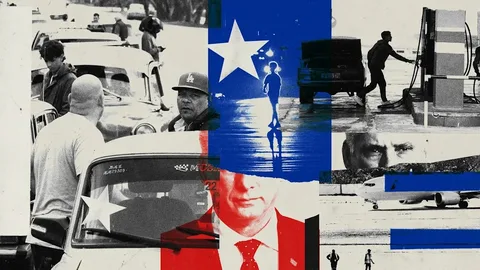

Trump Cuba news is dominating global headlines as the United States escalates pressure on Havana through a severe oil blockade, fresh sanctions, and a stunning federal indictment of 94-year-old former Cuban President Raúl Castro. The US government has indicted Raúl Castro for murder and conspiracy to kill Americans, coinciding with a US oil blockade that is causing a grave humanitarian crisis in Cuba and threatening societal collapse. The question now being asked worldwide is simple: why does Trump want Cuba, and is a military confrontation next?
Background: US–Cuba Tensions and Why Trump Is Focused on the Island
Cuba has been a communist-run state since Fidel Castro’s 1959 revolution. Is Cuba still communist? Yes Cuba remains a one-party socialist republic governed by the Cuban Communist Party, with Miguel Díaz-Canel currently serving as First Secretary. The US has maintained a decades-long embargo against the island, but relations briefly warmed under President Obama before freezing again under Trump’s first term.
Now, in his second term, Trump has dramatically hardened his stance. Trump is increasing pressure on Cuba’s government, elevating concerns that his continued threats to invade the Caribbean island could become reality a confrontation that would mark the most dramatic clash between Washington and Havana since the 1962 missile crisis.
The broader strategy fits Trump’s updated version of the Monroe Doctrine a belief that the United States should dominate political and economic affairs across the Western Hemisphere, with no room for adversarial governments in America’s backyard.
Details: The Oil Blockade and Its Devastating Impact
At the heart of the current Cuba news crisis is a brutal energy blockade. In January 2026, President Trump signed an Executive Order declaring a national emergency and establishing a process to impose tariffs on goods from countries that sell or otherwise provide oil to Cuba, protecting US national security from the Cuban regime’s malign actions.
The consequences on the ground have been severe. Cuba announced it had run out of diesel and fuel oil due to the US blockade and sanctions, with journalist Ed Augustin describing the situation as “the collective punishment of a population, particularly targeting poor communities, pregnant women, children and the elderly.”
Cubans are increasingly forced to go without electricity, drinking water, and access to medical care. The blockade has created the worst humanitarian conditions the island has seen in decades, further weakening a government that was already struggling economically.
Why Does Trump Want Cuba? The Strategic and Political Logic
So why does Trump want Cuba? The answer is multi-layered political, strategic, and ideological.
Firstly, Cuban Americans in Florida a critical electoral base for Trump have long pushed for regime change in Havana. Trump has stated: “I am very prone toward the Cuban Americans. They’ve been incredible people. Many of them have lost family members. They’ve been badly hurt themselves.!
Secondly, Trump views Cuba as a “failed state” ripe for transformation. Trump described Cuba as “a failed nation” and said “they want our help,” framing US pressure as an act of liberation rather than coercion.
Thirdly, Cuba’s strategic location in the Caribbean just 90 miles from Florida makes it a national security concern, particularly given its historical ties to Russia and China.
The “Friendly Takeover” What Did Trump Mean?
One of the most striking moments in recent Trump news today came when the president openly floated the idea of taking over Cuba. Trump said: “The Cuban government is talking with us. They have no money. They have no anything right now. We could very well end up having a friendly takeover of Cuba.”
Trump did not clarify what a “friendly takeover” would mean in practice whether it implied a negotiated political transition, a US-backed regime change, or something more forceful. Trump may hope to further strain the regime in Havana, perhaps by dislodging weaker or more pragmatic members who might be willing to negotiate but a new legal front could also serve as a pretext for military action or a special forces operation.
The Raúl Castro Indictment: A Legal Pressure Tool
The latest and most dramatic escalation in Trump Cuba news is the federal indictment of former Cuban President Raúl Castro. The indictment relates to the 1996 shooting-down of two civilian aircraft that killed four people, including three Americans an event carried out by Cuban military jets.
At 94 years old, Castro is unlikely to ever face a US court. But the indictment sends a powerful political message and significantly raises diplomatic stakes. Some analysts warned that the Justice Department indictment unsealed in Florida could backfire on the White House if it was meant to elicit Cuban concessions.
The move closely followed a CIA Director visit to Havana. CIA Director John Ratcliffe traveled to Havana to meet with Cuban officials just a day after Cuba announced it had run out of diesel and fuel oil due to the US blockade. The combination of a CIA visit and a criminal indictment signals a coordinated pressure campaign operating on multiple fronts simultaneously.
Negotiations: Is Cuba Still Talking to Washington?
Despite the escalating pressure, diplomatic channels remain open barely. Trump stated that Cuba wants to make a deal and is negotiating with him and Secretary of State Marco Rubio, saying at a gathering of Latin American leaders in Miami: “They want to negotiate, and they are negotiating with Marco and myself and some others, and I would think a deal would be made very easily with Cuba.”
Cuban President Miguel Díaz-Canel publicly confirmed for the first time in March 2026 that his government was engaged in diplomatic talks with the United States aimed at addressing the severe US-imposed oil and energy blockade. The fact that Havana admitted to talks at all was seen as a significant concession, reflecting just how desperate the economic situation has become.
Officially, yes. But the communist government is under enormous pressure economically, diplomatically, and now legally. Whether the Cuban Communist Party can survive this level of sustained US pressure without significant political change remains the defining question of 2026.
Quotes
Trump said of Cuba: “We’re there to help we’re there to help the families, the people.”
Trump also warned: “We’ll be doing something with Cuba very soon,” signalling that patience with Havana was running thin.
The White House stated in a formal fact sheet that US policy ensures engagement with Cuba advances “human rights, fostering a private sector independent of government control, and enhancing national security.”
Impact: Regional and Global Consequences
The escalating US–Cuba standoff is reverberating far beyond the Caribbean. A US invasion of Cuba would mark the most dramatic confrontation between Washington and Havana since the 1962 missile crisis, and the boldest test yet of Trump’s campaign to expand America’s influence in the Western Hemisphere.
Russia and China, both of which maintain strong ties with Havana, are watching closely. Any forced regime change in Cuba could trigger serious diplomatic blowback from both powers. Latin American nations, many of which oppose US interventionism, have also expressed concern about Washington’s increasingly aggressive posture.
For ordinary Cubans, the immediate impact is a daily humanitarian struggle fuel shortages, blackouts, food scarcity, and a collapsed healthcare system stretched beyond its limits by the blockade.
Conclusion: What Happens Next
The situation between Washington and Havana in 2026 is the most volatile it has been in over sixty years. With a federal indictment, an oil blockade, CIA visits, and open talk of a “friendly takeover,” the Trump administration has made Cuba a central front in its broader geopolitical agenda.
Whether diplomacy prevails or tensions escalate into something more dangerous will depend on decisions made in both Washington and Havana in the coming weeks. The world is watching closely — and Trump Cuba news shows no sign of slowing down.
FAQs
Does going to Cuba affect going to the USA?
For US citizens, traveling to Cuba is heavily restricted under the US embargo and requires falling under one of twelve authorized categories — such as family visits, journalism, or educational activities. Visiting Cuba without authorization can result in fines. For non-US citizens, visiting Cuba does not directly bar entry to the United States. However, travelers who have visited Cuba may face additional screening upon entering the US under current Homeland Security protocols. With tensions at their highest in decades in 2026, US travel advisories strongly caution against non-essential travel to Cuba.
Is Cuba friendly with the US now?
No US–Cuba relations in 2026 are at their most hostile point since the Cold War era. The Trump administration has imposed a full oil blockade, sanctioned Cuban officials, and indicted former President Raúl Castro. While back-channel diplomatic talks have reportedly taken place between Havana and Washington, there is no normalisation of relations, no open embassy cooperation, and no easing of the US embargo. The relationship remains deeply adversarial, with growing fears of military escalation.
What fruit grows in Cuba?
Cuba’s tropical climate makes it one of the most fertile islands in the Caribbean. Common fruits grown in Cuba include mangoes, papayas, guavas, pineapples, avocados, coconuts, bananas, plantains, tamarind, and mamey sapote a sweet, reddish-orange fruit native to Cuba and highly prized locally. Citrus fruits such as oranges, grapefruits, and limes are also widely cultivated. Despite the island’s agricultural abundance, the current humanitarian crisis caused by the US oil blockade has severely disrupted food production and distribution across Cuba.