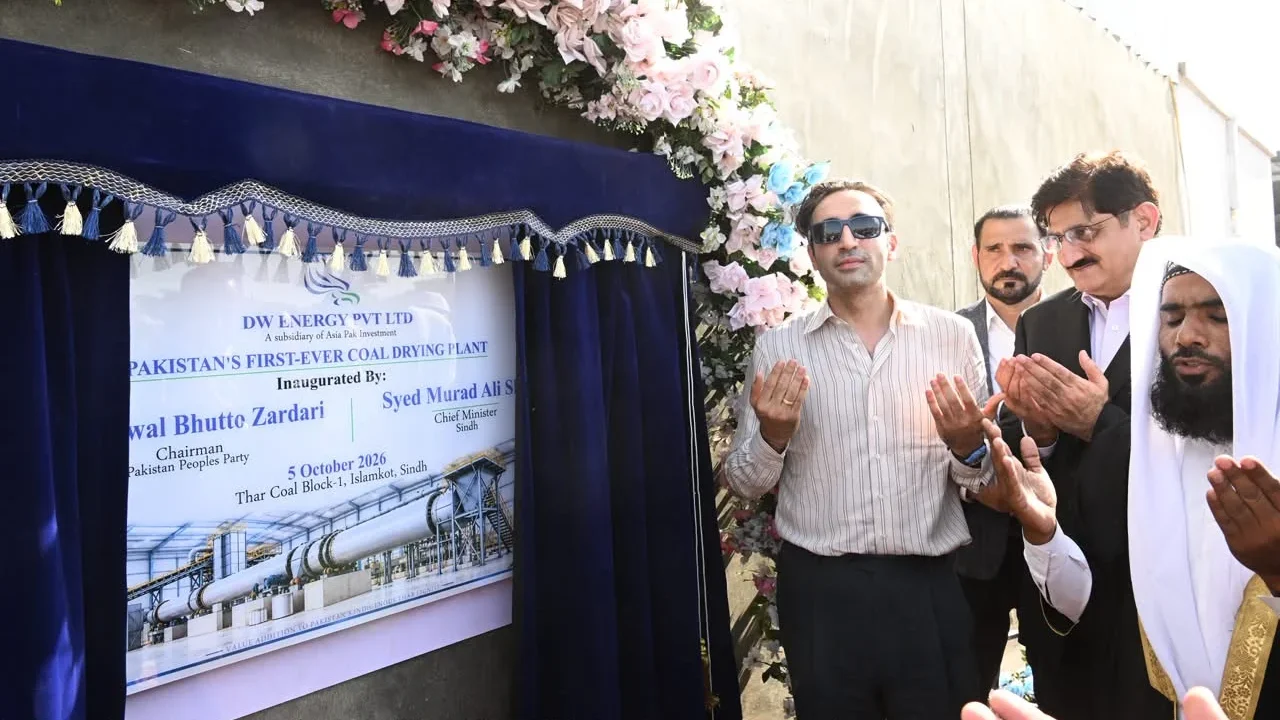
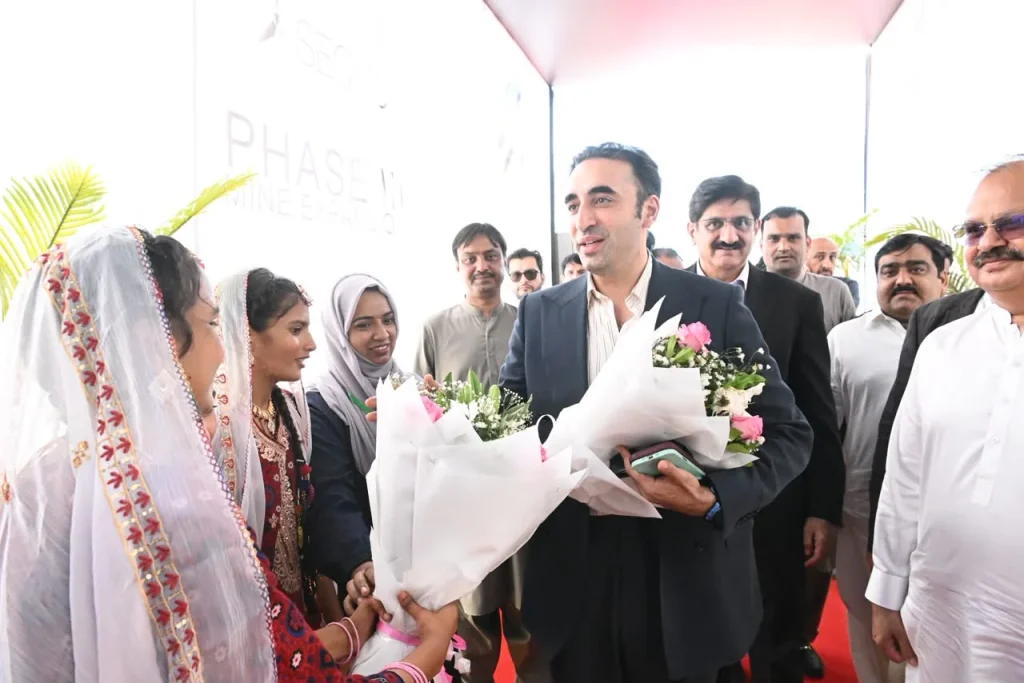
Tharparkar (By Najeeb Ahmed): Pakistan Peoples Party Chairman Bilawal Bhutto Zardari, along with Sindh Chief Minister Syed Murad Ali Shah, inaugurated Pakistan’s first coal drying unit in the Thar coal region. The new facility is part of efforts to expand the use of local coal and strengthen Pakistan’s energy resources.
The inauguration took place during Bilawal Bhutto Zardari’s visit to Tharparkar. He arrived in Islamkot and visited the Thar Foundation Hospital. During the visit, he reviewed different development activities in the area.
The coal drying unit is located in the Thar coal area. Officials briefed the visiting leaders about the project and its role in improving coal use. The facility is expected to support the wider development of the local coal sector.
Thar Coal Drying Unit Opens New Chapter
The Thar Coal Drying Unit is an important addition to the region’s growing coal infrastructure. Thar has large lignite coal resources, and the provincial government has continued to promote the use of these resources for energy and other industrial purposes. Official information from the Thar Coal and Energy Board identifies Thar as a major coalfield in southeastern Sindh.
Bilawal Bhutto Zardari inspected the site after the inauguration. He also reviewed the open-pit mining area in the region. The visit allowed officials to brief him about ongoing activities and future plans linked to Thar coal.
The development comes as Thar coal projects continue to expand. Recent reports said the Phase-III expansion of the Thar Block-II coal mine will increase annual coal production capacity from 7.6 million tonnes to 11.2 million tonnes. The expansion will also support additional electricity generation through local coal.
However, the development of Thar is not limited to coal mining. Authorities are also working on projects linked to health, education, water and agriculture. These initiatives aim to create wider opportunities for people living in the region.
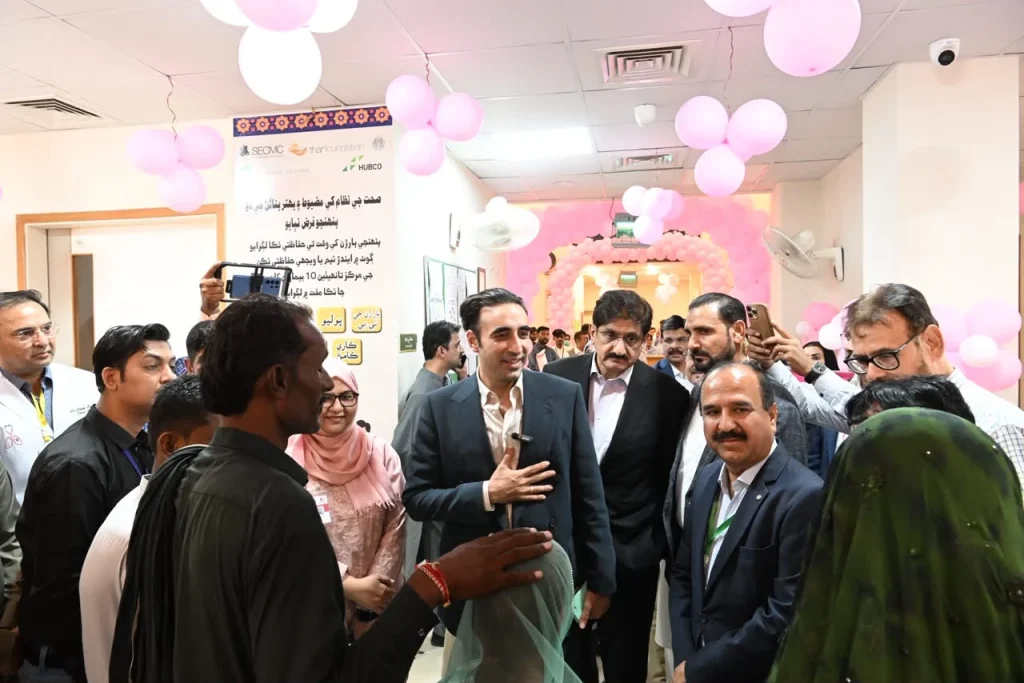
Bilawal Bhutto Visits Thar Foundation Hospital
During his visit to Islamkot, Bilawal Bhutto Zardari also visited Thar Foundation Hospital. The hospital provides healthcare services to people in the surrounding communities.
The Thar Foundation has played a role in supporting social development in the region. Earlier government information noted that its hospital in Islamkot provided medical services to local residents, including mother and child healthcare.
Bilawal’s visit also highlighted the importance of combining economic development with public services. As coal-related activities grow, local communities need access to healthcare, education, clean water and other basic facilities.
In addition, officials continue to focus on projects that can create jobs and improve living conditions in Tharparkar. Therefore, the region’s development plan includes both industrial and community-based projects.
Agricultural Research Project Using Saline Water
During the visit, Bilawal Bhutto Zardari was also scheduled to visit an agricultural research project covering 100 acres. The project focuses on growing fodder by using saline water.
The initiative is significant because Thar has a dry climate and limited water resources. The official Thar Coal and Energy Board describes the area as a dry and arid region with limited rainfall and water resources.
Using saline water for agricultural research could help explore new options for farming in difficult conditions. The project may also support livestock owners by providing a local source of fodder.
The agricultural work shows that development in Thar is moving beyond mining. Researchers and authorities are also exploring ways to improve agriculture and support local livelihoods.
Overall, the visit brought attention to several major projects in Tharparkar. The Thar Coal Drying Unit, the open-pit mining operations, the Thar Foundation Hospital and the agricultural research project all form part of the region’s wider development activities.
With continued investment, Thar is becoming an important centre for energy, agriculture and community development in Sindh. At the same time, the progress of these projects will remain closely linked to their impact on local communities and the responsible use of the region’s natural resources.