
Qatar’s Foreign Minister has delivered one of the most significant diplomatic interventions of the Iran war, stating publicly that regional countries are not an enemy of Iran — a direct appeal for de-escalation as the Strait of Hormuz remains effectively closed to global oil traffic. The Strait of Hormuz importance to global energy supply has never been more acutely felt, with oil prices above $100 a barrel and 140 million barrels of suspended shipments disrupting markets worldwide. Fears of Iran mines in Strait of Hormuz waters have compounded the crisis, with mines in Strait of Hormuz shipping lanes adding a new and potentially permanent threat to one of the world’s most critical maritime chokepoints.
Background: Strait of Hormuz Importance to the World
To understand why Qatar’s foreign minister felt compelled to make this statement — and why the world is watching the Strait of Hormuz with such acute anxiety — it is necessary to understand the Strait of Hormuz importance in the global energy architecture.
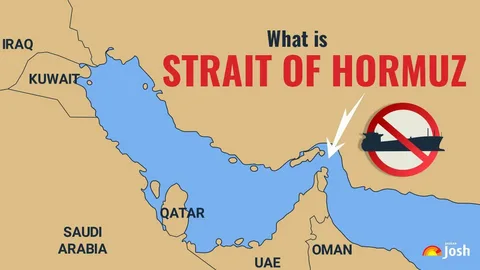
The Strait of Hormuz is a narrow waterway located between Iran to the north and Oman and the UAE to the south, connecting the Persian Gulf to the Gulf of Oman and from there to the Arabian Sea and global shipping routes. At its narrowest point, the Strait of Hormuz is only 33 kilometres wide — and the shipping lanes within it are just three kilometres wide in each direction.
The Strait of Hormuz importance to global energy supply is without parallel. Approximately 19 million barrels of oil pass through the Strait of Hormuz every single day — representing approximately 20 percent of the world’s total oil consumption and nearly 30 percent of all globally traded liquefied natural gas. The five countries that depend most heavily on Strait of Hormuz oil flows are China, India, Japan, South Korea, and the European Union — together representing the majority of the world’s major economies.
The Strait of Hormuz importance extends beyond oil. Qatar — the world’s largest exporter of liquefied natural gas — ships virtually all of its LNG exports through the Strait of Hormuz. Saudi Arabia, the UAE, Iraq, and Kuwait collectively depend on the Strait of Hormuz for the overwhelming majority of their oil export revenues. The Strait of Hormuz importance to the fiscal stability of every Gulf state cannot be overstated — it is the economic lifeline on which the entire regional order depends.
Iran has long understood the Strait of Hormuz importance and has repeatedly threatened to close it as a strategic lever in disputes with the United States and its allies. The current conflict has transformed that threat from rhetoric into reality — with the Strait of Hormuz effectively shut down by Iranian military action, tanker rerouting, and fear of Iran mines in Strait of Hormuz waters.
Details: Qatar’s Diplomatic Intervention and the Strait of Hormuz Crisis
Strait of Hormuz — Qatar’s Foreign Minister Speaks
Qatar’s Foreign Minister Mohammed bin Abdulrahman Al Thani delivered his statement at a moment of acute regional tension, when Gulf states were simultaneously absorbing Iranian missile and drone attacks on their territory and watching the Strait of Hormuz closure devastate their energy export revenues.
The Foreign Minister’s statement — that regional countries are not an enemy of Iran — was a carefully calibrated diplomatic message directed simultaneously at Tehran, Washington, and the broader international community. It was an explicit rejection of the binary war logic that the US-Israel alliance has sought to impose on the conflict, in which Gulf states would be expected to align unambiguously with Washington against Iran.
Qatar’s position reflects the unique complexity of its relationship with Iran. Qatar shares the world’s largest natural gas field — the North Dome/South Pars field — with Iran across the Strait of Hormuz. Qatar’s entire LNG export economy depends on the Strait of Hormuz remaining open. Qatar hosts the US military’s Al Udeid Air Base — the largest US air base in the Middle East — while simultaneously maintaining diplomatic and economic ties with Iran that no other Gulf state can match.
The Strait of Hormuz importance to Qatar’s own economic survival gives the Foreign Minister’s statement a strategic logic that goes beyond diplomatic niceties. A prolonged Strait of Hormuz closure does not hurt Iran alone — it devastates Qatar, Saudi Arabia, the UAE, Kuwait, and Iraq simultaneously. Qatar’s Foreign Minister was telling Tehran directly: the Gulf states are your neighbours, not your enemies, and the Strait of Hormuz closure hurts us as much as it hurts you.
Iran Mines in Strait of Hormuz — The Military Dimension
The most alarming development in the Strait of Hormuz crisis has been the threat and potential deployment of Iran mines in Strait of Hormuz shipping lanes — a tactic that Iran has used before and that represents one of the most difficult military challenges to counter in maritime warfare.
Iran mines in Strait of Hormuz waters have been a threat since the Tanker War of the 1980s, when Iran mined the Persian Gulf during the Iran-Iraq War and the United States launched Operation Earnest Will to escort Kuwaiti tankers through Iranian-mined waters. The mining campaign of the 1980s demonstrated that even relatively simple naval mines can cause disproportionate disruption to global shipping when deployed in a strategic chokepoint like the Strait of Hormuz.
Iran mines in Strait of Hormuz deployment in the current conflict would represent a significant escalation beyond missile and drone attacks. Unlike missiles and drones — which can be intercepted by air defence systems — mines in Strait of Hormuz waters are passive threats that persist long after the initial conflict. Mines in Strait of Hormuz shipping lanes are extremely difficult to detect and clear, can damage or destroy large commercial vessels, and create an insurance and liability environment that discourages tanker operators from entering the waterway even after a formal ceasefire.
Intelligence assessments from multiple Western governments indicate that Iran has the capability and the apparent intent to deploy mines in Strait of Hormuz waters as part of its war of attrition strategy. The IRGC Naval Forces maintain a significant mine warfare capability developed and expanded over decades specifically with the Strait of Hormuz chokepoint in mind.
The US Navy’s mine countermeasures forces — including dedicated minesweeping vessels and helicopter units — have been deployed to the region as part of the broader military response to the Iran conflict. But clearing Iran mines in Strait of Hormuz waters at the scale required to restore normal commercial shipping would be a prolonged and dangerous operation even under the best conditions.
Mines in Strait of Hormuz — Historical Context
Mines in Strait of Hormuz and the broader Persian Gulf have been a recurring feature of regional conflicts since World War Two. The most significant mines in Strait of Hormuz episode before the current crisis was the 1987-1988 Tanker War, during which Iran deployed hundreds of mines in Persian Gulf shipping lanes and the United States lost the frigate USS Samuel B. Roberts to an Iranian mine in April 1988.
The USS Samuel B. Roberts mining triggered Operation Praying Mantis in April 1988 — the largest US Navy surface engagement since World War Two — in which the US Navy destroyed two Iranian oil platforms and sank or damaged several Iranian naval vessels in a single day. That episode demonstrated both Iran’s willingness to use mines in Strait of Hormuz and Gulf waters as a strategic weapon and the severe consequences that such mining campaigns can trigger.
The current threat of Iran mines in Strait of Hormuz waters is considered more serious than the 1980s episode, because Iran’s mine warfare capabilities have advanced significantly in the intervening decades, the volume of commercial traffic through the Strait of Hormuz has grown enormously, and the global economic consequences of a prolonged Strait of Hormuz closure are far greater than they were forty years ago.
Strait of Hormuz Importance — The Economic Numbers
The Strait of Hormuz importance in economic terms can be measured through several specific metrics that illustrate just how catastrophic a prolonged closure would be for the global economy.
The 19 million barrels of oil that transit the Strait of Hormuz daily have a market value — at current elevated prices above $100 a barrel — of approximately $1.9 billion per day. Every day the Strait of Hormuz remains closed, that value is removed from global supply, contributing to the price surge that has already pushed Brent crude past $100 a barrel for the first time since 2022.
Qatar’s LNG exports — valued at approximately $80 billion annually under normal market conditions — transit the Strait of Hormuz almost entirely. Qatar Energy Minister Saad al-Kaabi warned that exports could halt within weeks if the Strait of Hormuz crisis continued — a development that would devastate European energy markets that have come to depend on Qatari LNG as an alternative to Russian gas since 2022.
Saudi Aramco’s Ras Tanura oil export terminal — the world’s largest crude oil loading facility — ships the majority of its exports through the Strait of Hormuz. The Strait of Hormuz importance to Saudi Aramco’s revenue, Saudi Arabia’s government budget, and the Kingdom’s ability to fund its ambitious Vision 2030 economic transformation programme is therefore existential.
Quotes on Strait of Hormuz and Qatar’s Diplomatic Intervention
Qatar’s Foreign Minister Mohammed bin Abdulrahman Al Thani stated directly that regional countries are not an enemy of Iran, adding that the Gulf states had always maintained a position of neutrality in the conflict between Iran and the United States and Israel, and that the Strait of Hormuz closure and the Iranian missile attacks on Gulf infrastructure were dragging the region into a war it had not chosen and did not want.
The Foreign Minister told Iran’s foreign minister in a direct phone call that Iran was not attacking the Gulf but only the American presence there — to which Qatar’s minister responded that this was completely untrue, that Gulf states were being hit by Iranian missiles and drones, that the Strait of Hormuz closure was devastating their economies, and that even though the Gulf had always been neutral, these attacks could not go unanswered.
US Energy Secretary Chris Wright told CNN that Strait of Hormuz traffic would resume after the US destroyed Iran’s ability to threaten tankers, saying regular ship traffic was not too far away but that it would take some time — a timeline that offered little immediate comfort to Gulf states whose export revenues were bleeding daily.
Qatar Energy Minister Saad al-Kaabi warned the Financial Times that if the Strait of Hormuz crisis and the war on Iran continued for weeks, GDP growth around the world would be impacted and everybody’s energy prices would go up — framing the Strait of Hormuz importance not as an abstract geopolitical concept but as an immediate economic emergency affecting every household on earth.
Defence analyst Frank Bohl warned that if Iran mines in Strait of Hormuz waters were confirmed and the Iranian attacks on Gulf infrastructure continued, Gulf Arab states would eventually be forced to participate in counter-attacks on Iran, adding that sitting passively and using up air defences without restoring deterrence was not a viable long-term strategy for any Gulf state.
Impact: What the Strait of Hormuz Crisis Means for the Region and the World
Strait of Hormuz Importance — Global Energy Impact
The Strait of Hormuz importance has translated directly into global energy price shock since the conflict began. Brent crude surging past $100 a barrel, diesel prices doubling in Europe, and jet fuel rising nearly 200 percent in Asia are all direct consequences of the Strait of Hormuz closure and the fear of Iran mines in Strait of Hormuz waters disrupting tanker traffic.
Oil analysts project that if the Strait of Hormuz remains closed for a sustained period — defined as more than four to six weeks — the structural damage to global energy markets could push Brent crude to $150 a barrel by the end of March 2026. At that price level, Goldman Sachs has warned that global inflation could accelerate dramatically, potentially triggering recessions in energy-import-dependent economies across Asia and Europe.
Iran Mines in Strait of Hormuz — Long-Term Threat
The Iran mines in Strait of Hormuz threat represents a particularly dangerous long-term dimension of the current crisis. Even if a ceasefire is reached and formal hostilities end, mines in Strait of Hormuz waters would continue to pose a threat to commercial shipping for months or years until a comprehensive mine-clearing operation is completed.
The insurance implications of confirmed mines in Strait of Hormuz waters are severe. War risk insurance premiums for vessels transiting the Strait of Hormuz have already surged to record levels — in some cases making commercial voyages economically unviable even if a physical passage is technically possible. Confirmed Iran mines in Strait of Hormuz deployment would push those premiums even higher and could deter commercial traffic from the waterway long after the shooting stops.
Qatar’s Diplomatic Role and Strait of Hormuz Importance
Qatar’s unique diplomatic position — as both a US military host and a country with deep economic ties to Iran through the shared gas field and the Strait of Hormuz — gives it a potential mediation role that no other Gulf state can play. Qatar’s Foreign Minister’s statement that regional countries are not Iran’s enemy is not merely a diplomatic pleasantry — it is an opening for a negotiated de-escalation that preserves the Strait of Hormuz importance as a shared economic artery for the entire region.
Qatar has previously served as a diplomatic back-channel between Iran and the United States in prisoner exchange negotiations and indirect nuclear talks. Its unique positioning — trusted to some degree by both sides — makes it the most plausible candidate to broker the kind of face-saving arrangement that could allow the Strait of Hormuz to reopen without requiring either side to formally concede defeat.
Conclusion
The Strait of Hormuz is simultaneously the world’s most important maritime chokepoint, the most immediate casualty of the Iran war, and the clearest measure of how far the conflict has spread beyond its origins in US-Israeli strikes on Iranian nuclear facilities. Qatar’s Foreign Minister’s statement that regional countries are not Iran’s enemy reflects the desperate desire of Gulf states to de-escalate a conflict whose Strait of Hormuz consequences are devastating their economies regardless of whose side they are on. The Strait of Hormuz importance to global energy security, the threat of Iran mines in Strait of Hormuz waters, and the history of mines in Strait of Hormuz conflicts all point to the same conclusion — the waterway that holds the world’s energy economy in its narrow passage must be reopened, and the diplomacy required to achieve that reopening may ultimately matter more than any military operation conducted on either side of this dangerous and consequential war.