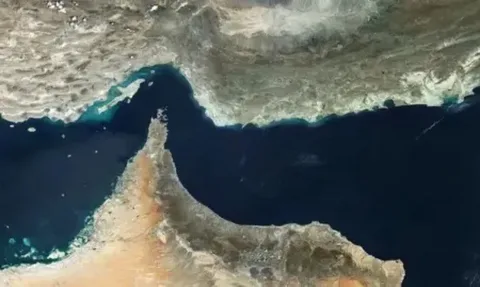
The Strait of Hormuz remains at the center of global attention as fighting between the United States and Iran continues for a third straight day. Oil prices have jumped to a one-month high, and shipping companies are once again rerouting vessels away from this narrow but vital waterway. This live update brings you the newest developments, the current Strait of Hormuz status, and what it all means for global energy markets.
Anyone following the Strait of Hormuz map right now will notice a sharp drop in vessel activity. Tanker traffic through the strait has slowed to levels not seen in two months. This slowdown is a direct response to the renewed military strikes and rising insurance costs for ships attempting the crossing.
Background: How the Crisis Began
The current Strait of Hormuz crisis traces back to February 2026, when the United States and Israel launched strikes against Iranian military targets. Iran responded by declaring the strait closed to what it called “unfriendly nations.” That closure triggered months of naval blockades, missile exchanges, and a sharp spike in global oil prices.
A ceasefire and a memorandum of understanding signed in June briefly calmed the situation. Commercial shipping traffic returned, and war-risk insurance premiums began to ease from their extreme wartime highs. That calm, however, did not last long, and the region is once again on edge.
Details: What Is Happening Right Now
Fighting between Washington and Tehran resumed this week after a series of attacks on commercial vessels transiting the strait. The United States has confirmed a third consecutive night of strikes on Iranian targets, with officials saying the goal is to protect commercial shipping lanes from further disruption.
Iran’s Islamic Revolutionary Guard Corps has responded by targeting tankers directly in the waterway. Two UAE-flagged tankers were struck by cruise missiles in the southern lane of the strait, within Omani territorial waters. The attack killed one crew member and left several others wounded, according to the UAE Ministry of Defence.
President Donald Trump has announced that the United States is reinstating its naval blockade of Iranian ports and plans to begin charging transit fees to vessels using the waterway. This move adds another layer of uncertainty to an already volatile situation, since it effectively puts Washington in the position of controlling access to the strait.
Shipping data shows the number of tankers passing through the Strait of Hormuz has fallen to its lowest level in two months. Many carriers are choosing to wait offshore or reroute entirely rather than risk their vessels and crews in an active conflict zone.
Is the Strait of Hormuz Open or Closed?
This is the single most searched question right now, and the honest answer is that it depends on who you ask. Iranian authorities have described passage as effectively blocked, pointing to what they call illegal foreign military movements in the area. American officials, on the other hand, insist the strait technically remains open, even as actual vessel movement collapses.
Independent shipping trackers report a steep decline in daily transits compared to the pre-war average of around 100 to 140 ships per day. On some recent days, transit numbers have fallen into the 20s and 30s. In practical terms, that means the strait is functioning far below normal capacity, even if it has not been formally sealed.
Quotes: What Officials and Analysts Are Saying
Market analysts have been closely watching the situation for clues about where oil prices head next. According to commodities expert June Goh, crude markets are quickly burning through their strategic reserve buffer, and further sharp price swings cannot be ruled out unless both sides ease their rhetoric.
Other analysts have echoed similar caution. Market strategist Tim Waterer noted that while a complete shutdown of the strait has not occurred, the conflicting goals of Washington and Tehran have made the outlook for oil supply highly uncertain in the near term.
Iran’s Ports and Shipping authority has maintained that passage through the strait is not currently possible, attributing the situation to recent military movements by the United States. Officials there have said that normal permits and scheduling will resume once stability returns to the region.
Impact: Oil Prices and Global Trade
The economic fallout from this renewed conflict is already visible in energy markets. Brent crude jumped nearly 10 percent in a single session this week, its biggest one-day gain since May 2020, before climbing further to reach its highest level in a month. West Texas Intermediate crude has followed a similar upward path.
Roughly a fifth of the world’s oil supply and a significant share of global liquefied natural gas exports pass through the Strait of Hormuz under normal conditions. Any prolonged disruption here tends to ripple quickly through fuel prices, shipping insurance costs, and broader supply chains around the world.
For countries like India, which rely heavily on Gulf energy imports, the situation is being watched with particular concern. While there is no official confirmation that Indian-bound shipments have been blocked, rising war-risk insurance and rerouted tanker traffic could still push up fuel costs and delivery timelines in the coming weeks.
Conclusion: What Happens Next
The coming days will likely determine whether this latest flare-up settles back into an uneasy truce or escalates further. Diplomatic channels remain technically open, but repeated attacks on commercial vessels and the reinstated US blockade suggest a fragile and unpredictable path ahead.
For now, the Strait of Hormuz tracker data tells the clearest story: sharply reduced shipping traffic, rising oil prices, and a standoff between two governments who cannot agree on the basic question of whether the world’s most important oil chokepoint is actually open. This page will continue to be updated as the situation develops.
Frequently Asked Questions
Is Strait of Hormuz closed now?
As of the latest reports, the Strait of Hormuz is not officially or legally closed, but it is functioning far below its normal capacity. Iranian authorities have stated that passage is currently not possible due to what they describe as illegal military movements by the United States, while American officials maintain the waterway technically remains open. Ship-tracking data shows daily transits have dropped dramatically compared to pre-war levels, meaning that in practical terms, the strait is severely restricted even if it has not been formally sealed. The situation remains fluid and can change within hours depending on military developments.
Which country is on the Strait of Hormuz?
The Strait of Hormuz sits between Iran to the north and Oman, specifically the Musandam exclave, to the south. The United Arab Emirates also lies close to the strait’s southern approaches, and its ports and territorial waters have been directly affected by recent attacks on commercial vessels. The strait connects the Persian Gulf to the Gulf of Oman and, ultimately, the Arabian Sea, making it a shared and highly strategic waterway for several Gulf nations and international shipping traffic passing through the region.
Is Strait of Hormuz opened for India?
There is no official confirmation that shipments bound for India have been specifically blocked or banned from using the Strait of Hormuz. However, India imports a large share of its crude oil and natural gas from Gulf nations, so any slowdown in transit through the strait affects Indian-bound cargo just like any other nation’s shipments. Rising war-risk insurance premiums and reduced tanker availability are the more immediate concerns for India, since these factors can increase fuel costs and delay deliveries even without a formal blockade targeting the country directly.