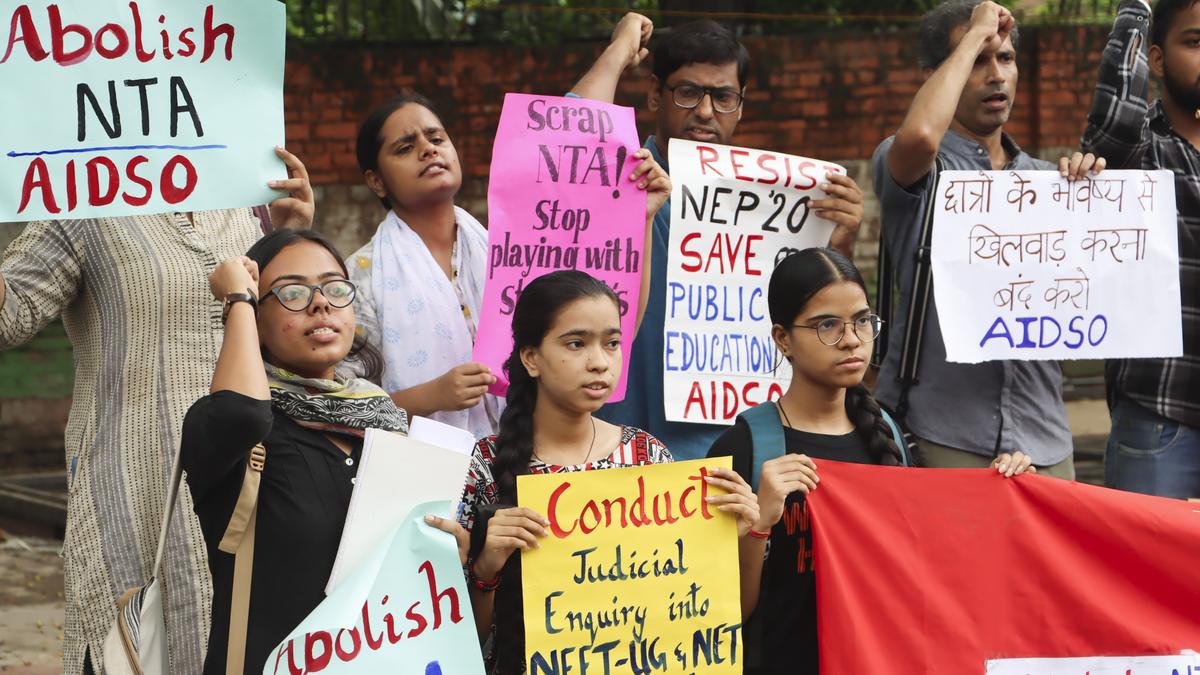
Summary: India’s social media landscape is witnessing one of its biggest digital storms of 2026. The alleged NEET UG 2026 paper leak has triggered an explosive social media reaction across India, with Twitter, Instagram, and WhatsApp flooded with angry posts, viral videos, and trending hashtags demanding justice for over 22 lakh medical aspirants.
Background: What Sparked the Outrage?
The NEET UG 2026 examination was conducted on May 3, 2026, across more than 5,400 centres in India and 14 cities abroad. Over 22.7 lakh students appeared for the exam — India’s biggest undergraduate medical entrance test. Within days of the exam, a social media reaction in India began building rapidly as disturbing allegations of a paper leak surfaced on X (formerly Twitter).
Videos began circulating on X showing screenshots of Telegram group chats allegedly dated May 1 two days before the exam in which users claimed to be selling the NEET UG 2026 question paper for Rs 10,000. The viral content spread quickly across every major social media India app, from WhatsApp groups to Instagram reels, sending shockwaves through the student community
Details: How the Crisis Unfolded on Social Media
The social media reaction India witnessed was swift and intense. An X user tagged the National Testing Agency (NTA) directly, writing a public appeal demanding immediate transparency and justice. The post gained thousands of shares within hours, becoming a launchpad for a broader national conversation.
The Rajasthan Special Operations Group added fuel to the fire when reports emerged that investigators had found a handwritten suggestion paper whose 120 questions matched the actual NEET paper including 90 Biology and 30 Chemistry questions. This revelation pushed social media reaction in India into overdrive, with hashtags like #NEETPaperLeak and #NEETUG2026 trending across Twitter India for multiple consecutive days.
The NTA denied all paper leak allegations, calling the viral video fake and confirming that an investigation was underway. Despite this, the social media India app ecosystem remained unrelenting in its criticism. Screenshots, reels, and WhatsApp forwards continued spreading across every platform.
India’s social media reaction today reflects the scale of the distrust. One widely shared post on X read: “Can a Rs 10,000 Telegram message really buy someone a medical seat?” — a question that resonated deeply with millions of students, parents, and educators following the controversy.
Quotes: What Officials and Users Are Saying
Opposition leader Rahul Gandhi responded sharply on social media, calling the situation an auction rather than an examination. His comment amplified the social media reaction India had already been building, drawing in political voices alongside student and academic communities.
The Indian Medical Association has reportedly urged the government to decentralize the conduct of NEET and take strict action against those found responsible. Education analysts and experts have also weighed in across social media India app platforms, pointing out that several reforms recommended after the 2024 NEET controversy were never fully implemented before the 2026 exam.
The Central Bureau of Investigation (CBI) has now taken up the investigation, adding official gravity to what began as a social media reaction India could not ignore.
The Scale of India’s Social Media Power
To understand why this social media reaction in India carries such weight, the numbers speak for themselves. As of 2026, India has over 500 million social media users, making it the second-largest social media market in the world, behind only China. An average Indian spends approximately 2 hours and 50 minutes daily on social media platforms.
WhatsApp leads with over 531 million active users, followed by Instagram with around 517 million, and Facebook with nearly 493 million. X (Twitter) remains a critical platform for breaking news and public discourse, with around 368 million monthly users globally and India is one of its most active markets.
The social media India app landscape is therefore not just a digital pastime. It is a powerful civic tool that can amplify controversies, shape government responses, and hold institutions accountable in real time. The NEET 2026 controversy is only the latest example of this.
Twitter India Today: What’s Trending Beyond NEET
While the NEET paper leak dominates the social media reaction India conversation, Twitter India today is buzzing with several other topics. The Somnath Temple’s 75th reconstruction anniversary has drawn patriotic posts and hashtag campaigns. Trade deal conversations around #IndiaUSTradeDeal are gaining traction among business and policy communities. Sports, Bollywood, and cricket updates continue to generate millions of daily interactions.
This shows that the social media India app environment is deeply multidimensional. Users switch seamlessly between political outrage, cultural pride, and entertainment often within the same scrolling session. The social media reaction India delivers on any given day is a real-time mirror of the nation’s mood.
Impact: Why This Matters Beyond Twitter
The social media reaction India is generating around NEET 2026 has consequences that extend well beyond viral tweets. Over 22 lakh students who sat for the exam now face uncertainty about their results, counselling timelines, and academic futures. Medical institutions, coaching centers, and parents are demanding reforms.
The controversy has also reignited a broader debate about India’s digital governance specifically, the challenge of preventing misinformation while protecting legitimate whistleblowing on platforms like X and Telegram. The sociological challenge for India in 2026 is balancing freedom of expression with preventing the organized spread of harmful or manipulative content.
Social media platforms have become the first and fastest responders in national crises. Governments, regulatory bodies, and institutions are now forced to respond not just through press releases but through their own social media India app presence often within hours of a controversy breaking.
Conclusion: What Comes Next
The CBI investigation is ongoing, and the results of NEET UG 2026 are yet to be officially declared. Petitions and legal challenges are expected as the probe progresses. Students, civil society organizations, and political parties have all signaled that they will continue using social media platforms to demand accountability.
The social media reaction India has displayed over the NEET 2026 controversy is a defining moment in how digital citizens engage with institutional failure. As India moves toward potentially 1.3 billion social media users by 2029, the power of collective online voices will only grow stronger.
For now, Twitter India today remains a battlefield of frustration, demand, and hope where every hashtag carries the weight of a young student’s future.
FAQs
Who is the social media influencer named India?
“India” as a social media influencer name refers to various content creators who use that branding across platforms like Instagram, TikTok, and YouTube. In the Indian context, the term more broadly refers to the massive community of Indian digital creators and influencers who shape public conversation on platforms like X, Instagram, and YouTube. India is home to millions of micro and macro influencers who drive trends across fashion, politics, education, and entertainment every single day.
Do people in India use social media?
Yes, very actively. As of 2026, India has over 500 million social media users, accounting for around 34.25% of the country’s total population. India ranks second globally in total social media users. WhatsApp, Instagram, Facebook, and X are the most widely used platforms. The average Indian spends close to three hours daily on these apps, and by 2029, India is projected to become the world’s largest social media market with over 1.3 billion users.
What are the challenges of social media in India?
India faces several significant challenges in its social media landscape. Misinformation and fake news spread rapidly on platforms like WhatsApp and X, often fueling communal tensions or public panic. The digital gender gap remains wide, with men accounting for nearly 65–70% of users on most platforms. Exam leaks and scams increasingly exploit messaging apps like Telegram. Additionally, the lack of strong digital literacy, especially in rural areas, makes millions of users vulnerable to manipulation. Regulatory frameworks are still catching up with the pace of platform growth, and the tension between free expression and harmful content moderation continues to challenge policymakers.