

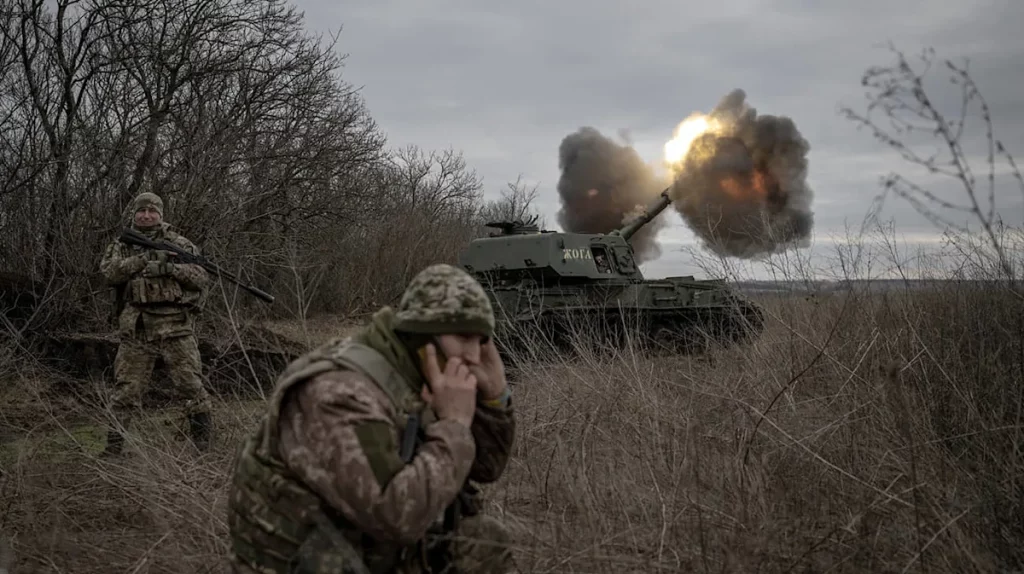

The Russia-Ukraine war latest news today brings fresh reports of deadly strikes on both sides, Ukraine’s bold drone campaign hitting Russia’s biggest online retailer, and a brutal death toll that has now crossed 2 million combined casualties. More than four years since Russia launched its full-scale invasion, the question on everyone’s mind remains the same: who is winning the war in Ukraine and is there any end in sight?
Today’s Attacks: Fresh Strikes Hit Both Countries
The Russia-Ukraine war today began with more bloodshed on both sides of the front line. According to officials and reports from August 3, 2026, Russian forces struck a petrol station near Ukraine’s Kryvyi Rih, killing three people including an eight-year-old child and an emergency worker who had rushed to help.
Russian missiles also hit food warehouses in Dnipro, sparking a major fire that lit up the city skyline. Infrastructure in Ukraine’s Odesa region was targeted again, leaving several people injured. Ukraine’s leadership warned that the continuing strikes on Odesa ports are not just an attack on Ukraine they threaten global food supplies for millions of people worldwide.
On the Russian side, drone debris from Ukrainian strikes fell on the resort village of Arkhipo-Osipovka near Gelendzhik in Krasnodar, killing seven people including three children and wounding nearly 40 others. The Russia-Ukraine war map live updates show that the front line in eastern Donetsk remains the most active zone, with Russia continuing to push toward key cities in the region.
Russia-Ukraine War Map: Where Things Stand Right Now
Anyone following the Russia Ukraine war map closely knows that the front line has shifted significantly over the past several months. Russia currently occupies approximately 18 to 20 percent of Ukraine’s internationally recognized territory, including Crimea, most of Luhansk, and large parts of Donetsk, Zaporizhzhia, and Kherson regions.
The front line stretches nearly 1,000 kilometers from the Kharkiv region in the north all the way down to the Dnipro River in the south. Fighting is most intense around Donetsk, where Russian forces are trying to push deeper toward cities like Kostiantynivka and the surrounding areas that form Ukraine’s so-called Donbas fortress belt.
However, the Russia Ukraine war map live picture shifted notably in 2026. In April and May of this year, Ukraine actually recorded net territorial gains for the first time since 2024. Russia lost more ground than it captured in both of those months, a total net loss of roughly 400 square kilometers. That reversal surprised many analysts and raised fresh questions about Russia’s ability to sustain its offensive pace.
Who Is Winning the War in Ukraine?
This is the question that analysts, governments, and ordinary people around the world keep asking and the honest answer is: it depends on how you measure it.
On the battlefield, Ukraine has been gaining tactical momentum in 2026. For the first time since mid-2024, Ukrainian forces were reclaiming more territory than they were losing. Russia’s casualty rate has risen dramatically, with some Western analysts estimating losses of over 30,000 Russian soldiers per month. That pace, according to the Center for Strategic and International Studies (CSIS), now exceeds Russia’s recruitment rate of roughly 27,000 new soldiers per month.
Ukraine’s drone campaign has also matured into one of the most effective long-range strike programs in modern warfare. Ukrainian drones have hit Russian oil refineries, military logistics hubs, ammunition depots, and most recently warehouses belonging to Russia’s largest online retailer Wildberries. In Crimea, Ukraine’s new Magura naval drone struck Russian ground targets for the very first time on August 3, 2026, a significant new development in the conflict.
But Russia still controls vast amounts of Ukrainian territory. It still has a larger military, a bigger defense budget, and a population roughly four times the size of Ukraine’s. Russia’s war economy has adapted to sanctions, and Moscow has shown no sign of backing away from its war aims.
The Russia-Ukraine war who is winning question does not have a clean answer. Ukraine is holding. Ukraine is fighting back harder than many expected. But this war is still going on, and it is far from over.
Russia-Ukraine War Death Toll: A Devastating Human Cost
The Russia-Ukraine war death toll has now reached levels not seen in any conventional war since the Korean War. According to a major study by the Center for Strategic and International Studies published in July 2026, combined casualties soldiers killed, wounded, or missing on both sides have surpassed 2 million people.
Russia has suffered by far the heavier losses. CSIS estimated approximately 1.4 million Russian casualties, including around 450,000 killed. Independent Russian investigative outlet Mediazona had confirmed at least 352,000 named Russian deaths as of May 2026, while noting the real figure is almost certainly far higher.
Ukraine’s military losses are estimated at between 525,000 and 625,000 casualties, including 125,000 to 150,000 soldiers killed, according to CSIS figures. The Ukrainian government does not release its official death figures, but Western intelligence assessments broadly align with these ranges.
On the civilian side, the United Nations has verified over 65,000 civilian casualties in Ukraine as of June 2026, including more than 15,000 verified deaths. UN officials have repeatedly stressed that the true civilian death toll is almost certainly much higher, as many areas under Russian occupation are inaccessible to independent monitors.
The Russia-Ukraine war death toll, in short, represents one of the worst humanitarian disasters of the 21st century. Every day that the Russia Ukraine war is still going on, these numbers continue to grow.
Ukraine’s Wildberries Strikes: Why Is Ukraine Attacking Russia’s Amazon?
One of the most dramatic recent developments in the Russia-Ukraine war today is Ukraine’s sustained drone campaign against Wildberries Russia’s equivalent of Amazon, which controls nearly 50 percent of Russia’s entire online retail market.
Starting in mid-July 2026, Ukraine launched a series of drone strikes against Wildberries logistics warehouses across multiple Russian regions. By early August, at least 17 percent of Wildberries’ total warehouse space had been destroyed or damaged, according to reporting by Forbes Russia. Financial losses for sellers on the platform could reach between 215 and 280 billion rubles roughly $2.7 to $3.5 billion according to analysts cited by Ukrainian media.
The reason Ukraine is attacking Wildberries is specific and strategic. Ukrainian President Volodymyr Zelenskyy stated directly that the strikes targeted Wildberries because its logistics centers were being used to supply the Russian army with drone components, navigation equipment, and other military hardware. The company’s website lists a range of military-related equipment, including drone parts and body armor. Its banking arm was also sanctioned by the European Union in July 2026 for its financial contribution to Russia’s state budget.
On August 3, 2026, another Wildberries warehouse was struck in Vladimir Oblast, with two people injured. A separate strike the same day also hit Belgorod State Technological University, where Russian drones were reportedly developed and tested.
Ukraine has called this campaign its “long-range sanctions” strategy targeting the Russian economic infrastructure that directly or indirectly sustains the war effort.
Peace Talks: Why Are They Going Nowhere?
Despite multiple rounds of diplomacy, including US President Donald Trump’s direct engagement and trilateral talks in Abu Dhabi earlier in 2026, peace in this war remains distant. Sources familiar with the negotiations told RBC-Ukraine on August 3, 2026, that peace talks have “little chance of success” at this stage.
Russia has continued to insist on maximalist demands including Ukraine withdrawing from the roughly 30 percent of Donetsk Oblast it still controls. Those terms are entirely unacceptable to Kyiv. Ukraine’s presidential chief of staff said on August 3 that Ukraine “will continue its campaign to pressure Russia,” signaling no imminent change in strategy.
The US made a “discouraging statement” regarding Patriot air defense licenses for Ukraine on the same day, adding to concerns about Western military support sustaining its current pace. At the same time, Ukraine and the UK are actively discussing joint anti-ballistic defense projects, suggesting Kyiv continues to seek new partnerships to compensate for any gaps.
Russia Is Shifting Tactics
Security analysts have noted a significant shift in how Russia is now fighting this war. Russian forces are increasingly deploying ballistic missiles alongside jet-powered Shahed drones a combination designed to overwhelm Ukraine’s air defenses by attacking from multiple directions at different speeds simultaneously.
Ukraine’s air defense systems have intercepted the vast majority of incoming drones over the past year, but ballistic missiles are far harder to shoot down and require specialized systems like the Patriot, which Ukraine has in limited numbers. Russia’s new approach exploits this gap deliberately.
Meanwhile, Russian losses are reaching 40,000 a month, according to Ukrainian military reporting as of August 3, 2026 a rate so high that analysts are asking whether Vladimir Putin will be forced to announce a new wave of military mobilization to sustain the offensive.
Is the Russia-Ukraine War Still Going On?
Yes. Emphatically, definitively yes. The Russia Ukraine war is still going on, and it shows no signs of ending in the immediate future. More than four years after Russia launched its full-scale invasion on February 24, 2022, both countries are still exchanging attacks daily. The front line remains active across hundreds of kilometers of eastern and southern Ukraine.
The war has now lasted longer than many early analysts predicted, outlasted multiple rounds of ceasefire speculation, and survived enormous pressure from both allies and adversaries on both sides to reach some kind of agreement. Ukraine is still fighting. Russia is still attacking. And the world is still watching.
Global Impact of the Russia-Ukraine War
The ripple effects of this war extend far beyond Europe. Ukraine’s Odesa officials warned on August 3 that disruption to Black Sea shipping threatens a global hunger risk, as Ukraine is one of the world’s largest exporters of grain and sunflower oil.
Disruptions in the Black Sea, along with tensions in the Strait of Hormuz and the Bab al-Mandeb, are squeezing global shipping routes simultaneously raising costs for consumers across Asia, Africa, and the Middle East. Countries that depend on Ukrainian grain imports face serious food security pressures.
Europe is meanwhile continuing to scale up its military support for Ukraine following the significant reduction in US aid since early 2025. The UK, France, Germany, and Poland have all deepened their commitments, while Ukraine’s defense spending has surged from $6.9 billion in 2021 to roughly $71 billion in 2025 almost entirely funded by external aid.
FAQs
Why was Ukraine attacked by Russia?
Russia’s decision to launch a full-scale invasion of Ukraine on February 24, 2022, came after years of escalating tension between the two countries. Russian President Vladimir Putin justified the attack by claiming Russia was conducting a “special military operation” to achieve the “demilitarization and denazification” of Ukraine terms widely rejected as pretexts by Western governments, international legal experts, and independent analysts around the world. The deeper roots of the conflict lie in Ukraine’s growing alignment with NATO and the European Union, which Moscow viewed as a direct security threat on its western border. Russia had already occupied Ukraine’s Crimea peninsula in 2014 and supported separatist forces in eastern Ukraine’s Donbas region for eight years before the 2022 invasion.
Who is stronger, Russia or Ukraine?
By almost every conventional measure of military power troop numbers, weapons stockpiles, defense budget, nuclear arsenal, and population size Russia is significantly larger and stronger than Ukraine. Russia’s military before the invasion was considered one of the largest and most equipped in the world, with a population of roughly 144 million compared to Ukraine’s 44 million. However, the question of who is stronger in this specific war has become far more complicated as the conflict has progressed. Ukraine has fought far more effectively than most analysts predicted in February 2022, receiving enormous quantities of military aid from NATO allies, including artillery, air defense systems, tanks, and long-range missiles. Ukraine has also developed a world-leading drone program that has allowed it to strike deep inside Russian territory, including hitting Moscow itself. According to CSIS data from 2026, Russia’s casualty rate is now roughly eight times higher than Ukraine’s meaning for every Ukrainian soldier lost, Russia is losing approximately eight. That ratio represents a dramatic shift from earlier in the war and suggests that while Russia is physically larger, Ukraine has significant advantages in motivation, adaptability, and the quality of its Western military support.
Why are Ukraine attacking Wildberries?
Ukraine’s drone strikes on Wildberries warehouses are not random economic warfare they are a deliberate and legally argued military strategy. President Zelenskyy confirmed that the strikes specifically targeted Wildberries logistics facilities because the company was directly contributing to Russia’s military supply chain. Wildberries openly lists drone components, navigation equipment, and body armor on its platform, and Ukrainian officials say its warehouses were being used to source and move military hardware to Russian forces. Ukraine has described this campaign as “long-range sanctions” a way of applying direct economic and logistical pressure on Russia’s ability to sustain the war when conventional sanctions have not been enough. Under international law, civilian infrastructure can become a legitimate military target if it is making an effective contribution to military action, provided that precautions are taken to minimize civilian casualties.