

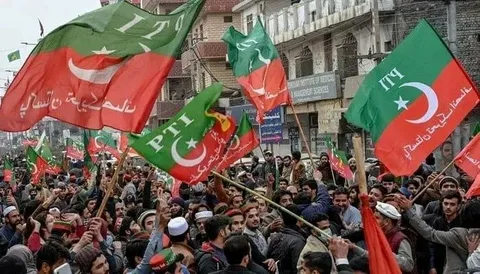

The Lahore High Court has disposed of a petition seeking permission for a PTI rally at Minar-i-Pakistan after the Lahore deputy commissioner refused to approve the proposed gathering. The court observed that the petitioner could challenge the administrative decision through the appropriate legal process.
The development comes as Pakistan Tehreek-i-Insaf continues its political activities across the country. The party had planned demonstrations to mark three years since the imprisonment of its founder, Imran Khan, while calling for his release.
Background
The dispute began after PTI Lahore President Mian Akram Usman sought permission for a public gathering at Minar-i-Pakistan. According to the petition, the party had submitted an application for a no-objection certificate on July 22.
The petitioner said the application included assurances that the party would follow security, traffic and other administrative requirements. However, he alleged that the district administration did not provide a clear response despite repeated follow-ups.
The issue eventually moved to the Lahore High Court, where the PTI sought judicial intervention over the proposed political gathering.The case has become another example of the tension between political parties seeking to organise public events and administrative authorities responsible for maintaining public order.
Lahore High Court Proceedings
During Wednesday’s hearing, Justice Mirza Viqas Rauf asked the law officer appearing for the government to obtain instructions from the deputy commissioner.
When the hearing resumed, the court was informed that the deputy commissioner had rejected the PTI’s request following a high-level meeting. The government side said that the rally could not be permitted because of potential terrorist threats in Lahore.
The court then questioned the legal basis for granting permission after the district administration had already taken a decision on the application.
Justice Rauf subsequently disposed of the petition. The judge also indicated that if the PTI was dissatisfied with the deputy commissioner’s decision, it could challenge that order through the appropriate legal remedy.
Why Was Permission Refused?
The main reason presented before the court was the security situation in Lahore. Authorities raised concerns about possible terrorist threats and the security challenges associated with holding a large political gathering.
Large public events require considerable arrangements involving police, traffic management, emergency services and other departments. In a city facing security concerns, authorities often assess whether adequate resources are available before approving a major gathering.
For PTI supporters, however, the issue is also connected to the broader question of political participation and the right to hold peaceful demonstrations.
The party’s petition argued that constitutional protections relating to peaceful assembly, freedom of association and freedom of expression should be taken into consideration when deciding applications for political gatherings.
PTI’s Position
PTI maintained that it had approached the authorities through the proper administrative process before moving to the court.The party’s Lahore president said the request for permission had been submitted well in advance and that the organisers had offered to comply with security and traffic requirements.
The petition also alleged that the lack of a formal response from the district administration had effectively prevented the party from making arrangements for the event.From the PTI’s perspective, the matter was therefore not simply about a venue. It also raised concerns about how political parties can exercise their constitutional rights when seeking permission for public gatherings.
Government and Security Concerns
The government position presented before the court focused primarily on security. The law officer told the court that the deputy commissioner had rejected the application because of potential terrorist threats in Lahore.
Security remains an important consideration whenever thousands of people are expected to gather at a major public location.Minar-i-Pakistan is one of Lahore’s most prominent public spaces and has historically been associated with major political gatherings. Any large event there requires extensive planning because of the expected crowd, traffic movement and surrounding public areas.
The district administration therefore has to balance requests for political activity with its responsibility to protect residents, participants and public property.
PTI Political Activities Across Pakistan
The Lahore dispute comes at a time when PTI is continuing political mobilisation in different parts of Pakistan.The party announced countrywide protests on Wednesday to mark three years since Imran Khan’s imprisonment. A gathering in Peshawar was described as the centrepiece of the campaign.
The PTI has repeatedly used public demonstrations as a way of keeping pressure on the government and highlighting its demands. Its supporters have also continued to call for the release of the party founder.
The latest developments are therefore being closely followed as part of the wider Pakistan politics landscape.For people searching for Breaking News in Pakistan Today, the court decision is significant because it affects a major political party’s planned public activity in Lahore.
Political Context in Pakistan
Pakistan politics has remained highly active, with political parties frequently organising rallies, demonstrations and public campaigns.The debate over public gatherings often involves two competing considerations. Political parties argue that peaceful demonstrations are an important part of democratic participation, while authorities are responsible for assessing security and maintaining public order.
This balance has become particularly important when large crowds are expected.The latest Lahore High Court proceedings show how disputes over political gatherings can quickly move from administrative offices to the courts.
For audiences following Pakistan News Today Live, the case also highlights the continuing interaction between political parties, local administrations and the judiciary.
What the Court Decision Means
The Lahore High Court did not grant permission for the PTI rally. Instead, it disposed of the petition after being informed that the deputy commissioner had already rejected the request.
The court indicated that the petitioner could challenge the deputy commissioner’s order if the party believed the decision was legally incorrect.
This means the dispute may not necessarily end with the disposal of the current petition. The PTI can consider the legal options available to it under the relevant procedure.The immediate outcome, however, is that the requested rally permission was not granted through the petition heard by the LHC.
Rights and Responsibilities
Political gatherings are an important feature of democratic societies, but organisers also have responsibilities when planning large events.Authorities typically consider crowd control, emergency access, traffic arrangements and public safety before approving major gatherings.
At the same time, political parties expect administrative decisions to be transparent and consistent. This is especially important when public gatherings involve large numbers of citizens and politically significant issues.The latest case illustrates why decisions involving political rallies can become sensitive matters for both governments and opposition parties.
Pakistan Government and Public Security
The role of the Pakistan Government and local administrations in maintaining public safety remains central to discussions surrounding major political events.
While political parties have the right to organise peaceful activities within the law, government agencies also have a duty to respond to credible security threats.
The challenge is finding a practical balance between security requirements and democratic participation.This debate is likely to remain relevant as Pakistan continues to experience intense political competition and frequent public demonstrations.
People following Pakistan International news are also watching these developments because political stability and public security in Pakistan can influence the country’s wider economic and diplomatic environment.
Wider Political Impact
The decision could have an impact on PTI’s political mobilisation in Lahore. Minar-i-Pakistan is a symbolic location, and political gatherings there can attract significant public and media attention.
The party may now consider alternative legal or political options following the rejection of its request.The development could also contribute to further debate over how permissions for political rallies are handled in major Pakistani cities.For supporters and critics alike, the case is likely to remain part of the wider discussion surrounding Pakistan politics and political rights.
Media and Public Reaction
Political developments in Pakistan are closely followed by television networks, newspapers and online platforms.Audiences looking for BBC news about Pakistan Today, Pakistan Geo News updates or other news coverage are likely to encounter continuing discussion about PTI’s political activities and the government’s response.
Social media has also become an important source of information for political supporters. However, claims circulating online can sometimes lack context, making verified reporting especially important during politically sensitive events.Readers should distinguish between confirmed statements from courts and government authorities and unverified claims shared through social media.
What Happens Next?
The immediate legal route available to PTI is to consider challenging the deputy commissioner’s order through the appropriate legal process.Whether the party chooses to pursue that option, change the proposed venue or organise its activities elsewhere will depend on its future political strategy.
The administration, meanwhile, is expected to continue assessing security conditions before approving major public gatherings.The situation will therefore remain relevant for anyone following Breaking News in Pakistan Today, particularly developments involving PTI, Lahore and the country’s political environment.
Conclusion
The Lahore High Court’s decision has closed the current petition seeking permission for a PTI rally at Minar-i-Pakistan after the deputy commissioner rejected the request on security grounds.The court did not approve the gathering and instead pointed the petitioner toward the appropriate legal remedy for challenging the administrative decision.The case highlights a continuing challenge in Pakistan: ensuring that political parties can conduct peaceful activities while authorities address genuine security and public-order concerns.As PTI continues its political campaign and the government manages security arrangements, further developments could shape the next phase of political activity in Lahore and elsewhere in the country.
Frequently Asked Questions
Why is there a protest in Pakistan today?
PTI announced countrywide protests to mark three years since the imprisonment of party founder Imran Khan and to demand his release. The party’s political campaign includes public gatherings and demonstrations in different parts of the country. The planned activities have attracted significant attention because they come amid continuing political tensions between PTI and the government.
Which is the strongest party in Pakistan?
There is no single objective measure that permanently establishes which political party is the strongest in Pakistan. Political strength can be assessed through election results, parliamentary representation, public support, organisational structure and regional influence. PTI remains a major political force with a large and active supporter base, while the PML-N and PPP also have significant political influence and organisational networks.
Is KPK under PTI?
Khyber Pakhtunkhwa has traditionally been a strong political base for PTI, and the party has held significant electoral and governmental influence in the province. PTI’s political organisation and support in Khyber Pakhtunkhwa have remained important to its national political strategy. The province also continues to play a central role in the party’s public campaigns and political gatherings.