

Summary
The Pakistan Peoples Party brought two government bills on gas-sector revenue to a halt on Friday. The move came inside the National Assembly Standing Committee on Petroleum, where PPP lawmakers used their numbers to put off any vote.
It is the latest sign that the PPP government rift with Prime Minister Shehbaz Sharif’s coalition has not cooled down. Gas revenue bills Pakistan watchers were tracking closely are now stuck, and nobody in Islamabad is promising a quick fix.
Background
For weeks, the PPP has been pulling back its support for government legislation. The party is not a formal member of the ruling coalition, but it has propped up the PML-N-led setup in parliament since the last general election.
That arrangement has been fraying since August, when PPP lawmakers stalled a full slate of 21 bills in the National Assembly. The party’s grievances center on the recent Azad Jammu and Kashmir elections, delays in judicial appointments, and open talk within government ranks about carving out new provinces. PPP chairman Bilawal Bhutto Zardari has said publicly that no move on new provinces should happen without the consent of the people affected.
Details
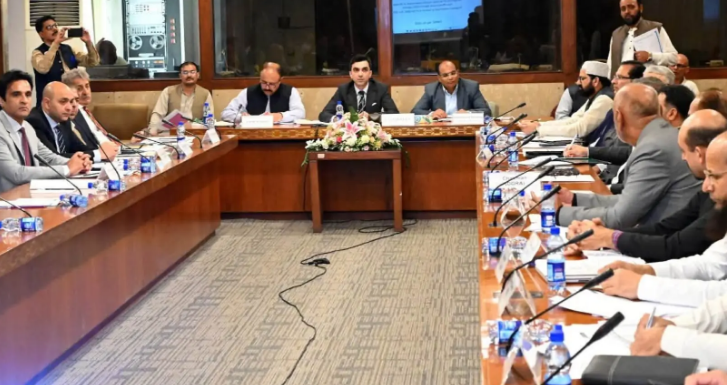
Friday’s session of the National Assembly Standing Committee on Petroleum was chaired by PPP’s own Syed Mustafa Mehmood. Before the meeting even got into its agenda, senior PPP lawmaker Syed Naveed Qamar asked that two bills be set aside rather than debated.
The first was an amendment to the law governing the Natural Gas Development Surcharge. The second touched the Gas Infrastructure Development Cess, better known as GIDC. The Petroleum Division had wanted to widen what GIDC money can be spent on. Right now those funds are earmarked for specific pipeline projects: Pakistan-Iran, Turkmenistan-Pakistan, and domestic gas lines. The proposed change would have let the government also tap GIDC funds for strategic oil and gas reserves.
There is real money sitting behind this fight. Roughly Rs295 billion in GIDC funds is sitting unused in the public treasury. Separately, more than Rs400 billion collected from consumers by fertiliser companies has never made it into the national exchequer, tied up by ongoing legal disputes. Pakistan gas revenue figures like these explain why both sides are digging in.
Both bills have now been pushed down the road, with no new date set for the committee to take them up again.
Quotes
Speaking to reporters after the meeting, Naveed Qamar made clear the PPP does not see itself as bound to the government the way a formal coalition partner would be. He said his party had been supporting the government voluntarily, but that support cannot keep flowing in one direction indefinitely.
Qamar added that PPP had already flagged its concerns, including those tied to the AJK vote and judicial appointments, and that the government had promised action but delivered little. Until there is visible movement on those issues, he said, the PPP will not back government bills in parliament.
Committee chairman Mustafa Mehmood weighed in on the substance of the gas dispute too. He argued that fertiliser manufacturers should not keep receiving subsidised gas if the savings never reach the farmers who buy their product.
Impact
The immediate effect is financial. Energy planners had counted on the GIDC changes to help fund strategic reserves, a project meant to cushion Pakistan against sudden supply shocks. That plan is now on hold.
There’s a wider political cost too. A PPP government rift that keeps blocking legislation slows down the entire reform agenda the finance ministry has promised to lenders and investors. Every stalled bill adds to a growing list of unfinished business in the National Assembly, and gas-sector reform was already moving slower than officials wanted.
Ordinary gas consumers are watching from the sidelines, somewhat literally caught in the middle: unresolved GIDC cases mean pending surcharge dues and refund questions stay unsettled for both households and industry.
Conclusion
Neither party has signaled it’s ready to blink first. The PPP has tied its cooperation to progress on AJK elections and judicial appointments, issues that sit well outside the petroleum ministry’s control. Until those political knots are untangled, gas revenue bills Pakistan needs to modernize its energy financing look set to stay parked in committee.
Government sources say back-channel talks with PPP leadership are ongoing. Whether that produces a breakthrough before the next committee sitting remains to be seen.
Frequently Asked Questions
Who is the CEO of OGDCL?
Ahmed Hayat Lak serves as the Managing Director and CEO of the Oil and Gas Development Company Limited. He was first appointed to the role in February 2023 and was later reappointed for a fresh three-year term starting January 2024. Before taking charge as MD/CEO, he worked as OGDCL’s Company Secretary and headed its Legal Services division, and he also sits on the boards of Mari Petroleum and Reko Diq Mining Company.
Which is the second largest gas field in Pakistan?
The Mari gas field, located in Daharki, Ghotki District in Sindh, is widely regarded as Pakistan’s second-largest gas field, ranking behind the Sui field in Balochistan, which remains the country’s biggest natural gas discovery. Mari is operated by Mari Petroleum and has been supplying gas uninterrupted for more than five decades, playing an outsized role in powering the country’s fertiliser industry.
Where does Pakistan buy gas from?
Pakistan meets a large share of its gas shortfall through imported liquefied natural gas, most of it bought from Qatar under long-term government-to-government agreements. When Qatari deliveries are delayed or domestic demand spikes beyond planned volumes, state-run Pakistan LNG Limited also turns to the spot market, occasionally sourcing cargoes from suppliers in the United States and elsewhere to plug short-term gaps.