The only newborn who had survived last month’s devastating nursery fire at the Pakistan Institute of Medical Sciences (PIMS) in Islamabad has died. The infant had been fighting for life on a ventilator for weeks after being pulled from the blaze.
Hospital officials confirmed that the baby passed away late Wednesday night at PIMS Children’s Hospital. She had remained in intensive care since the incident, battling severe complications caused by smoke inhalation.
Background of the PIMS Hospital Fire
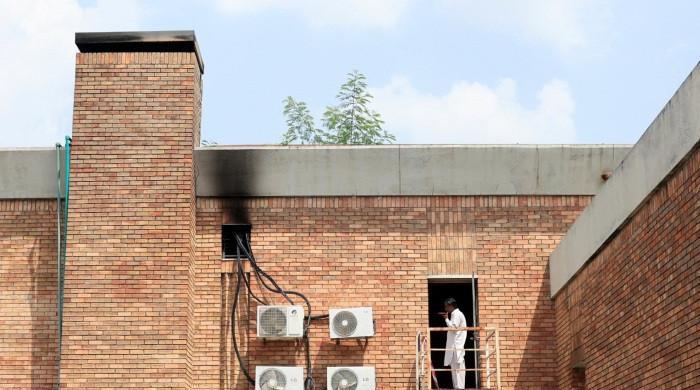
The fire broke out on August 26 inside the neonatal nursery of PIMS’ Mother and Child Hospital. At the time, fifteen newborns were being cared for in a unit that officials later said was built to hold only ten patients.
Fourteen of the infants died in the blaze itself. Only one baby, a premature girl identified by family members as Aizal, was pulled out alive by a hospital nurse. Her survival had offered a brief moment of hope amid the national grief that followed the disaster.
What Happened in the Final Days
According to hospital sources, the surviving infant never fully recovered from the smoke damage to her lungs. She remained dependent on a ventilator throughout her treatment, with doctors monitoring her condition closely in the weeks after the fire.
Her mother, Asifa Bibi, later told local media that the baby had been born on August 12 and was just over six months old at the time of the fire. The infant was the family’s first child.
With her death, every newborn who was present in the nursery on the night of the fire has now lost their life, bringing the confirmed toll to fifteen.
Nurse Honoured for Rescue Attempt
Days before the infant’s death, President Asif Ali Zardari approved a Tamgha-i-Shujaat, one of Pakistan’s civil bravery awards, for PIMS nurse Razia Noreen. She had risked her own safety to enter the burning nursery and carry the surviving baby out.
Prime Minister Shehbaz Sharif had separately met the nurse and presented her with a cheque worth Rs 10 million in recognition of her actions.
Quotes from Officials
A PIMS spokesperson confirmed the death to international media, stating simply that the hospital’s only surviving nursery-fire patient had passed away.
A government inquiry into the fire had earlier found that the blaze escalated with alarming speed, with conditions inside the nursery becoming critical within roughly two minutes of ignition.
Impact of the Tragedy
The fire and the infant’s subsequent death have intensified public scrutiny of safety standards at Pakistan’s public hospitals. A final inquiry report pointed to a damaged electrical cable connected to an air-conditioning unit as the likely source of ignition.
Investigators also found that PIMS had received earlier warnings about fire-safety gaps, including after a smaller fire at a nursing hostel on the same campus weeks before the nursery blaze. Those warnings, the report said, were not acted upon with a proper corrective plan.
Islamabad police have since opened criminal proceedings against several hospital officials in connection with the fire.
Conclusion
The death of the last surviving infant closes one of the most tragic chapters in Pakistan’s recent public-health history. Authorities say the criminal investigation and safety-reform process are ongoing, and further findings on accountability are expected in the coming weeks.
Frequently Asked Questions
What happened in PIMS hospital Islamabad?
A fire broke out on August 26 inside the neonatal nursery of the Mother and Child Hospital at PIMS in Islamabad. Fifteen newborns were in the unit at the time; fourteen died in the fire, and one infant was rescued alive by a nurse but later died from her injuries after weeks of treatment, bringing the total deaths to fifteen.
What does PIMS stand for?
PIMS stands for the Pakistan Institute of Medical Sciences, a major public hospital and teaching institution located in Islamabad that provides specialized medical care, including maternal and newborn services.
What was the reason for the fire?
A government inquiry concluded that the fire most likely started from a damaged electrical supply cable connected to an air-conditioning unit in the nursery, which caused localized heating that ignited nearby combustible material. Investigators also found that earlier fire-safety warnings at the hospital had not been properly addressed.