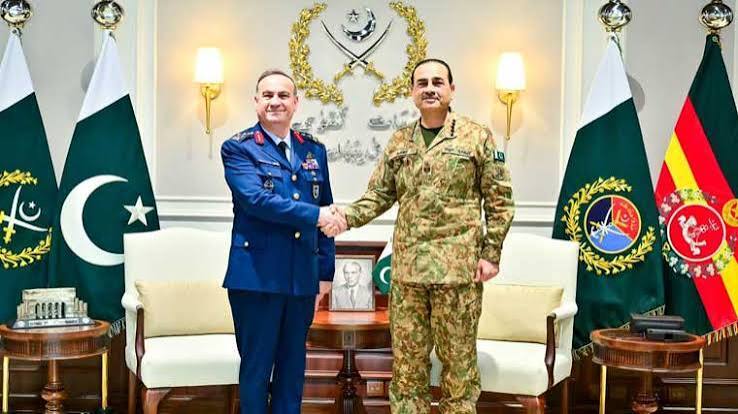
Pakistan Turkiye defence cooperation has taken another step forward after the heads of both air forces met on Wednesday, November 18, 2026. Air Chief Marshal Zaheer Ahmed Baber Sidhu and Turkish Air Force Commander General Rafet Dalkiran discussed joint work in unmanned and autonomous systems, electronic warfare, advanced aerospace technologies and indigenous research and production.
Background of the Partnership
Islamabad and Ankara have shared close military ties for decades, built on common values and a long record of mutual trust. Over the years the relationship has moved from basic defence trade to joint projects, training programmes and technology sharing. Today it covers air, land and sea domains.
One early milestone came in 2011, when the Pakistan Air Force inducted an Electronic Warfare Test and Training Range designed by Turkish firm HAVELSAN. In 2018 the two countries concluded a deal for 30 Turkish T129 attack helicopters. Turkiye has also built corvettes for the Pakistan Navy under its national MILGEM warship programme.
Cooperation in unmanned systems has grown more visible recently. Pakistan’s National Aerospace Science and Technology Park signed a research agreement with Turkish drone maker Baykar in 2023. In December 2025, media reports citing Bloomberg said Turkiye was preparing a combat drone assembly facility in Pakistan, although the Turkish defence ministry declined to comment at the time.
Air chiefs have also met earlier this year. In May 2026, Air Chief Marshal Sidhu visited Turkiye, where he held talks with Defence Minister Yasar Guler and with Baykar’s chief technology officer Selcuk Bayraktar. Both sides reaffirmed their commitment to broader cooperation in defence, aerospace and emerging technologies.
Details of the Latest Meeting
According to a statement from the PAF’s Directorate General of Public Relations, General Dalkiran was received at Air Headquarters with a guard of honour from a PAF contingent. The two commanders then held talks on how to widen collaboration in modern military technologies. The discussions focused on unmanned and autonomous platforms, electronic warfare capabilities and next generation aerospace systems.
Air Chief Marshal Sidhu described the partnership as a strong strategic relationship with considerable room to grow in defence and aerospace. He also assured his guest of the PAF’s full support in pilot training, professional development and capacity building for the Turkish Air Force. This offer reflects the operational experience the PAF has built over many years.
Both leaders stressed the value of regular professional exchanges, integrated training programmes and joint exercises. These steps are meant to improve interoperability, which means the two air forces can plan, communicate and operate together more smoothly in real situations. The Air Chief also briefed the visitor on the PAF’s ongoing modernisation, which relies on capability focused upgrades, homegrown innovation and investment in new operational concepts.
A day earlier, General Dalkiran called on Chief of Defence Forces and Chief of the Army Staff Field Marshal Asim Munir at General Headquarters. That meeting covered matters of mutual interest, regional security and ways to strengthen defence ties between the armed forces. The back to back meetings show that the visit carried weight across the military leadership.
Statements From Both Sides
The Turkish commander praised the PAF’s professional standing, operational skill and combat experience. He also appreciated its growing indigenous aerospace capabilities and its push for technological self reliance. General Dalkiran expressed a sincere wish to benefit from the PAF’s rich combat legacy and expertise as the two sides advance their cooperation.
Both air chiefs, according to the PAF statement, identified “substantial opportunities” for working together in the areas they discussed. The statement added that the visit reflects the growing strategic depth of the relationship and a shared resolve to build a more integrated, technology driven and forward looking defence partnership.
Why This Matters Regionally and Globally
Drones, electronic warfare and autonomous systems are now central to how modern air forces think about future conflict. Countries around the world are investing heavily in these tools, along with cyber capabilities and operations that combine air, land and digital domains. For Pakistan and Turkiye, working together in these fields could reduce dependence on outside suppliers and speed up local development.
The talks also fit into a wider diplomatic picture. Reports note that Pakistan and Turkiye are part of several defence and security arrangements, including the Makkah Defence Pact signed with Saudi Arabia in August and the Badr cooperation pact agreed in October with Qatar and Indonesia. Both countries also belong to the Regional Four group alongside Saudi Arabia and Egypt, which emerged in March and has met several times since.
For Pakistan, the partnership offers access to proven drone expertise and a reliable training and industrial partner. For Turkiye, it brings a battle tested air force and a steady market for its growing defence industry, whose exports reached record levels in 2025. Readers can follow more regional security updates in the defence news section of Pakistan Chronicle.
What Comes Next
Both air forces now appear set to turn discussions into practical steps, including more joint training, regular exchanges and shared research projects. Whether this leads to new production agreements or larger exercises will depend on follow up meetings between technical teams and defence officials. Analysts will also watch how drone manufacturing plans develop over the coming months.
For now, the message from Air Headquarters is clear. Pakistan Turkiye defence cooperation is expected to deepen in the years ahead, with technology, training and local production at the centre of the agenda. Stay with Pakistan Chronicle for verified updates and analysis of regional developments as this story moves forward.
Frequently Asked Questions
1. Who met during the latest Pakistan Turkiye defence talks?
Air Chief Marshal Zaheer Ahmed Baber Sidhu, who leads the Pakistan Air Force, met Turkish Air Force Commander General Rafet Dalkiran at Air Headquarters on November 18, 2026. The visiting commander was given a guard of honour on arrival. A day earlier he also met Field Marshal Asim Munir at General Headquarters, where regional security and defence ties were on the agenda.
2. Which technologies were discussed?
The two commanders talked about unmanned and autonomous systems, electronic warfare, advanced aerospace technologies and indigenous research, development and production. These areas are seen as central to modern air power. They also match earlier discussions held during the Pakistan Air Force chief’s visit to Turkiye in May, which included talks with the drone maker Baykar.
3. What support did Pakistan offer the Turkish Air Force?
The PAF chief assured General Dalkiran of full support in pilot training, professional development and capacity building. This builds on years of training links between the two air forces. Both sides also highlighted the need for joint exercises and integrated training so that their forces can work together more effectively when required.
4. How long has defence cooperation between the two countries been growing?
The partnership stretches back decades and has widened steadily. Notable examples include the electronic warfare training range set up for the PAF in 2011, the 2018 deal for Turkish T129 helicopters, corvettes built for the Pakistan Navy, and research agreements in drone technology signed in recent years. Each step has added trust and practical experience.
5. Why is this cooperation important for the region?
Both countries want stronger local defence industries and less reliance on imports, and shared work on drones and electronic warfare can help achieve that. The cooperation also sits within a wider network of defence arrangements involving Saudi Arabia, Qatar, Indonesia and Egypt. This gives the partnership broader strategic weight beyond the two capitals alone.