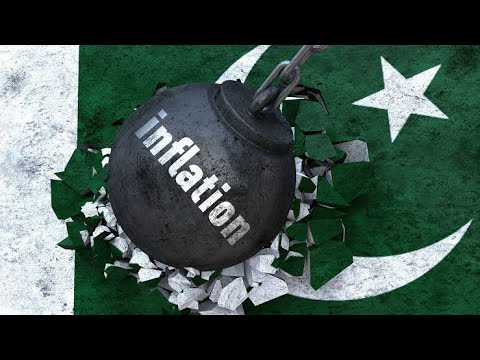
Pakistan’s inflation crisis has been one of the most severe economic shocks in the country’s history. From skyrocketing food prices to a near-sovereign default, the economic crisis in Pakistan pushed millions into poverty. Today, as Pakistan economic recovery slowly takes shape, questions remain about how long it will last and who will truly benefit.
Background: How the Economic Crisis in Pakistan Began
The economic crisis in Pakistan did not happen overnight. It built up over years of excessive borrowing, poor governance, and low productivity. The Russia-Ukraine war in 2022 sent global fuel prices soaring, hitting Pakistan especially hard. The country was already running a balance of payments deficit meaning it could not earn enough foreign exchange to pay for its imports.
By June 2022, Pakistan’s inflation hit an all-time high. Food prices surged, the Pakistani rupee lost more than 60% of its value against the US dollar, and foreign exchange reserves fell to dangerously low levels. The Pakistan inflation crisis 2022 became a national emergency that affected every household in the country.
The devastating 2022 floods made things far worse. The floods caused approximately $30–40 billion in economic losses, destroyed 9.4 million acres of farmland, killed over 1.2 million livestock, and pushed 10.5 million people into acute food insecurity. The decline of Pakistan’s economy accelerated sharply in this period.
Details: The Worst Years of the Pakistan Inflation Crisis
2023 The Peak of the Crisis
The economic crisis in Pakistan reached its most dangerous point in 2023. Pakistan stood on the verge of sovereign default for the first time in its peacetime history. In May 2023, Pakistan’s inflation rate climbed to 38%, overtaking Sri Lanka to become the highest in all of Asia. For ordinary citizens, this meant bread, fuel, electricity, and medicine all became unaffordable within a very short time.
According to the Pakistan Bureau of Statistics, inflation was above 29% in January 2023. The national poverty rate rose from 21.9% in 2018–2019 to 28.8% by 2024–202 an increase of nearly 7 percentage points driven directly by the Pakistan inflation crisis.
The Pakistan inflation crisis Wikipedia entry describes how the country’s GDP growth fell to -0.2% in 2023, meaning the economy actually shrank. Foreign currency reserves fell as low as $2.9 billion in February 2023 barely enough to cover three weeks of imports. Pakistan also faced roughly $30 billion in annual external debt obligations, further deepening the economic crisis in Pakistan.
IMF Bailout and Tough Conditions
To prevent total collapse, Pakistan turned to the International Monetary Fund (IMF). The IMF’s stabilisation package came with strict conditions including removal of subsidies, higher energy tariffs, and tight monetary controls. These measures brought short-term stability but added to the suffering of ordinary Pakistanis, who faced higher electricity bills and rising fuel costs at the same time.
Protests erupted across the country. The Markazi Muslim League organised a rally in Karachi in May 2026, marching from Arts Council to the Karachi Press Club to demand relief from inflation and petroleum price hikes. Party president Faisal Nadeem accused the government of pushing the country backwards. Such street demonstrations have become a symbol of the public frustration that the Pakistan inflation crisis 2022 onward has produced.
Quotes: Officials and Experts Speak Out
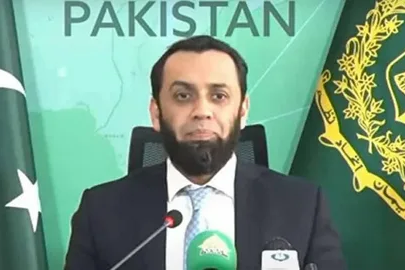
Finance Minister Muhammad Aurangzeb, presenting the Economic Survey 2024–25 on June 10, 2025, described Pakistan’s inflation journey as a “fantastic story.” He pointed out that average CPI inflation had dropped from over 29% in 2023 to just 4.6% a remarkable turnaround in a short time.
However, senior economist Sajid Amin Javed of the Sustainable Development Policy Institute (SDPI) offered a more cautious view. Speaking to Al Jazeera, he warned that this kind of “ad-hoc stabilisation” had happened before in Pakistan but was never sustained. “It dissipates as soon as the economy moves toward higher growth,” he said, adding that IMF-led stabilisation always comes at a cost to the people.
Prime Minister Shehbaz Sharif called the reduction in inflation proof that the government’s economic policies were moving in the “right direction.” In early 2025, he noted that inflation had reached its lowest level in six decades during the month of Ramadan a statement that contrasts sharply with the protests still taking place on Pakistan’s streets.
Pakistan Economic Recovery: Signs of Progress
The latest data does show real movement on Pakistan economic recovery, even if the gains are uneven.
- Inflation fell to a historic low of 0.3% in April 2025, driven by declining global commodity prices, a stable exchange rate, and tight monetary policy.
- Foreign exchange reserves rose to a record high of $16.055 billion in January 2025 a dramatic improvement from the crisis low of $2.9 billion in early 2023.
- GDP growth recovered to 2.5% in 2024, up from -0.2% in 2023, with a target of 4.2% for the following fiscal year.
- Interest rates were cut from a peak of 22% to 11%, easing borrowing costs for businesses and households.
- The KSE-100 stock index rose nearly 30% in 2024, reaching an all-time high and attracting $87 million in foreign investment the highest since 2014.
- Fitch and Moody’s both upgraded Pakistan’s credit rating in 2024, and by June 2025, Pakistan led all emerging markets in improvement in sovereign credit risk, with a 12% decline in default risk.
These are meaningful markers of Pakistan economic recovery. However, in April 2026, inflation ticked back up to 10.9% its highest in nearly two years with transport costs rising 29.9% and housing and utilities climbing 16.8%. This shows that the Pakistan inflation crisis is not fully resolved and the road to complete economic recovery remains fragile.
Impact: Regional and Global Implications
The economic crisis in Pakistan has effects that reach well beyond its borders. With a population of over 245 million the world’s fifth largest Pakistan’s economic stability matters for the entire South Asian region.
The decline of Pakistan’s purchasing power has reduced demand for imports from neighbouring countries and trading partners. Energy crises have disrupted industrial output, while mass poverty has increased pressure on already-strained public services. On the global stage, a Pakistani default would have rattled international bond markets and raised questions about IMF lending frameworks in developing nations.
The Pakistan inflation crisis also carries a social cost that does not appear in economic data. Millions of families cut meals, withdrew children from school, and deferred medical treatment during the worst years of the crisis. The Pakistan economic crisis essay that future historians will write will have to reckon with this human dimension alongside the macroeconomic statistics.
Remittances from the Pakistani diaspora particularly from the Gulf —played a stabilising role, helping families survive the worst periods of the crisis. The economic crisis in Pakistan CPF (Contributory Provident Fund) and pension pressures on government employees also grew significantly as inflation eroded real incomes.
Conclusion: What Comes Next
Pakistan stands at a cautious crossroads. The Pakistan inflation crisis 2022 marked the beginning of a painful but necessary economic reckoning. The country narrowly avoided default, secured IMF support, and has now seen its credit ratings improve. Yet the economic crisis in Pakistan is not over. The spike in inflation in April 2026 is a reminder that recovery remains fragile and reversible.
The government needs to move from stabilisation to sustainable growth growing exports, attracting foreign direct investment, reforming energy and taxation policy, and reducing reliance on international bailouts. True Pakistan economic recovery will only be felt when ordinary citizens those who rallied in Karachi’s streets against inflation and fuel prices see genuine relief in their daily lives.
The decline of Pakistan‘s economic standing was years in the making. Its reversal will take time, discipline, and political will. The coming months will be a critical test of whether Pakistan can hold the gains it has made or repeat the cycles of the past.
FAQs
Is Pakistan suffering from inflation?
Yes, Pakistan continues to deal with inflation pressures. After falling to a historic low of 0.3% in April 2025, the annual inflation rate rose sharply to 10.9% in April 2026, driven by surging transport costs and rising housing and utility prices. While the worst of the Pakistan inflation crisis appears to have passed, inflation remains above the State Bank of Pakistan’s target range of 5–7%.
What is the main cause of inflation in Pakistan?
The main causes of the economic crisis in Pakistan and its resulting inflation include excessive external borrowing, a weak Pakistani rupee, high global fuel prices triggered by the Russia-Ukraine war, the 2022 floods which destroyed agriculture worth billions, energy sector mismanagement, and structural governance failures. Import dependence and a narrow export base have also made Pakistan highly vulnerable to global commodity price swings.
What is the current inflation in Pakistan?
As of April 2026, Pakistan’s annual inflation rate stands at 10.9%, up from 7.3% in March 2026. Transport costs rose 29.9% and housing and utilities climbed 16.8% year-on-year. On a monthly basis, consumer prices rose 2.5%, the fastest pace in nine months. This marks a reversal from the historic low of 0.3% seen in April 2025, raising fresh concerns about the durability of Pakistan economic recovery.