

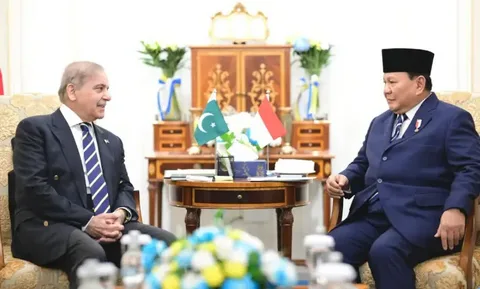

Sindh Chief Minister Murad Ali Shah recently extended a formal invitation to Indonesian investors to explore business opportunities in Pakistan’s most populous province, signaling a new chapter in Pakistan Indonesia relations. The move reflects growing momentum between two of the Muslim world’s largest economies, as both nations push to deepen cooperation across trade, investment, energy, and people-to-people ties. With historical bonds rooted in shared Islamic heritage and post-independence solidarity, the relationship is now being reshaped by modern economic ambition.
Background: A Long History of Solidarity
Pakistan and Indonesia established diplomatic relations shortly after both nations gained independence in the mid-twentieth century. Indonesia was among the early nations to recognize Pakistan, and the two countries have maintained warm, consistent ties ever since. Both are founding members of the Organisation of Islamic Cooperation (OIC) and active participants in the Non-Aligned Movement, giving them a shared multilateral platform.
Pakistan Indonesia relations have historically been defined by mutual respect and cultural affinity rather than transactional economic interest. However, in recent years, both governments have recognized the untapped potential of their bilateral trade and investment relationship, prompting a shift toward more structured economic engagement.
CM Murad’s Invitation: What It Means for Pakistan Indonesia Relations
Sindh Chief Minister Syed Murad Ali Shah’s invitation to Indonesian investors marks a concrete step in translating diplomatic goodwill into economic action. Sindh, home to Karachi Pakistan’s financial and commercial capital offers a gateway for Indonesian businesses seeking access to South Asia’s vast consumer market.
The invitation comes as Indonesia continues to grow as a regional economic powerhouse in Southeast Asia. With a GDP exceeding one trillion US dollars and a population of over 270 million, Indonesia has significant capital and market muscle. Pakistani officials are now actively courting Indonesian businesses in sectors including agriculture, manufacturing, textiles, and energy. The Sindh government has emphasized infrastructure development and special economic zones as key areas where Indonesian investment could yield strong returns.
Pakistan Indonesia Trade: Current Status and Potential
Despite the warmth in diplomatic ties, Pakistan Indonesia trade volumes have historically remained below their potential. Two-way trade has hovered in a range that both countries agree does not reflect the size of their respective economies. Key Pakistani exports to Indonesia include cotton yarn, leather goods, surgical instruments, and rice. Indonesia, for its part, exports palm oil, coal, electronic components, and machinery to Pakistan.
Pakistan Indonesia relations 2022 saw renewed efforts to boost this trade relationship. Officials from both sides met on the sidelines of multilateral forums to discuss reducing tariff barriers and establishing more direct trade corridors. Both governments have expressed interest in expanding bilateral trade to several billion dollars, a target that would require deliberate policy action, stronger logistics links, and greater private sector engagement on both sides.
Does Indonesia Support Pakistan or India?
One of the most commonly asked questions surrounding Pakistan Indonesia relations is whether Indonesia supports Pakistan or India in the long-standing geopolitical rivalry between the two South Asian neighbors. The answer reflects Indonesia’s pragmatic foreign policy posture. Indonesia maintains cordial diplomatic and trade relations with both Pakistan and India, and consistently avoids taking sides in their bilateral disputes.
Indonesia, as the world’s largest Muslim-majority country, has historically expressed solidarity with Pakistan on sensitive issues such as the Kashmir dispute within multilateral forums, though it has never adopted an overtly confrontational stance toward India. Indonesia and India share robust trade ties and strategic interests in the Indo-Pacific region, making Indonesia’s position a carefully balanced one. In short, Indonesia supports peaceful resolution and multilateral dialogue rather than aligning exclusively with either nation.
How Many Pakistanis Live in Indonesia?
The Pakistani community in Indonesia is relatively small compared to Pakistani diaspora populations in the Gulf, United Kingdom, or North America. Estimates suggest that several thousand Pakistanis reside in Indonesia, primarily in Jakarta, Bali, and other major urban centers. This community includes businesspeople, students, and professionals working in trade and education. The small but active Pakistani diaspora serves as an informal bridge between the two countries, facilitating business connections and cultural exchange.
Pakistan Indonesia relations have benefited from student exchanges and academic collaborations as well. Indonesian universities have welcomed Pakistani students in science, technology, and Islamic studies programs, while Pakistani institutions have expressed interest in partnering with Indonesian centers of research and innovation.
Pakistan Malaysia Relations: A Parallel and Complementary Track
Understanding Pakistan Indonesia relations requires brief context on Pakistan Malaysia relations, as Malaysia is a key middle point in Pakistan’s engagement with the ASEAN region. Pakistan and Malaysia share strong historical and economic ties, with Malaysia being one of Pakistan’s top trading partners in Southeast Asia. The two countries signed a Free Trade Agreement and have maintained high-level diplomatic engagement over the decades.
In some ways, the success of Pakistan Malaysia relations has served as a model for what Pakistan hopes to achieve with Indonesia. Pakistani officials often reference Malaysia as proof that deep, multi-dimensional bilateral relationships with Southeast Asian Muslim-majority nations are achievable and mutually beneficial. The trajectory of Pakistan Indonesia relations, diplomats suggest, could follow a similar upward curve if the right policy frameworks are put in place.
Indonesia India Relations: A Factor in Regional Dynamics
Any comprehensive analysis of Pakistan Indonesia relations must acknowledge the parallel track of Indonesia India relations. India and Indonesia have developed one of the strongest bilateral partnerships in the Indo-Pacific. Trade between the two countries runs into tens of billions of dollars annually, and both nations cooperate on maritime security, digital economy, and defense technology.
Indonesia India relations are driven substantially by geographic and economic logic, as both countries are major players in the Indian Ocean region. However, Indonesian foreign policy is rooted in the principle of “bebas dan aktif” free and active meaning Indonesia actively avoids military alliances and superpower dependence. This posture means that strong Indonesia India relations do not translate into hostility toward Pakistan, and Indonesia continues to engage both South Asian neighbors on their own respective merits.
Quotes from Officials
Sindh Chief Minister Murad Ali Shah stated on record that Sindh is open for business and that Indonesian investors will find a supportive regulatory environment, a strategic port location, and a young, growing consumer base. He emphasized that the provincial government is ready to facilitate investment across key sectors including agriculture, energy, and manufacturing.
Pakistani trade officials have also noted that Indonesia’s expertise in palm oil processing, halal food certification, and maritime logistics offers areas where collaboration could bring direct economic benefit to both countries. Indonesian trade representatives who have engaged with Pakistani counterparts have expressed genuine interest in exploring the opportunity, citing Pakistan’s improving ease-of-doing-business environment as an encouraging sign.
Regional and Global Impact
The deepening of Pakistan Indonesia relations carries implications beyond just bilateral trade figures. Both countries are members of the OIC, and their combined economic and demographic weight makes their partnership significant for the Muslim world’s collective economic standing. A stronger Pakistan Indonesia economic axis could enhance the influence of both countries in multilateral settings such as the United Nations, World Trade Organization, and ASEAN-adjacent diplomatic forums.
At a time when global trade is being reconfigured by geopolitical pressures, supply chain realignments, and energy transitions, partnerships between developing economies that share cultural and historical affinity take on new strategic value. Pakistan Indonesia relations fit squarely within this broader global trend.
Conclusion: What Comes Next
The invitation by Sindh’s Chief Minister to Indonesian investors is a positive and practical step, but the real test of Pakistan Indonesia relations lies in what follows. Concrete investment deals, signed memorandums of understanding, and operational trade corridors will determine whether this diplomatic warmth translates into measurable economic outcomes. Both governments have signaled their commitment, and the private sector on both sides is watching closely.
As Indonesia continues to grow as a regional economic leader in Southeast Asia and Pakistan works to stabilize and attract foreign capital, the logic of deeper Pakistan Indonesia relations has never been stronger. The next chapter of this relationship is being written now, and the tone, set by officials on both sides, is one of genuine mutual interest and shared opportunity.
Frequently Asked Questions (FAQs)
Can Pakistanis visit Indonesia?
Yes, Pakistani passport holders can visit Indonesia, and Indonesia has at various times offered visa-on-arrival or visa-free access to Pakistani nationals depending on the prevailing bilateral agreement. Travelers are advised to check the latest visa requirements through the Indonesian Embassy in Islamabad or the official Indonesian immigration website before planning their trip. Indonesia is a popular destination for Pakistani tourists, pilgrims traveling through Bali, and business travelers engaging with Indonesian trade partners. The two governments have periodically discussed simplifying travel between the two countries as part of broader efforts to enhance people-to-people connectivity within the framework of Pakistan Indonesia relations.
Who is Pakistan’s real best friend?
This question has long been debated in Pakistani public discourse, and the answer depends on the time period and the dimension of the relationship being considered. China is widely regarded as Pakistan’s closest strategic and economic partner in the contemporary era, with the China-Pakistan Economic Corridor (CPEC) cementing a deep infrastructure and investment relationship. Saudi Arabia has been a long-standing ally offering financial support and religious solidarity. Turkey has emerged as an increasingly visible partner in defense and cultural diplomacy.
Who is richer, Pakistan or Indonesia?
By most standard economic measures, Indonesia is significantly wealthier than Pakistan. Indonesia’s GDP crossed the one trillion US dollar mark and ranks it among the world’s top twenty economies, while Pakistan’s GDP is approximately a third to a quarter of Indonesia’s in nominal terms. Indonesia has a higher per capita income, a more diversified export base, stronger foreign exchange reserves, and a more stable macroeconomic environment. Indonesia has also benefited from sustained growth in its manufacturing sector, tourism industry, and commodity exports, particularly palm oil and coal. Pakistan, while possessing significant economic potential and a large young population, has faced persistent fiscal challenges, inflation pressures, and dependency on IMF support in recent years.