
Pakistan India water weaponisation UN confrontation has escalated sharply after Pakistan’s UN representative delivered a forceful rebuttal to what Islamabad described as baseless Indian allegations — with Pakistan accusing India of deliberately weaponising water as a tool of geopolitical pressure against a downstream neighbour in violation of international law and the bilateral treaty framework governing shared river systems.
Pakistan India water weaponisation UN dispute centres on India’s suspension of the Indus Water Treaty — the 1960 World Bank-brokered agreement that has governed water sharing between the 2 countries for over 6 decades — following the Pahalgam attack in April 2025 and India’s assertion that Pakistan’s alleged support for cross-border terrorism justified the unilateral suspension of treaty obligations.
Indus Water Treaty current situation is the most precarious it has been since the treaty was signed — with India implementing infrastructure projects on western rivers allocated to Pakistan under the treaty framework and Pakistan warning at the UN that the denial of water to a population of 240 million people constitutes a form of warfare that the international community cannot permit to stand.
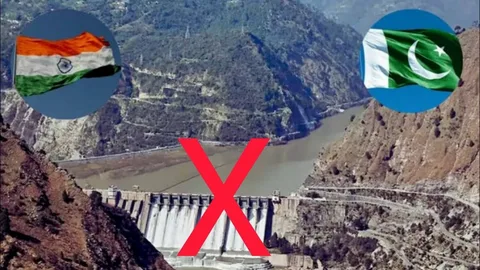
Background: Pakistan India Water Weaponisation UN
The Indus Water Treaty — 60 Years of Fragile Peace
Pakistan India water weaponisation UN dispute has its foundations in the India Indus Water Treaty of 1960 — one of the most durable bilateral water-sharing agreements in history and a treaty that survived 3 India-Pakistan wars without being suspended until India’s 2025 unilateral action.
India Indus Water Treaty divided the 6 rivers of the Indus basin between the 2 countries — giving Pakistan exclusive use of the 3 western rivers Indus Jhelum and Chenab and India exclusive use of the 3 eastern rivers Ravi Beas and Sutlej. The India Indus Water Treaty allocation reflects Pakistan’s downstream geography — with approximately 80 percent of Pakistan’s irrigated agriculture dependent on the western rivers that India controls at the upstream end.
India Indus Water Treaty World Bank brokering and the treaty’s survival through decades of bilateral hostility reflected a shared recognition that water was too existential an issue to be held hostage to political relations — a principle that India’s 2025 suspension has now fundamentally challenged.
Pakistan water crisis predating the India Indus Water Treaty suspension has already placed Pakistan among the world’s most water-stressed nations — with per capita water availability having fallen from approximately 5,000 cubic metres in 1947 to approximately 1,000 cubic metres today approaching the international scarcity threshold of 500 cubic metres. India Indus Water Treaty suspension threatens to push Pakistan water crisis from severe stress into acute scarcity in agricultural regions whose populations have no alternative water sources.
Pakistan India Water Weaponisation — What Was Said at UN
Pakistan’s UN Statement
Pakistan India water weaponisation UN address was delivered by Pakistan’s Permanent Representative to the United Nations — who described India’s suspension of the India Indus Water Treaty and its ongoing construction of dams and diversions on western rivers as a deliberate and calculated act of water weaponisation against a sovereign nation.
Pakistan India water weaponisation UN statement specifically accused India of 4 violations — unilateral treaty suspension without the dispute resolution mechanism that the India Indus Water Treaty requires, construction of Kishanganga and Ratle hydropower projects on western rivers in violation of treaty design restrictions, withholding of hydrological data that Pakistan requires for downstream flood management and agricultural planning, and framing the water dispute in terrorism terms to deflect international attention from India’s treaty violations.
Pakistan India water weaponisation UN address invoked international water law — specifically the UN Convention on the Law of Non-Navigational Uses of International Watercourses — in arguing that no bilateral dispute including terrorism allegations can justify the denial of water to a downstream population that depends on it for survival.
India’s Position
Pakistan India water weaponisation UN Indian response rejected Pakistan’s characterisation — with India’s representative arguing that the India Indus Water Treaty suspension was a legitimate response to Pakistan’s alleged support for cross-border terrorism that had killed Indian civilians and that Pakistan’s UN address was designed to internationalise a bilateral dispute that should be resolved through direct engagement.
India Indus Water Treaty suspension India frames as a temporary measure whose reversal depends on Pakistan taking verifiable action against terrorist organisations operating from its territory — rejecting Pakistan’s characterisation of India’s actions as water weaponisation and describing them instead as a proportionate response to an existential security threat.
India Indus Water Treaty — Current Status
Indus Water Treaty Current Situation — What Has Changed
Indus Water Treaty current situation following India’s 2025 suspension represents the most significant disruption to the treaty framework since its signing — with multiple dimensions of treaty implementation either suspended or contested.
Indus Water Treaty current situation data sharing dimension is the most immediately operationally damaging — with India withholding the hydrological data that Pakistan’s irrigation authorities and flood management systems require to manage downstream water flows across the agricultural regions that depend on western rivers. Indus Water Treaty current situation data denial has already contributed to irrigation planning difficulties affecting millions of Pakistani farmers.
Indus Water Treaty current situation infrastructure dimension involves India’s continued construction of the Kishanganga and Ratle hydropower projects on the Jhelum and Chenab rivers — projects that Pakistan’s Indus Water Treaty legal position holds are non-compliant with treaty design restrictions on storage capacity and project dimensions but that India argues fall within permitted parameters.
Indus Water Treaty current situation dispute resolution dimension reflects the breakdown of the Permanent Indus Commission — the bilateral technical body that was the treaty’s primary management mechanism — with India refusing to attend commission meetings following the treaty suspension announcement.
Pakistan Water Crisis — Human Impact
Pakistan Water Crisis — Agricultural Consequences
Pakistan water crisis consequences from the India Indus Water Treaty current situation deterioration are being felt most acutely in Punjab and Sindh — the agricultural heartland provinces whose irrigation systems draw directly from the western rivers allocated to Pakistan under the treaty.
Pakistan water crisis agricultural impact data shows irrigated area under cultivation declining in regions dependent on Jhelum and Chenab flows — with farmers reporting reduced canal water availability that has forced shifts from water-intensive crops including rice and sugarcane to less productive alternatives.
Pakistan water crisis food security dimension is particularly alarming given Pakistan’s pre-existing food security vulnerabilities — with the World Food Programme having already documented elevated food insecurity across Pakistan’s agricultural regions before the India Indus Water Treaty current situation deterioration added the additional pressure of reduced irrigation availability.
Pakistan Water Crisis — Urban Water Supply
Pakistan water crisis urban dimension extends beyond agriculture — with Lahore Faisalabad and other major Punjab cities whose water supply depends on groundwater recharge from western river flows facing declining water table levels that threaten municipal water supply security over the medium term.
Pakistan water crisis groundwater depletion represents a slow-moving emergency whose consequences accumulate invisibly until aquifer depletion reaches critical thresholds — at which point the remediation costs and humanitarian consequences dwarf the investment that preventive treaty compliance would have required.
Quotes on Pakistan India Water Weaponisation UN
Pakistan’s UN Permanent Representative Munir Akram stated that India’s weaponisation of water against Pakistan was not a bilateral dispute — it was a violation of international humanitarian law that threatened the lives and livelihoods of 240 million Pakistanis who had no alternative source of water for their agriculture and survival.
India’s UN representative Ruchira Kamboj rejected the weaponisation characterisation — stating that India had exercised its legal right to suspend the treaty in response to Pakistan’s continued support for cross-border terrorism and that Pakistan’s UN address was a diversion from its own obligations under international law to prevent its territory from being used for attacks on neighbouring states.
World Bank President Ajay Banga expressed concern about the India Indus Water Treaty current situation — stating that the World Bank as original treaty broker remained committed to facilitating dialogue between the parties and that the disruption of a 65-year water-sharing framework with direct humanitarian consequences for hundreds of millions of people required urgent diplomatic attention.
Former Pakistani Foreign Minister Shah Mahmood Qureshi described Pakistan India water weaponisation as the most dangerous escalation in bilateral relations since the 1971 war — stating that denying water to a nuclear-armed neighbour of 240 million people was the kind of existential provocation that history had repeatedly demonstrated produced unpredictable consequences.
Impact: Pakistan India Water Weaponisation UN Consequences
For Bilateral Relations
Pakistan India water weaponisation UN confrontation has added a new and potentially irreversible dimension to bilateral relations that were already at their most hostile since the 1971 Bangladesh war — with water joining nuclear weapons Kashmir and cross-border terrorism as an existential issue capable of driving escalation to conflict.
The India Indus Water Treaty framework that survived 3 wars has been damaged in ways that will be difficult to repair regardless of diplomatic developments — with the precedent of unilateral treaty suspension creating a bilateral water relationship based on power rather than agreement that permanently disadvantages downstream Pakistan.
For International Water Law
Pakistan India water weaponisation UN case has potential implications for international water law that extend beyond the bilateral relationship — with the precedent of a major power suspending a World Bank-brokered water treaty in response to terrorism allegations creating a template that other upstream-downstream river-sharing relationships could follow with devastating humanitarian consequences.
Frequently Asked Questions
What Happened to the Water Treaty Between India and Pakistan?
India suspended the Indus Water Treaty in April 2025 following the Pahalgam terrorist attack in Indian-administered Kashmir — citing Pakistan’s alleged support for cross-border terrorism as justification for the unilateral suspension of treaty obligations. India Indus Water Treaty suspension marked the first time in the treaty’s 65-year history that either party had suspended its obligations — ending a framework that had survived 3 India-Pakistan wars. Indus Water Treaty current situation involves suspended data sharing discontinued Permanent Indus Commission meetings and continued Indian construction of hydropower projects on western rivers that Pakistan argues violate treaty restrictions. Pakistan has challenged the suspension at the Permanent Court of Arbitration and raised the Pakistan India water weaponisation issue at the UN as described in this article.
Who Brokered the Indus Water Treaty Between India and Pakistan?
The India Indus Water Treaty was brokered by the World Bank — with then World Bank President Eugene Black playing a central role in facilitating the 9 years of negotiations between India and Pakistan that concluded in the treaty’s signing by Indian Prime Minister Jawaharlal Nehru and Pakistani President Ayub Khan in Karachi in September 1960. The World Bank’s brokering role gave the India Indus Water Treaty a multilateral legitimacy that pure bilateral agreements lack — with the World Bank’s continued role as a treaty institution including its ability to appoint neutral experts and court of arbitration members giving it ongoing relevance to the Indus Water Treaty current situation dispute. The World Bank has expressed concern about India’s treaty suspension and indicated willingness to facilitate renewed dialogue — though India has questioned the World Bank’s jurisdiction over a dispute it frames as security-related rather than purely technical.
Which River of India Supplies Water to Pakistan?
Under the India Indus Water Treaty 3 western rivers supply water to Pakistan — the Indus Jhelum and Chenab. The Indus River originates in Tibet flows through Indian-administered Kashmir and enters Pakistan near Attock before flowing south through the entire length of Pakistan to the Arabian Sea. The Jhelum River originates in the Kashmir Valley flows through Indian-administered Kashmir and enters Pakistani-administered Kashmir before joining the Chenab in Pakistani Punjab. The Chenab River originates in the Himachal Pradesh region of India flows through Jammu and Kashmir and enters Pakistan near Marala where it feeds the critical Marala Headworks that supplies the Upper Chenab Canal system. Pakistan water crisis severity reflects the extraordinary dependence of Pakistan’s agricultural economy on these 3 rivers — with approximately 90 percent of Pakistan’s irrigated agriculture drawing from the western river system that India controls at the upstream end.
Conclusion
Pakistan India water weaponisation UN confrontation has elevated one of South Asia’s most consequential bilateral disputes to the international stage — where it deserves the attention that the humanitarian stakes demand.
India Indus Water Treaty suspension is not merely a legal or diplomatic dispute — it is a decision with direct consequences for the food security water availability and economic survival of hundreds of millions of Pakistanis whose lives depend on rivers that flow from Indian-controlled territory.
Indus Water Treaty current situation and Pakistan water crisis together present the international community with a test of whether international water law multilateral treaty frameworks and the institutions that broker and guarantee them retain any practical authority when a major power decides its security interests outweigh its treaty obligations.
The answer the world gives to that test will shape not only the India-Pakistan relationship but the future of transboundary water governance everywhere — at a time when climate change is making water scarcity one of the defining geopolitical challenges of the 21st century.