Pakistan foreign policy in 2025 has undergone one of its most significant transformations in recent decades. From a landmark defence pact with Saudi Arabia to a recalibrated relationship with the United States, Pakistan is asserting itself on the world stage with renewed confidence. Students preparing for CSS exams, researchers looking for Pakistan foreign policy PDF resources, and readers following Pakistan foreign policy Dawn coverage will find this article a comprehensive guide to understanding where Pakistan stands today and where it is headed.
Background
For years, Pakistan foreign policy was described by analysts as reactive rather than proactive. The country struggled with economic pressures, a tense relationship with India, a volatile western border with Afghanistan, and uncertainty about its standing with traditional allies like the United States. Books like Pakistan Foreign Policy by Abdul Sattar, which remains one of the most widely read and cited texts in CSS preparation and academic circles, laid out the foundational principles that have guided Pakistan’s diplomatic posture since independence.
Pakistan foreign policy by Abdul Sattar PDF continues to be downloaded by thousands of students and researchers annually, which reflects the enduring relevance of understanding Pakistan’s historical foreign policy framework. The book traces Pakistan’s diplomatic journey from 1947 onward, examining how geography, ideology, security imperatives, and economic needs have shaped every major policy decision. That historical grounding is essential context for understanding the dramatic shifts of 2025.
Details
A Year of Unprecedented Diplomatic Activity
2025 proved to be exceptionally dynamic and significant for Pakistan’s foreign policy and diplomatic engagement. Pakistan effectively projected its principled stance at regional and global forums, while high-level overseas visits by the country’s leadership and the arrival of foreign delegations in Pakistan gave new momentum to bilateral relations, economic cooperation, and strategic partnerships.
From emerging as a net regional stabiliser and a moderator in the over two-year Gaza war to clinching strategic defence agreements and recalibrating ties with Washington, 2025 was an epochal year for Pakistan.
Those studying Pakistan foreign policy for CSS exams will recognize this as a textbook example of multilateral balancing a strategy Abdul Sattar analyzed extensively in his work. Pakistan foreign policy articles published across major outlets this year consistently highlighted Islamabad’s ability to engage multiple power centers simultaneously without formally aligning with any single bloc.
The India Factor
The single most consequential event shaping Pakistan foreign policy in 2025 was the brief military confrontation with India in May. The conflict was sparked by an attack on Hindu tourists in Indian Illegally Occupied Jammu and Kashmir, which New Delhi, without evidence, said was backed by Pakistan. Both sides used fighter jets, missiles, artillery and drones during the four-day conflict, killing dozens of people, before agreeing to a US-brokered ceasefire.
Widely written off as overstretched and hollowed out by years of economic and political crises, Pakistan demonstrated that it retained a credible, modern, and integrated conventional war-fighting capability. Its air force in particular showcased operational proficiency and command-and-control sophistication that surprised foreign observers.
This military performance directly enhanced Pakistan’s diplomatic leverage. Pakistan foreign policy Dawn coverage noted that foreign capitals reassessed Islamabad’s strategic value almost immediately after the ceasefire. The lesson for CSS aspirants is clear: in Pakistan’s case, security credibility and diplomatic influence remain deeply interconnected, a theme that runs throughout Pakistan foreign policy by Abdul Sattar.
The Saudi Arabia Defence Pact
One of the most significant diplomatic achievements of 2025 was the defence partnership agreement between Pakistan and Saudi Arabia. Saudi Arabia also expressed strong interest in expanding investment, energy cooperation, and development projects in Pakistan. Both countries maintained complete alignment on key issues affecting the Muslim world, including Palestine and Gaza.
Under this bold pact, an attack on one will be regarded as an attack on both a dramatic escalation of security guarantees in a region already crowded with rivalries.
For those seeking Pakistan foreign policy articles that analyze the strategic rationale behind this pact, the key argument is straightforward. Pakistan gains a powerful, financially resourceful security partner. Saudi Arabia gains a military partner with demonstrated conventional warfare capability and a nuclear deterrent. This is the kind of mutually reinforcing alliance that Pakistan foreign policy in Urdu commentary has described as a “tazweeji moahida” a complementary partnership built on shared interests rather than shared ideology alone.
The United States: A Recalibrated Relationship
Islamabad’s outreach to Washington centres on promises of access to rare earth minerals, many of which are located in the restive region of Balochistan. On paper, this looks like a win-win: Pakistan gains investment, and the US secures critical resources.
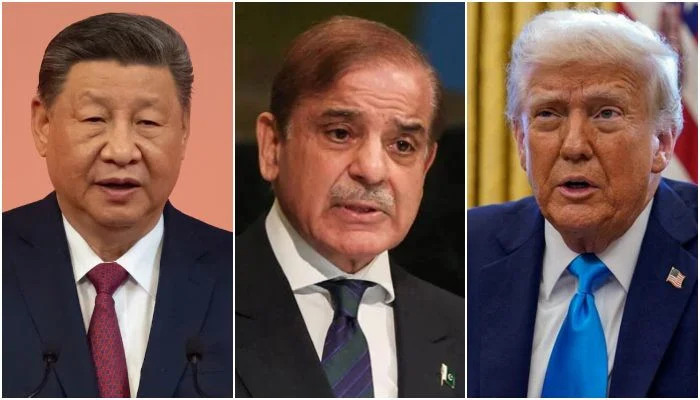
After years of strategic drift, 2025 has placed Pakistan in a rare geopolitical sweet spot where its allies and partners, including the United States, Saudi Arabia, Turkey, and China, see it as a country that offers them things they value and need.
Students who have studied Pakistan foreign policy by Abdul Sattar PDF will recall that the US-Pakistan relationship has historically been described as transactional warm during periods of American strategic need and cool when that need diminishes. The current engagement over minerals and Afghanistan follows this same historical pattern. Pakistan foreign policy CSS candidates are frequently asked to evaluate whether this relationship can be transformed into something more durable and structural.
China and CPEC
The evolving global landscape facilitated the second phase of the China-Pakistan Economic Corridor (CPEC), launched formally at the 14th Joint Cooperation Committee meeting in September 2025. This phase emphasizes green development, innovation, and industrial parks, projecting investments exceeding 35 billion dollars.
Relations with China remain the cornerstone of Pakistan foreign policy. Pakistan foreign policy articles published in Dawn and other outlets consistently emphasize that while the US relationship has warmed, Islamabad has no intention of abandoning its all-weather partnership with Beijing. Managing this balance between Washington and Beijing represents perhaps the most delicate long-term challenge in Pakistan foreign policy today.
The Middle East and OIC Leadership
Through carefully navigating its relations with Saudi Arabia and Iran in particular, Pakistan has secured itself a diplomatic and military role in Middle Eastern security. Pakistan balanced a fine line as it strongly condemned the Israeli and US strikes on Iranian nuclear facilities and diplomatically stood by Iran, acting as an intermediary between Tehran and Washington.Pakistan’s foreign policy in 2025 achieved unprecedented success, rivaling the diplomatic triumphs of the 1974 Lahore Islamic Summit. The post-conflict environment amplified Pakistan’s role within the OIC, where it championed unified positions on issues such as Palestinian rights, Afghan reconstruction, and counterterrorism.
Pakistan foreign policy in Urdu media has given this development considerable coverage, with commentators noting that Pakistan’s role as an honest broker between Riyadh and Tehran is a historic development that no previous government managed to achieve at this scale.
Quotes
Deputy Prime Minister and Foreign Minister Ishaq Dar stated at a news briefing in Islamabad: “The improvement in Pakistan’s foreign relations is a blessing of God,” adding that the country’s foreign policy standing had been elevated globally.
Analyst Syed Baqir Sajjad, a seasoned journalist covering foreign affairs, told Geo.tv that Islamabad appeared “more active and visibly confident than in recent years,” registering “clear gains, especially in resetting ties with the United States and managing the fallout from the brief clash with India.”
Meanwhile, Al Jazeera’s commentary noted that Pakistan is manoeuvring carefully, improvising under pressure and seeking to turn vulnerabilities into opportunities. But the real test lies at home unless Islamabad can confront governance failures, regional inequalities and political mistrust, foreign policy gains will remain fragile.
Impact
Regional Impact
Pakistan’s enhanced military credibility following the May confrontation with India has shifted the regional balance of perception, if not yet power. Neighboring countries and Gulf states are recalibrating their engagement with Islamabad. Economically, the influx of over 12 billion dollars in investments from Muslim allies stabilized Pakistan’s economy, with trade volumes and remittances rising by 22 percent year-on-year.
Global Impact
The American foreign policy magazine The Diplomat proclaimed 2025 as the year Pakistan reclaimed its position as a focal point of international affairs, reversing years of relative obscurity. Pakistan foreign policy Dawn analysis has echoed this assessment, noting that Islamabad is no longer being treated as a peripheral actor by major powers.
For CSS candidates, understanding this impact requires grounding in the four basic principles of foreign policy sovereignty, non-interference, peaceful resolution of disputes, and economic development all of which are detailed in Pakistan foreign policy by Abdul Sattar. The events of 2025 demonstrate that Pakistan has applied these principles selectively and pragmatically, abandoning rigid ideological postures in favour of results-oriented diplomacy.
Conclusion
Pakistan foreign policy in 2025 represents a genuine, if fragile, diplomatic resurgence. The country has leveraged a combination of military credibility, mineral diplomacy, and active multilateral engagement to elevate its global standing in ways not seen since the early 1990s. Whether this momentum translates into lasting structural gains will depend on domestic stability, consistent governance, and the ability to convert diplomatic capital into economic development.
For CSS aspirants, researchers, and readers seeking Pakistan foreign policy PDF materials, Pakistan foreign policy by Abdul Sattar books, or in-depth Pakistan foreign policy articles, the lesson of 2025 is clear: geography and strategy matter, but so does the discipline to follow through. As noted in Pakistan foreign policy Dawn and other credible outlets throughout this year, the window of opportunity is open the question is whether Pakistan will use it wisely.
FAQs
What are the four basic principles of Pakistan’s foreign policy?
Pakistan’s foreign policy rests on four foundational principles that have guided its diplomacy since independence. The first is the preservation of national sovereignty and territorial integrity, meaning Pakistan will not tolerate any external interference in its internal affairs or accept violations of its borders. The second principle is the promotion of peaceful resolution of disputes through dialogue, negotiation, and international law rather than military force. The third is support for Muslim solidarity and the cause of oppressed peoples, particularly on issues such as Kashmir and Palestine, which reflects Pakistan’s Islamic identity and its founding ideological commitments. The fourth principle is economic development and trade cooperation, recognizing that foreign policy must serve the material wellbeing of Pakistan’s citizens by attracting investment, expanding exports, and securing financial partnerships. These principles are examined in depth in Pakistan foreign policy by Abdul Sattar, the most widely read book on the subject among CSS candidates, and are frequently tested in Pakistan foreign policy CSS examinations.
What are the three main types of foreign policy Pakistan follows?
Pakistan’s foreign policy operates across three broad strategic types. The first is bilateral diplomacy, which involves direct state-to-state relations with individual countries such as China, the United States, Saudi Arabia, and India. This is where Pakistan negotiates trade agreements, defence pacts, and economic partnerships. The second is multilateral diplomacy, conducted through international organizations including the United Nations, the Organisation of Islamic Cooperation (OIC), the Shanghai Cooperation Organisation (SCO), and SAARC. Pakistan uses these platforms to advance collective positions on issues like Kashmir, Afghanistan, and counterterrorism. The third is economic or commercial diplomacy, which involves using trade, investment, and resources including, increasingly, Pakistan’s rare earth mineral reserves as tools to strengthen political relationships and attract foreign direct investment.
What is Pakistan’s foreign policy according to Wikipedia and standard references?
According to standard references including Wikipedia, Pakistan’s foreign policy is defined as the set of strategies and principles that guide the Islamic Republic of Pakistan in its interactions with other nations and international bodies. It is shaped primarily by four factors: the Kashmir dispute with India, the relationship with Afghanistan and its impact on regional security, the alliance with China through CPEC and the broader strategic partnership, and Pakistan’s ties with the Western world, particularly the United States. Pakistan follows a policy of non-alignment in theory, though in practice it has historically leaned toward different blocs based on strategic circumstances. Pakistan foreign policy in Urdu educational materials explain that the country’s founding vision was to be an independent, Islamic, and neutral state, but geographic realities and security pressures have always complicated that vision.