
Pak-Afghan Border Fence Claims Firmly Rejected by Pakistan
Pakistan’s Information Ministry has issued a strong and unequivocal rejection of viral claims suggesting that barbed wire is being removed from the Pak-Afghan border fence calling the allegations completely devoid of facts. The Pak-Afghan border fence claims had been circulating widely on social media and through certain media outlets creating confusion and concern about the security status of one of the world’s most strategically sensitive frontiers. The Information Ministry’s categorical dismissal of the Pak-Afghan border fence claims underlines the government’s determination to counter what it describes as deliberate misinformation about the security infrastructure protecting Pakistan’s northwestern boundary.
Background: Why Pak-Afghan Border Fence Claims Matter
The Pak-Afghan border fence claims emerge in a deeply sensitive security context that makes any suggestion of reduced border security an immediately explosive political and national security issue. Pakistan has invested billions of rupees and enormous military resources into the construction and maintenance of its border fencing along the Pak-Afghan borders following years of cross-border militant infiltration that caused devastating loss of life and widespread instability across Khyber Pakhtunkhwa and Balochistan.
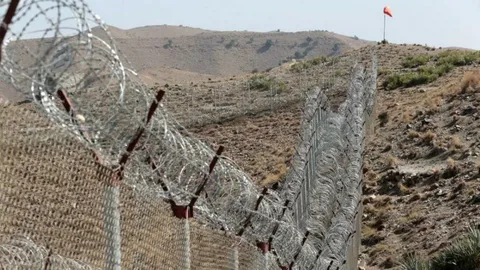
The Pak-Afghan border fence was conceived and executed as a comprehensive security infrastructure project designed to control movement across one of the world’s most porous and historically ungoverned frontiers. The Pak-Afghan border fence stretches across hundreds of kilometres of rugged mountainous terrain and represents one of the most ambitious border security undertakings in the region’s recent history. Any credible suggestion that the Pak-Afghan border fence was being dismantled or compromised would therefore carry enormous political weight and security implications making the Information Ministry’s rapid and forceful response to the Pak-Afghan border fence claims entirely predictable.
The broader context of Pak-Afghan borders tensions adds further significance to the Pak-Afghan border fence claims and their rejection. Relations between Pakistan and Afghanistan’s Taliban government have been severely strained by repeated cross-border attacks by the Tehreek-e-Taliban Pakistan and by fundamental disagreements about the management and recognition of the Pak-Afghan borders that have historical roots stretching back to the colonial era and the contested Durand Line.
Details: What the Information Ministry Said About Pak-Afghan Border Fence Claims
The Information Ministry issued a direct and strongly worded statement dismissing the Pak-Afghan border fence claims as entirely without factual basis. Ministry officials characterised the claims as a deliberate attempt to spread confusion and undermine public confidence in Pakistan’s border security infrastructure at a time when the management of the Pak-Afghan borders is already a subject of intense national and international attention.
The ministry’s response to the Pak-Afghan border fence claims emphasised that the fencing along the Pak-Afghan border remains fully intact and that security forces continue to maintain and patrol the border infrastructure with full operational readiness. Officials stated that the Pak-Afghan border fence claims about barbed wire removal were not grounded in any verified observation or credible reporting and called on media organisations and social media users to exercise responsibility before amplifying unverified claims about sensitive security matters.
The Information Ministry’s dismissal of the Pak-Afghan border fence claims also carried an implicit message about the sources and motivations behind the misinformation. By describing the claims as devoid of facts the ministry suggested that the Pak-Afghan border fence claims were not the product of honest reporting error but of deliberate disinformation designed to serve specific agendas hostile to Pakistan’s national interest and security posture.
Pak-Afghan Border Fence: A Security Lifeline
The Pak-Afghan border fence has been one of the most consequential security investments Pakistan has made in the post-9/11 era and its importance to the country’s counter-terrorism strategy cannot be overstated. Before the Pak-Afghan border fence was constructed the Pak-Afghan borders were effectively open in large stretches allowing militants weapons and narcotics to move freely across the frontier creating the security conditions that enabled the TTP and other militant groups to launch devastating attacks deep inside Pakistani territory.
The Pak-Afghan border fence construction faced enormous practical challenges including extreme terrain, hostile weather conditions, and active resistance from communities on both sides of the Pak-Afghan borders who had historically moved freely across the frontier without reference to international boundaries. Despite these challenges Pakistan pressed ahead with the Pak-Afghan border fence project demonstrating the strategic priority the military and civilian establishment attached to establishing physical control over the Pak-Afghan borders.
The Pak-Afghan border fence has been credited by Pakistani security officials with significantly reducing infiltration by militant groups across the Pak-Afghan borders and providing security forces with the physical infrastructure needed to monitor and control movement in areas that were previously impossible to adequately surveil or defend. Any suggestion that this hard-won security infrastructure was being removed would therefore strike at the heart of Pakistan’s counter-terrorism strategy making the Pak-Afghan border fence claims a matter of the utmost sensitivity.
Pak-Afghan Borders and the Ongoing Security Challenge
The Pak-Afghan borders represent one of the most complex and contested frontier zones in the world combining historical grievances territorial disputes ethnic divisions and active security threats into a frontier management challenge of extraordinary difficulty. The Pak-Afghan borders span approximately 2,670 kilometres of some of the most rugged and inhospitable terrain on earth crossing mountain ranges, river valleys, and desert plateaus that have historically defied effective state control from either side.
The Pak-Afghan borders security challenge has been fundamentally transformed by the Taliban’s return to power in Afghanistan in 2021 which removed the internationally recognised Afghan government that had cooperated with Pakistan on border management and replaced it with a regime that has shown limited willingness to prevent TTP militants from using Afghan territory to plan and launch attacks across the Pak-Afghan borders into Pakistan.
The Pak-Afghan border fence has therefore become even more strategically important since the Taliban takeover as it represents Pakistan’s primary unilateral mechanism for controlling movement across Pak-Afghan borders in the absence of reliable bilateral security cooperation with the Afghan side. The Pak-Afghan border fence claims about barbed wire removal struck directly at this strategic asset making the Information Ministry’s forceful rebuttal both necessary and predictable.
Expert Quotes on Pak-Afghan Border Fence Claims
Security analysts commenting on the Pak-Afghan border fence claims noted that the misinformation appeared carefully timed to coincide with heightened tensions along the Pak-Afghan borders and suggested that the false claims were likely intended to create domestic political pressure on the Pakistani government and undermine confidence in the country’s border security infrastructure. Experts praised the Information Ministry’s rapid response to the Pak-Afghan border fence claims as an appropriate and necessary counter to deliberate disinformation.
Border security specialists familiar with the Pak-Afghan border fence stated that the infrastructure represents an enormous investment of resources and political will that Pakistan would have no strategic incentive to dismantle. Analysts noted that the Pak-Afghan border fence claims about barbed wire removal were implausible on their face given the current security environment along the Pak-Afghan borders and the Pakistani military’s well-documented commitment to maintaining the fence as a cornerstone of its counter-terrorism strategy.
Media experts commenting on the spread of the Pak-Afghan border fence claims called for greater responsibility among social media users and news organisations in verifying sensitive security-related claims before amplifying them to mass audiences. Analysts noted that false claims about Pak-Afghan borders security infrastructure can have real-world consequences by generating public panic, emboldening militant groups, and straining already tense bilateral relations.
Impact of Pak-Afghan Border Fence Claims on Pakistan
The circulation of the Pak-Afghan border fence claims before their official rebuttal created measurable public concern and political noise in Pakistan where border security is a deeply emotional and politically charged issue. The Pak-Afghan border fence claims touched on anxieties that are rooted in years of devastating terrorist violence that the Pakistani public associates directly with the permeability of the Pak-Afghan borders in the pre-fencing era.
The Pak-Afghan border fence claims also had the potential to complicate Pakistan’s already difficult relationship with Afghanistan’s Taliban government by creating the impression that Pakistan was unilaterally reducing the security measures that Kabul has always viewed with deep suspicion as a mechanism for enforcing border demarcations that Afghanistan does not formally recognise. The Information Ministry’s decisive rebuttal of the Pak-Afghan border fence claims was therefore important not just for domestic public opinion management but for diplomatic reasons as well.
Conclusion: Pak-Afghan Border Fence Claims Reflect Larger Information War
The Information Ministry’s dismissal of the Pak-Afghan border fence claims as devoid of facts reflects a broader pattern of deliberate misinformation targeting Pakistan’s security infrastructure and national narrative at a time of genuine vulnerability and tension along the Pak-Afghan borders. The Pak-Afghan border fence remains fully operational and continues to serve as the primary physical barrier protecting Pakistani territory from cross-border militant infiltration.
The Pak-Afghan border fence claims episode is a reminder of the information environment in which Pakistan’s security institutions must now operate where false narratives can spread to mass audiences within hours and require rapid authoritative rebuttal to prevent lasting damage to public confidence and national security. Pakistan’s ability to quickly identify and counter Pak-Afghan border fence claims of this kind is an important dimension of its broader national security posture in the complex and contested environment of the Pak-Afghan borders.
FAQs
What is the Durand Line Between Afghanistan and Pakistan?
The Durand Line is the 2,670 kilometre international boundary between Pakistan and Afghanistan that was established in 1893 through an agreement between British India and the Afghan Amir Abdur Rahman Khan. The Durand Line forms the basis of the modern Pak-Afghan borders and cuts through the traditional territory of Pashtun tribes creating a divided ethnic and cultural community on both sides of the frontier. Afghanistan has historically refused to formally recognise the Durand Line as an internationally valid border arguing that the agreement was imposed under colonial pressure and has expired. Pakistan maintains that the Durand Line is the legally recognised international boundary and that the Pak-Afghan border fence being constructed along it is entirely legitimate. The Durand Line dispute is one of the most fundamental sources of tension in Pak-Afghan relations and provides important context for understanding the sensitivity of Pak-Afghan border fence claims and the broader management of Pak-Afghan borders.
Why is Afghanistan Fighting With Pakistan?
The tensions between Afghanistan and Pakistan that have periodically escalated into armed clashes along the Pak-Afghan borders stem from several interconnected sources of conflict. The Afghan Taliban government’s refusal to prevent the TTP from using Afghan territory to plan and launch attacks against Pakistan has been the most immediate cause of military confrontations along the Pak-Afghan borders in recent years. Pakistan has conducted airstrikes against TTP positions inside Afghanistan in response to attacks launched from Afghan soil creating a cycle of military action and retaliation that has severely damaged bilateral relations. The deeper sources of Afghanistan-Pakistan conflict include the unresolved Durand Line dispute the treatment of Pashtun communities on both sides of the Pak-Afghan borders and historical grievances about Pakistani support for various Afghan factions during decades of conflict. The Pak-Afghan border fence has itself been a source of tension as the Taliban government views it as an attempt to permanently demarcate borders that Afghanistan does not recognise making Pak-Afghan border fence claims about its status particularly politically charged.
Is Pakistan-Afghanistan Border Fenced?
Yes Pakistan has constructed an extensive border fence along significant stretches of the Pak-Afghan borders as part of its comprehensive border management initiative launched in the post-2016 security environment. The Pak-Afghan border fence consists of double-layer concertina wire fencing supplemented by watchtowers floodlights and regular military patrol posts designed to monitor and control movement across the Pak-Afghan borders. Pakistan claims that the Pak-Afghan border fence covers the vast majority of the frontier though some stretches of extremely remote and rugged terrain remain incompletely fenced due to the practical challenges of construction in such difficult geographical conditions. The recent Pak-Afghan border fence claims about barbed wire removal have been firmly rejected by Pakistan’s Information Ministry which confirmed that the Pak-Afghan border fence remains fully intact and operational as a cornerstone of the country’s border security and counter-terrorism strategy.