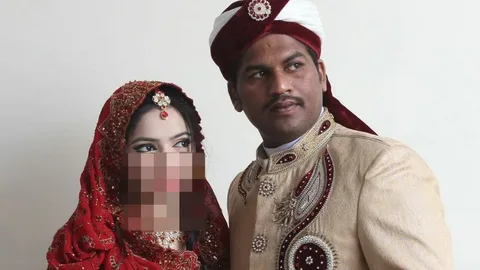
A young woman, recently married, was allegedly murdered by her husband in Narowal. According to police, the suspect then attempted to burn her body to destroy evidence.
Police responded after receiving information about the incident, secured the crime scene, arrested the suspect, and began a forensic investigation. The motive is still being established. Legal proceedings are underway.
The facts, as reported, are stark. And they’ve landed on a country that has heard them in different specific forms, from different specific places far too many times before.
Why This Case Is Getting Attention
It’s not just because of the violence. It’s because of what the violence represents.Every time a case like this surfaces a woman killed by someone who was supposed to protect her, in a space where she should have been safest it reopens a conversation that Pakistan has been having for years without arriving at solutions that actually stick. Social media reacted immediately. Civil society organizations issued statements. Calls for justice came from across the country.
Women’s rights advocates have made the same point consistently across such cases: public outrage after a tragedy is not a substitute for prevention before it. The question isn’t just whether this particular suspect faces justice. The question is what changes so that the next case doesn’t happen.
The Broader Reality: Domestic Violence in Pakistan
Domestic violence remains one of the most common and most underreported forms of violence against women in Pakistan.
That second part underreported matters as much as the first. For every case that reaches police, investigators, and headlines, there are many more that don’t. Women in abusive situations face an overwhelming set of reasons not to report: fear of the abuser’s retaliation, social stigma that attaches to women who “break up families,” financial dependence that makes leaving feel impossible, family pressure to stay quiet, and limited confidence that the legal system will actually protect them rather than send them back.
The abuse itself takes forms that aren’t always visible. Physical violence is the most obvious, but emotional manipulation, financial control, enforced isolation, and verbal degradation cause lasting damage and are far harder to prosecute even when they are reported.
Research consistently shows that survivors who do reach out for help often face a second ordeal navigating systems that are underfunded, inconsistently trained, and sometimes skeptical of their accounts.
The Causes: Honest About What’s Driving This
Understanding violence against women in Pakistan requires being honest about where it comes from.Unequal power dynamics embedded in traditional gender expectations create conditions where some men feel entitled to control women and where that control, when resisted, can turn violent. These aren’t abstract cultural forces. They show up in daily life, in family expectations, in how boys are raised and what they’re taught about women’s autonomy.
Legal awareness gaps leave many women not knowing what protections exist, what their rights are, or where to go for help. A law you don’t know exists can’t protect you.
Implementation failures mean that even good laws produce inconsistent outcomes. Police officers who aren’t trained to handle domestic violence cases properly. Courts where cases move so slowly that victims give up or are pressured into withdrawing. Prosecution rates that don’t reflect the scale of the problem.
Economic dependence is a trap that’s difficult to escape. When a woman has no income, no savings, no property in her name, and nowhere to go, leaving an abusive situation isn’t just emotionally hard it’s practically dangerous in a different way.
Geographic barriers compound everything for women in rural areas, where distance from police stations, courts, and support services is itself a form of powerlessness.
None of these causes exist in isolation. They reinforce each other, and addressing any one of them without the others produces limited results.
What the Law Actually Says
Pakistan has made legal progress on paper. There are laws addressing domestic violence, workplace harassment, honour killings, rape, and acid attacks. Provincial governments have established women’s protection centers, complaint mechanisms, and helplines in various regions.
Legal experts make a point that bears repeating: legislation alone cannot eliminate violence. The gap between what a law says and what actually happens to a victim who tries to use it is where the failure often lives.
Effective implementation requires trained police who take domestic violence seriously. It requires prosecutors who pursue cases. It requires judges who understand the dynamics of intimate partner violence. It requires witness protection so survivors don’t recant out of fear. And it requires enough capacity in the system to actually process cases in reasonable timeframes.
Most of those things need significant investment and sustained political will. Both have been inconsistent.
What Human Rights Organizations Are Calling For
The recommendations from human rights advocates aren’t new they’ve been made before, in response to previous cases. That they keep needing to be made reflects the implementation gap.
Faster criminal investigations that don’t lose momentum or allow evidence to degrade. Better victim protection services that make reporting less dangerous than staying silent. Police training specifically on gender-based violence and how to handle survivors. More shelters and legal aid accessible to women who need to leave quickly. Stronger prosecution of offenders with sentences that reflect the severity of the crime. And sustained public awareness campaigns that normalize seeking help and destigmatize being a survivor.
Advocates also consistently emphasize something that takes longer to show results but matters enormously: community education. Changing how gender roles, women’s rights, and family dynamics are understood particularly among younger generations is the work that prevents violence from occurring in the first place rather than responding to it afterward.
The Public Reaction
Across social media and television discussions, the public response to the Narowal case has followed a familiar and frustrated pattern.
Demands for stricter punishment. Calls for better protection of women in abusive situations. Anger at the pace of investigations in previous cases. Questions about why laws that exist aren’t producing different outcomes.
Women’s rights organizations have been consistent in redirecting that energy productively: use high-profile cases as pressure to strengthen systems, not just to punish individuals. Justice for one victim matters. Structural change protects the next one.
The Wider Regional and International Picture
Violence against women isn’t a Pakistan-specific problem it exists across South Asia and globally. But Pakistan’s response to these incidents is watched by international human rights organizations and development partners who measure progress on gender equality.
The connection between women’s safety and broader national development is not abstract. When women can’t access education safely, can’t work without harassment, can’t leave dangerous home situations, the human potential being lost has real economic and social consequences. Gender-based violence doesn’t only harm the women who experience it it holds back the communities and country around them.
What Actually Needs to Happen
Experts who study this issue have arrived at a consistent answer: lasting progress requires working on multiple fronts simultaneously.
Government institutions need to enforce existing laws with consistency and accountability. Law enforcement needs training, resources, and leadership that takes gender-based violence seriously. Educational institutions and religious scholars need to be engaged in shifting norms over the long term. Civil society organizations need support and space to do advocacy work. And victims need systems they can trust enough to approach.
None of this is simple or fast. But the alternative treating each case as an isolated tragedy, expressing outrage, and waiting for the next one has produced exactly the results you’d expect.
The Bottom Line
A young woman is dead in Narowal, and a suspect is in custody. That’s where this particular story is right now.But the story behind that story why violence against women in Pakistan persists at the scale it does, why so many cases go unreported, why the gap between legal protections and lived reality remains so large is the one that needs sustained attention beyond the news cycle.
Every case that generates national conversation is an opportunity. The question Pakistan keeps facing is whether those opportunities translate into changes that protect the women who come after.
FAQs
What crimes are most commonly reported in Pakistan?
Property crimes like theft and robbery are among the most frequently reported. But domestic violence, harassment, and gender-based violence represent significant concerns that are believed to be substantially underreported — meaning official statistics don’t reflect the actual scale of the problem. Reporting patterns also vary considerably across provinces and between urban and rural areas.
What are the fundamental rights women are entitled to?
The right to life and personal security. The right to education. The right to work and access equal opportunities. The right to own property and inherit. And the right to seek legal protection against violence, discrimination, and abuse. These are recognized under Pakistan’s Constitution and under international human rights frameworks the persistent challenge is enforcement and accessibility in practice.
Which countries are considered safest for women?
Rankings vary depending on what indicators are measured crime rates, legal protections, healthcare access, gender equality in education and employment, and public perception surveys all produce somewhat different results. Iceland, Denmark, Finland, New Zealand, and Norway consistently appear near the top of international women’s safety assessments. The methodology matters, and no ranking captures the full complexity of women’s safety in any country.