
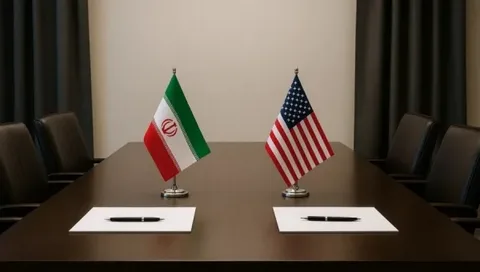
A major diplomatic breakthrough appears to be taking shape as the Iran-US Agreement moves into a new phase following the signing of an Iran MOU between senior representatives of Tehran and Washington. The development comes after weeks of military confrontation, rising tensions across the Middle East, and growing international concern over the possibility of a wider regional conflict.
The new Iran MOU has attracted global attention because it could help reduce hostilities, reopen key trade routes, and create conditions for future diplomatic engagement. While challenges remain, officials on both sides have described the latest understanding as an important step toward de-escalation.
Background: Months of Escalating Tensions
The road to the current Iran-US Agreement has been marked by significant instability. Earlier in the year, tensions increased following military exchanges involving Iran, Israel, and several regional actors. Concerns about attacks on critical infrastructure and disruptions to shipping routes pushed diplomatic efforts into high gear.
International observers warned that continued escalation could threaten regional security and impact global energy markets. As a result, multiple countries encouraged dialogue between Washington and Tehran. The idea of an Iran MOU gradually emerged as a possible framework for reducing immediate risks while opening the door to broader negotiations.
For many analysts, the latest MOU Iran initiative represents the most serious diplomatic effort in recent months. Although it does not resolve all disputes, it establishes a mechanism for communication at a time when mistrust remains high.
Details of the Iran-US Agreement
According to officials familiar with the discussions, the Iran-US Agreement focuses on reducing military tensions and creating conditions for further diplomatic engagement. The agreement reportedly includes commitments aimed at preventing direct confrontation and improving communication channels.
The Iran MOU is not considered a final peace treaty. Instead, it serves as a framework that outlines areas of cooperation and establishes expectations for future talks. Such arrangements are often used in international diplomacy when parties seek to build confidence before entering more comprehensive negotiations.
Supporters argue that the US Iran MOU could lower the risk of miscalculation and accidental escalation. Critics, however, caution that implementation will be the true test of whether the agreement can produce lasting results.
Diplomatic sources indicate that discussions also touched on maritime security and regional stability. These issues have become increasingly important because disruptions in strategic waterways can affect international trade and energy supplies.
Why the Iran MOU Matters
The significance of the Iran MOU extends beyond bilateral relations. Many governments view the understanding as a potential turning point in a region that has experienced repeated cycles of confrontation.
One reason the MOU Iran initiative has gained attention is its potential impact on economic stability. Markets often react to geopolitical uncertainty, particularly when tensions involve major energy-producing regions. Any reduction in conflict risk can improve investor confidence and reduce fears of supply disruptions.
The agreement also demonstrates that diplomacy remains possible even after periods of intense disagreement. International organizations have repeatedly emphasized the importance of dialogue as a means of preventing further conflict.
Another important aspect is the message sent to regional actors. The Iran-US Agreement may encourage broader diplomatic engagement among countries seeking stability and economic growth.
Israel News and Regional Reactions
The latest Israel News developments indicate that policymakers across the region are closely monitoring the agreement. Israel has consistently expressed concerns about Iran’s regional activities and security policies.
Political leaders and security analysts continue to debate the long-term implications of the Iran-US Agreement. Some experts believe it could reduce immediate tensions, while others argue that significant disagreements remain unresolved.
Regional governments have generally welcomed efforts aimed at preventing further escalation. Several countries have emphasized the need for continued dialogue and confidence-building measures.
The agreement has also generated discussion among strategic experts who view diplomacy as essential for avoiding broader instability. Many analysts note that sustained communication will be necessary if the positive momentum created by the Iran MOU is to continue.
Statements from Officials
Officials involved in the process have described the understanding as a practical step toward reducing tensions. While acknowledging that major differences remain, representatives from both sides emphasized the value of continued engagement.
Diplomatic sources indicated that the Iran-US Agreement is intended to create space for future discussions rather than provide immediate solutions to every dispute. This approach reflects the complexity of relations between the two countries.
International observers have also welcomed signs of dialogue. Many experts believe that maintaining communication channels can help prevent misunderstandings during periods of heightened tension.
Some analysts noted that the US Iran MOU could serve as a foundation for future negotiations on broader regional issues. However, they stressed that progress will depend on implementation and sustained political commitment.
Economic and Global Impact
The potential economic impact of the Iran-US Agreement has become a major focus for global markets. Investors often monitor developments in the Middle East because the region plays a critical role in international energy production and transportation.
If the Iran MOU contributes to greater stability, it could reduce uncertainty surrounding trade routes and shipping operations. This would be particularly significant for countries that depend on energy imports.
Financial analysts also point out that diplomatic progress can strengthen business confidence. While markets remain cautious, the possibility of reduced tensions has been viewed positively in many sectors.
Beyond economics, the agreement could influence international diplomacy. Governments around the world are watching closely to determine whether the MOU Iran framework can lead to broader cooperation and conflict prevention.
Challenges Ahead
Despite the optimism surrounding the Iran-US Agreement, several challenges remain. Historical disputes, political differences, and regional security concerns continue to complicate relations.
Experts caution that memorandums of understanding are only effective when accompanied by practical implementation. Both sides will face pressure to demonstrate commitment to the principles outlined in the Iran MOU.
Political developments within the region could also affect the agreement’s future. Unexpected events or security incidents have the potential to disrupt diplomatic momentum.
Nevertheless, many observers believe that maintaining dialogue is preferable to allowing tensions to escalate further. The coming months are likely to determine whether the current framework can evolve into a more comprehensive arrangement.
Conclusion
The Iran-US Agreement and accompanying Iran MOU represent a significant diplomatic development at a time of heightened regional uncertainty. Although the understanding does not resolve every dispute, it creates an opportunity for dialogue and confidence-building between two long-standing rivals.
The success of the agreement will ultimately depend on implementation, political will, and continued engagement. For now, the US Iran MOU has provided a measure of optimism that diplomacy can play a larger role in shaping the future of the Middle East.
As governments, markets, and international observers continue to monitor developments, the agreement stands as one of the most closely watched diplomatic initiatives of the year.
FAQs
Who is Pakistan ruled by?
Pakistan is a parliamentary democratic republic. The country is governed through a system that includes a Prime Minister as the head of government and a President as the constitutional head of state. Executive authority is primarily exercised by the elected government, while the Parliament is responsible for legislation and oversight. The country’s institutions, including the judiciary and provincial governments, also play important roles in governance.
What is a MOU in government?
A Memorandum of Understanding (MOU) is a formal document that outlines the intentions, expectations, and areas of cooperation between two or more parties. In government affairs, an MOU is often used to establish a framework for collaboration before a legally binding agreement is negotiated. It helps define objectives, responsibilities, and future steps while demonstrating a commitment to dialogue and cooperation.
Does MOU stand for?
MOU stands for Memorandum of Understanding. It is commonly used in diplomacy, business, education, and government relations. Although an MOU is generally not legally binding like a treaty or contract, it serves as an important document that records mutual understanding and cooperation between parties pursuing common goals.