
Mojtaba Khamenei supreme leader of the Islamic Republic of Iran has issued his first public statement since being named to the position — vowing to continue the fight against what he described as American and Zionist aggression and declaring that Iran would never surrender to US demands for unconditional capitulation.
Mojtaba Khamenei supreme leader status was confirmed on March 8, 2026 following the death of his father Ali Khamenei in the opening US-Israeli strikes on Iran. The statement — delivered through Iranian state media — has drawn sharp international reactions ranging from US President Donald Trump calling him a lightweight to Russia pledging unwavering support for the new Iranian leadership.
Mojtaba Khamenei wounded reports that circulated in the days following the opening strikes have not been officially confirmed — with Iranian state media presenting the new supreme leader as healthy, resolute, and in full command of the Islamic Republic’s war response.
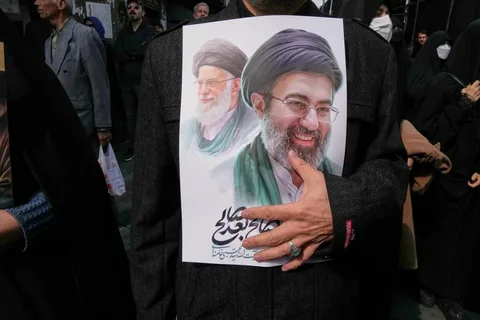
Background: Who Is Mojtaba Khamenei Supreme Leader?
Mojtaba Khamenei supreme leader of Iran was not a widely known public figure outside Iranian political and religious circles before his father’s death elevated him to the highest position in the Islamic Republic.
Born on September 8, 1969 in Mashhad — Iran’s second largest city and holiest pilgrimage destination — Mojtaba Khamenei is the second son of former Supreme Leader Ali Khamenei. He grew up in the shadow of the Islamic Revolution and came of age during the Iran-Iraq War of the 1980s — formative experiences that shaped his worldview and political identity.
Mojtaba Khamenei served in the IRGC’s Habib ibn Mazaher Battalion as a teenager during the Iran-Iraq War — giving him direct combat experience that distinguishes him from many Iranian clerical figures who rose through purely religious rather than military channels.
He studied theology under both his father and the late Grand Ayatollah Shahroudi — acquiring the deep religious credentials that the position of Supreme Leader requires under the Iranian constitution’s concept of Velayat-e Faqih, or guardianship of the Islamic jurist.
Mojtaba Khamenei was elevated to Ayatollah rank in 2022 — a promotion that many Iran analysts at the time interpreted as preparation for an eventual succession. His net worth is estimated at over 3 billion dollars through control of bonyad — Islamic charitable foundations — and other entities linked to the supreme leader’s office.
The United States sanctioned Mojtaba Khamenei in 2019 under Executive Order 13224 targeting individuals linked to terrorism financing — making him a sanctioned individual even before his elevation to Mojtaba Khamenei supreme leader status.
First Statement as Mojtaba Khamenei Supreme Leader
What He Said
Mojtaba Khamenei supreme leader delivered his first formal statement through Iranian state broadcaster IRIB — a carefully staged address designed to project strength, continuity, and defiance in the face of the ongoing US-Israeli military campaign against Iran.
The statement contained 4 core messages that define the new Mojtaba Khamenei supreme leader political and military posture.
First, he declared that Iran would not accept unconditional surrender under any circumstances — directly rejecting Trump’s demand that Iran capitulate as a condition for ending the US military campaign.
Second, Mojtaba Khamenei supreme leader vowed that the IRGC would continue and intensify its multi-front retaliation campaign against US military bases, Gulf infrastructure, and Israeli cities until the US-Israeli assault on Iranian territory ceased.
Third, he framed the conflict in explicitly religious and civilisational terms — describing it as a war imposed on Islam by American imperialism and Zionist aggression, and calling on Muslims worldwide to support Iran’s resistance.
Fourth, Mojtaba Khamenei supreme leader invoked the memory of his father Ali Khamenei — stating that the martyrdom of the former supreme leader had strengthened rather than weakened Iranian resolve, and that every Iranian would honour his memory through continued resistance.
How the Statement Was Delivered
The Mojtaba Khamenei supreme leader statement was notably delivered through audio and written channels rather than live video — a detail that has fuelled speculation about Mojtaba Khamenei wounded or injured reports that Iranian state media has consistently denied.
The absence of live video of Mojtaba Khamenei supreme leader in the days following his appointment has been noted by Western intelligence analysts and Iran watchers as a potential indicator of physical limitations — though Iranian officials have attributed the communication format to security protocols rather than any health concerns.
Mojtaba Khamenei Wounded — Is He Injured?
Mojtaba Khamenei Wounded Reports
Mojtaba Khamenei wounded reports began circulating within 48 hours of the opening US-Israeli strikes on Iran — with unverified social media accounts and some opposition exile sources claiming that Mojtaba Khamenei had been injured in a strike on a facility where he was present at the time of the attack.
Mojtaba Khamenei wounded claims have not been confirmed by any official source — Iranian, American, or Israeli. Iranian state media has explicitly denied that Mojtaba Khamenei is injured in any way, describing the new supreme leader as healthy and in complete command of the Islamic Republic’s war management.
US intelligence officials, when asked about Mojtaba Khamenei wounded reports, declined to confirm or deny — a studied ambiguity that neither validates nor definitively refutes the claims.
Mojtaba Khamenei Injured — What the Evidence Suggests
The Mojtaba Khamenei injured question remains genuinely unresolved. The circumstantial evidence cited by those advancing Mojtaba Khamenei wounded claims includes the absence of live video appearances, the delivery of his first statement through audio and written formats only, and reports from Iranian opposition sources about medical personnel being summoned to a secure location in the days following his appointment.
The counter-argument to Mojtaba Khamenei injured claims is straightforward — a newly appointed supreme leader conducting his first days in office during an active war would have compelling security reasons to minimise video appearances regardless of his physical condition.
The Mojtaba Khamenei wounded question may only be definitively resolved when the new supreme leader makes a verifiable live public appearance — an event that Iranian state media has not yet scheduled.
Mojtaba Khamenei Wife — Personal Profile
Who Is Mojtaba Khamenei’s Wife?
Mojtaba Khamenei wife was Zahra Haddad-Adel — a member of one of Iran’s most prominent conservative political families and the daughter-in-law connection that linked the Khamenei and Haddad-Adel families in one of the Islamic Republic’s most politically significant marriages.
Mojtaba Khamenei wife Zahra Haddad-Adel was killed on February 28, 2026 — the opening day of the US-Israeli strikes on Iran. Her death in the opening hours of the conflict, combined with the killing of his father Ali Khamenei, means that Mojtaba Khamenei supreme leader assumed his position having lost both his father and his wife within hours of each other.
The personal dimension of Mojtaba Khamenei wife Zahra’s death has been used extensively by Iranian state media to frame the new supreme leader as a figure who has personally paid the ultimate price in the confrontation with American and Israeli military power — a narrative designed to strengthen his religious and political legitimacy among the Iranian population.
Mojtaba Khamenei Children
Mojtaba Khamenei and his late wife Zahra had 3 children together — Mohamed Amin, Fatemeh Sadaat, and Mohamed Bagher. One son was also reported killed in the opening strikes of the conflict, adding further to the personal losses that Mojtaba Khamenei supreme leader has absorbed in the days surrounding his appointment.
International Reaction to Mojtaba Khamenei Supreme Leader
US Reaction
US President Donald Trump’s reaction to Mojtaba Khamenei supreme leader appointment was characteristically blunt — describing the new Iranian leader as a lightweight and unacceptable, and suggesting that his elevation would not change US military objectives or negotiating demands.
Trump’s lightweight characterisation of Mojtaba Khamenei supreme leader was widely reported in Iranian state media — where it was presented as evidence of American arrogance and used to rally domestic support for the new leadership.
Russian and Chinese Reaction
Russia pledged unwavering support for the Mojtaba Khamenei supreme leader government — with Moscow’s statement representing one of the clearest expressions of Russian backing for Iran since the conflict began.
China expressed opposition to any targeting of Mojtaba Khamenei supreme leader by US or Israeli forces — a statement interpreted as a warning against any attempt to replicate the day-one strike that killed Ali Khamenei against his successor.
Israeli Reaction
Israel issued a stark warning to Mojtaba Khamenei supreme leader — with Israeli officials stating that his position would not grant him immunity from military targeting if he continued to direct attacks on Israeli territory.
The Israeli warning regarding Mojtaba Khamenei supreme leader was interpreted by analysts as both a military threat and a psychological pressure operation designed to destabilise the new Iranian leadership in its earliest and most vulnerable days.
Quotes on Mojtaba Khamenei Supreme Leader
Mojtaba Khamenei supreme leader stated through Iranian state media that Iran had never bowed to aggression in its 4,000 years of history and would not begin now — adding that the blood of the martyrs including his own father and wife would water the tree of Islamic resistance until final victory was achieved.
US President Donald Trump described Mojtaba Khamenei supreme leader as a lightweight who would face the same consequences as his father if he continued directing attacks on US forces and allies — adding that the only acceptable outcome of the conflict remained Iran’s unconditional surrender.
Russian Foreign Minister Sergei Lavrov stated that Russia recognised Mojtaba Khamenei supreme leader as the legitimate head of the Islamic Republic and pledged full Russian diplomatic support for Iran’s sovereignty and territorial integrity against what he described as illegal American and Israeli aggression.
Israeli Prime Minister Benjamin Netanyahu warned that Mojtaba Khamenei supreme leader should understand that Israel’s reach was long and its patience with Iranian attacks on Israeli cities was exhausted — stopping just short of an explicit assassination threat that Israeli security officials privately made more directly.
A senior Iranian Revolutionary Guards commander stated that the appointment of Mojtaba Khamenei supreme leader had unified the IRGC’s resolve — adding that every soldier of the Islamic Revolution was prepared to give his life in defence of the supreme leader and the Islamic Republic.
Impact: What Mojtaba Khamenei Supreme Leader Means for the Iran War
No Negotiated Exit in Sight
The Mojtaba Khamenei supreme leader first statement — vowing to fight and rejecting unconditional surrender — eliminates any near-term prospect of a negotiated end to the conflict on US terms.
A newly appointed supreme leader who opened his tenure by vowing resistance has no political space to immediately pivot to negotiation without catastrophically undermining his own legitimacy. The Mojtaba Khamenei supreme leader defiance posture may therefore be both genuine conviction and political necessity — with the two being impossible to separate in the current environment.
IRGC Loyalty Question
The speed with which the IRGC endorsed Mojtaba Khamenei supreme leader — with IRGC commanders reportedly pressuring the Assembly of Experts to confirm his appointment rapidly — suggests that the military establishment views his elevation as serving its institutional interests.
An IRGC that backed the Mojtaba Khamenei supreme leader appointment is an IRGC that retains significant influence over the new supreme leader — a dynamic that may make the IRGC’s war strategy more difficult to moderate through diplomatic back-channels even if Mojtaba Khamenei wounded or injured reports were to prove accurate.
Global Implications
The Mojtaba Khamenei supreme leader era begins in the most dangerous circumstances imaginable — with Iran under active military assault, its economy under maximum pressure, its nuclear programme destroyed, and its regional proxy network severely degraded.
Whether Mojtaba Khamenei supreme leader proves to be the hardline fighter his first statement projects or a pragmatist who eventually seeks a political exit from an unwinnable war will be the defining question of the Iran war’s next phase.
Frequently Asked Questions
When Did Khamenei Become Supreme Leader?
Mojtaba Khamenei became supreme leader on March 8, 2026 following the death of his father Ali Khamenei in US-Israeli strikes on Iran on February 28, 2026. Ali Khamenei himself had become supreme leader in June 1989 following the death of the Islamic Republic’s founder Ayatollah Ruhollah Khomeini. Mojtaba Khamenei supreme leader appointment was confirmed by Iran’s Assembly of Experts — the 88-member clerical body constitutionally empowered to select and supervise the supreme leader — under significant pressure from IRGC commanders who backed his rapid confirmation to ensure continuity of leadership during the active war.
How Many Supreme Leaders Has Iran Had?
Iran has had 2 supreme leaders since the establishment of the Islamic Republic in 1979. The first was Ayatollah Ruhollah Khomeini — the founder of the Islamic Republic who led Iran from the 1979 revolution until his death in June 1989. The second was Ali Khamenei — who served as supreme leader from June 1989 until his death on February 28, 2026 in the opening US-Israeli strikes on Iran. Mojtaba Khamenei supreme leader is therefore the third person to hold the position in the Islamic Republic’s history — and the first to assume it under conditions of active foreign military assault on Iranian territory.
What Religion Is Ayatollah?
Ayatollah is a senior clerical title in Twelver Shia Islam — the branch of Islam practised by approximately 85 to 90 percent of Iran’s population and the official state religion of the Islamic Republic. The title Ayatollah means sign of God in Arabic and is awarded to senior Shia scholars who have demonstrated mastery of Islamic jurisprudence, theology, and law through decades of study in the Shia seminary system. Mojtaba Khamenei was elevated to Ayatollah rank in 2022. The supreme leader of Iran must hold at minimum Ayatollah rank under the constitution’s Velayat-e Faqih framework — which requires the supreme leader to be a qualified Islamic jurist capable of issuing religious rulings binding on the Islamic Republic. Grand Ayatollah is a higher rank above Ayatollah held by the most senior Shia scholars with the largest independent followings.
Conclusion
Mojtaba Khamenei supreme leader has announced himself to the world through a statement of defiance — vowing to fight, rejecting surrender, and framing the US-Israeli assault on Iran as a civilisational confrontation that Islam will ultimately win.
Whether Mojtaba Khamenei wounded reports prove accurate, whether Mojtaba Khamenei wife Zahra’s death and his father’s killing have hardened his resolve beyond any diplomatic reach, and whether his IRGC-backed supreme leader appointment gives him the authority to actually end the war if he chose to — these are the 3 questions that will define the next chapter of the Iran war.
The world is watching a new supreme leader forge his identity in the crucible of the most dangerous conflict the Middle East has seen in a generation. History will judge whether Mojtaba Khamenei supreme leader proves to be the resistance fighter his first statement proclaims — or a pragmatist waiting for the right moment to end a war that neither side can truly win.