
Pakistan-China Khunjerab Pass trade is in full swing in March 2026 — with officials from both countries confirming that the high-altitude border crossing on the Karakoram Highway is operating at its highest cargo throughput in years, driven by China’s drive to expand bilateral trade volumes and Pakistan’s growing need for an alternative supply route as the Gulf crisis disrupts its maritime import channels. The Khunjerab Pass trade latest news shows that the crossing — which straddles the border between Pakistan’s Gilgit-Baltistan and China’s Xinjiang region at 4,693 metres above sea level — is now operating year-round under upgraded infrastructure protocols, ending the previous seasonal closure model that used to shut the Khunjerab Pass trade route during winter months. The Khunjerab Pass trade date for the 2026 full operations season was confirmed as running continuously since January 1 — the first full year-round Khunjerab Pass trade operation in the crossing’s history.
Background: What Is the Khunjerab Pass Trade Route and Why Does It Matter?
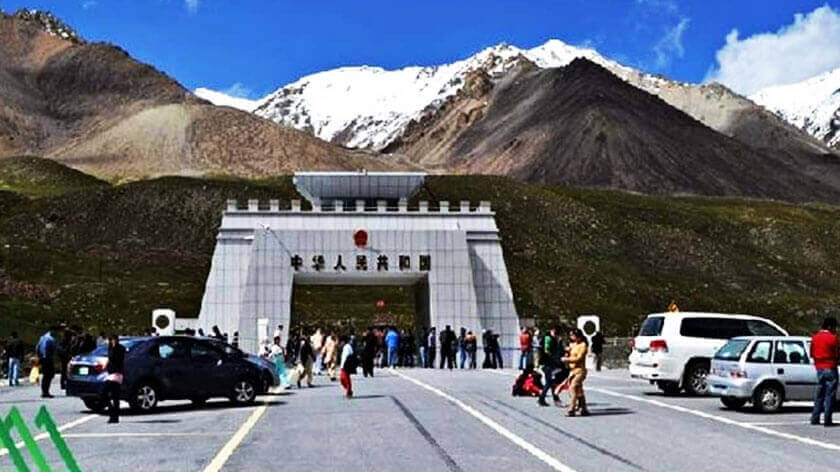
The Khunjerab Pass trade route is the primary land crossing between Pakistan and China — a high-altitude mountain pass on the Karakoram Highway that connects Pakistan’s Gilgit-Baltistan region with China’s Xinjiang Uyghur Autonomous Region. The Khunjerab Pass map shows it sitting at the junction of the Karakoram, Hindu Kush, and Himalayan mountain ranges — making it the highest paved international border crossing in the world at 4,693 metres above sea level.
The Khunjerab Pass trade route has been operational since the Karakoram Highway was completed in 1978 — a joint Pakistan-China engineering achievement that took 20 years to build through some of the world’s most challenging terrain. The Karakoram Highway connects Abbottabad in Pakistan’s Khyber Pakhtunkhwa province through Gilgit-Baltistan to Kashgar in China’s Xinjiang — a distance of approximately 1,300 kilometres that forms the northern corridor of the China-Pakistan Economic Corridor.
The Khunjerab Pass trade has historically operated on a seasonal basis — the Khunjerab Pass trade date for opening was typically around April 1 each year, with the pass closing to cargo traffic in November due to heavy snowfall, avalanche risk, and extreme cold at altitude. The Khunjerab Pass trade date seasonal calendar limited annual cargo movement to approximately seven months per year — restricting the volume of trade that could flow through the crossing.
The Khunjerab Pass trade latest news of year-round operations in 2026 represents the fulfilment of a long-standing goal of both Pakistan and China — to convert the Khunjerab Pass trade route from a seasonal crossing into a permanent all-weather trade corridor capable of handling continuous cargo flows that would make it a genuinely competitive alternative to maritime trade routes.
Details: Khunjerab Pass Trade — Full Story
Khunjerab Pass Trade — Year-Round Operations Confirmed
The Khunjerab Pass trade latest news confirms that the crossing has been operating continuously since January 1, 2026 — the first time in its history that the Khunjerab Pass trade has continued through the traditional winter closure period. The year-round Khunjerab Pass trade operation was made possible by infrastructure upgrades completed in 2025 — including improved snow clearance equipment deployed by both Pakistan’s National Highway Authority and China’s Ministry of Transport, avalanche protection structures at the most vulnerable sections of the Karakoram Highway, and enhanced heating and accommodation facilities at the Khunjerab Pass trade border crossing point for drivers and customs officials.
The Khunjerab Pass trade latest news shows that cargo volumes in January and February 2026 — months when the Khunjerab Pass trade would previously have been completely suspended — reached approximately 1,200 to 1,400 trucks per month. The Khunjerab Pass trade latest news confirms this winter cargo volume, while lower than the summer peak of approximately 3,000 trucks per month, demonstrates that year-round Khunjerab Pass trade is operationally viable and economically meaningful.
Khunjerab Pass Trade — The Gulf Crisis Alternative Route Context
The Khunjerab Pass trade latest news is particularly significant in the context of Pakistan’s Gulf crisis supply chain disruptions. The Iran war’s disruption of maritime routes through the Strait of Hormuz and Gulf ports has pushed Pakistan to accelerate its use of alternative land trade routes — with the Khunjerab Pass trade route emerging as the most strategically important alternative to the Gulf maritime corridor.
The Khunjerab Pass trade route offers Pakistan access to Chinese goods — including consumer electronics, industrial machinery, pharmaceutical APIs, automotive components, and a wide range of manufactured products — without any dependence on the Gulf maritime routes currently affected by the Iran war. The Khunjerab Pass trade latest news therefore represents not just commercial activity but strategic supply chain resilience at a moment when Pakistan’s maritime import routes face significant disruption.
The Khunjerab Pass trade latest news confirms that Pakistani importers have been actively redirecting orders for Chinese goods from maritime to overland routing through the Khunjerab Pass trade corridor — with the Sost dry port at the Pakistan end of the Khunjerab Pass trade route reporting a 35 to 40 percent increase in cargo processing volumes since the Gulf crisis began in late February 2026.
Khunjerab Pass Trade — What Moves Through the Crossing
The Khunjerab Pass trade latest news covers a diverse cargo mix that reflects both the breadth of Pakistan-China bilateral commerce and the specific emergency supply needs created by the Gulf crisis. The Khunjerab Pass trade in the current period includes Chinese imports to Pakistan covering consumer electronics, mobile phones, solar panels, industrial machinery, vehicle components, pharmaceutical raw materials, textiles and clothing, household goods, and fresh fruit and vegetables.
The Khunjerab Pass trade also covers Pakistani exports to China — a smaller but growing component of the Khunjerab Pass trade flow that includes marble, granite, dried fruits, pine nuts, gemstones from Gilgit-Baltistan and KPK, and increasingly, Pakistani manufactured textile and leather products destined for Chinese distribution networks.
The Khunjerab Pass trade latest news highlights solar panels as one of the most rapidly growing commodity categories — with Pakistani importers taking advantage of Chinese solar panel prices that have fallen 60 to 70 percent in the past three years to source panels for Pakistan’s rapidly expanding distributed solar energy sector. The Khunjerab Pass trade route offers significantly faster delivery times for solar panels than maritime routing through Gulf ports — a critical advantage when Pakistan’s electricity sector is trying to accelerate solar deployment.
Khunjerab Pass Map — The Strategic Geography
The Khunjerab Pass map context is essential to understanding why the crossing matters strategically. The Khunjerab Pass map shows the pass sitting at the intersection of three of the world’s great mountain ranges — the Karakoram, the Hindukush, and the western Himalayas. This geographical position makes the Khunjerab Pass map the key to the overland connection between South Asia and East Asia — a route that, if fully developed, could eventually carry not just Pakistan-China trade but transit trade between China and the broader South Asian market.
The Khunjerab Pass map also shows the strategic logic of CPEC — the China-Pakistan Economic Corridor — which is built along the Karakoram Highway corridor that runs through the Khunjerab Pass trade zone. CPEC infrastructure investment in roads, energy pipelines, and fibre optic networks running through the Khunjerab Pass map corridor is designed to make the land route between China’s industrial heartland and the Arabian Sea commercially competitive with maritime alternatives.
The Khunjerab Pass map further illustrates Pakistan’s geographic advantage as a transit corridor — the Khunjerab Pass map position gives Pakistan potential transit revenue from goods moving between China and Afghanistan, Central Asia, and the broader Middle East through land routes that bypass the traditional maritime chokepoints including the Strait of Hormuz and Malacca Strait.
Khunjerab Pass Trade Date — The New Year-Round Calendar
The Khunjerab Pass trade date for 2026 represents a historic change in the crossing’s operational model. The previous Khunjerab Pass trade date calendar had the pass officially opening to cargo traffic on April 1 and closing on November 30 — a 7-month window. The new year-round Khunjerab Pass trade date model means the crossing is open 365 days per year — adding approximately 5 months of previously unavailable Khunjerab Pass trade capacity to the annual trade calendar.
The Khunjerab Pass trade date change was formalised through a bilateral protocol signed by Pakistan and China in September 2025 — which also standardised customs procedures, streamlined cargo documentation requirements, and established joint inspection protocols to reduce border crossing times from the previous average of 4 to 6 hours per truck to the new target of 90 minutes.
The Khunjerab Pass trade date year-round model is supported by the Sost dry port on the Pakistan side — which was upgraded with additional cold storage facilities, vehicle inspection bays, and digital customs processing systems as part of the protocol implementation. The Khunjerab Pass trade date calendar also now includes a formal winter transit protocol — with Pakistan’s NHA and China’s Ministry of Transport coordinating daily weather and road condition assessments to ensure safe Khunjerab Pass trade operations during the winter months.
Khunjerab Pass Trade — Pakistan-China Bilateral Trade Context
The Khunjerab Pass trade latest news is one component of a much larger Pakistan-China bilateral trade relationship. Pakistan-China bilateral trade reached approximately $28 billion in FY2025 — with imports from China dominating at approximately $26 billion and Pakistani exports to China at approximately $2 billion. The trade imbalance is one of Pakistan’s most significant economic policy challenges — with the Khunjerab Pass trade route being promoted by both governments as a channel through which Pakistani exports to China can be increased.
The Khunjerab Pass trade latest news of Pakistani exporters using the crossing to access Chinese markets has focused on Gilgit-Baltistan’s agricultural produce — apricots, cherries, apples, and pine nuts — which reach Chinese markets faster through Khunjerab Pass trade routing than through maritime alternatives. The Khunjerab Pass trade route’s proximity to Gilgit-Baltistan’s producing areas gives it a natural advantage for fresh produce trade that maritime routing cannot replicate.
Quotes
Gilgit-Baltistan Chief Minister, on Khunjerab Pass trade latest news: “The Khunjerab Pass trade is in full swing and operating year-round for the first time in our history. This is a transformative development for Gilgit-Baltistan — the communities along the Karakoram Highway are directly benefiting from the increased Khunjerab Pass trade activity.”
Sost dry port director, on the Khunjerab Pass trade volume increase: “We are processing 35 to 40 percent more cargo than the same period last year. The Gulf crisis has redirected significant Chinese import demand through the Khunjerab Pass trade route. Our capacity is being tested — but we are meeting the demand.”
Chinese Consul General Karachi, on Khunjerab Pass trade bilateral significance: “The year-round Khunjerab Pass trade operation represents the maturation of CPEC’s land connectivity vision. China is committed to increasing the volume and diversity of goods flowing through the Khunjerab Pass trade corridor — both to Pakistan and beyond.”
Pakistani importer, on switching from Gulf maritime to Khunjerab Pass trade routing: “I used to import all my Chinese goods through Dubai. Since the Gulf crisis began, I have shifted to Khunjerab Pass trade routing. Transit time is longer but the cost uncertainty is lower — I know what I am paying without worrying about Strait of Hormuz risk premiums.”
TDAP official, on expanding Pakistani exports through the Khunjerab Pass trade: “The Khunjerab Pass trade is not just an import route for Pakistan. It is a gateway to China’s consumer market for Pakistani products. We are working to expand Pakistani fruit, marble, and textile exports through the Khunjerab Pass trade route.”
Karakoram Highway engineer, on the infrastructure behind the Khunjerab Pass trade year-round operations: “Year-round Khunjerab Pass trade was considered impossible 10 years ago. The snow clearance equipment, the avalanche protection structures, and the improved road surfaces we have built make it feasible today. The Khunjerab Pass trade route has been genuinely transformed.”
Impact: What the Khunjerab Pass Trade Means
For Pakistan’s Supply Chain Resilience
The Khunjerab Pass trade’s full-swing operation during the Gulf crisis demonstrates that Pakistan has a viable alternative land route for Chinese goods that does not depend on Gulf maritime infrastructure. The Khunjerab Pass trade route’s strategic value as a supply chain alternative has been validated by the Gulf crisis in real time — and Pakistan’s ability to redirect Chinese import flows through the Khunjerab Pass trade corridor has meaningfully cushioned the economic impact of the maritime disruption.
For Gilgit-Baltistan’s Economy
The Khunjerab Pass trade latest news is the most positive economic development for Gilgit-Baltistan in years. Increased Khunjerab Pass trade volumes mean higher customs revenue flowing through the Sost dry port, more business for transport operators and logistics companies along the Karakoram Highway, more overnight stays in Gilgit-Baltistan hotels and rest houses by drivers and traders, and more demand for fuel, food, and services in the communities along the Khunjerab Pass trade corridor.
For CPEC’s Land Corridor Vision
The year-round Khunjerab Pass trade operation is the most concrete demonstration that CPEC’s land connectivity vision is becoming operational reality rather than remaining a strategic aspiration. The Khunjerab Pass trade route’s year-round functionality transforms it from a seasonal supplement to maritime trade into a genuine alternative corridor — the foundation on which Pakistan can build a viable overland transit trade economy connecting China to the Arabian Sea.
For Pakistan-China Relations
The Khunjerab Pass trade latest news of record volumes and year-round operations is a positive signal for Pakistan-China bilateral relations at a moment when the broader regional environment — the Iran war, Gulf disruption, and global supply chain realignment — is creating new strategic partnerships and trade alignments. The Khunjerab Pass trade route’s performance during the Gulf crisis demonstrates the practical value of the CPEC partnership in a way that abstract economic projections cannot.
Conclusion
The Khunjerab Pass trade is in full swing — and for the first time in the crossing’s history, it is operating year-round. The Khunjerab Pass trade latest news tells a story of strategic infrastructure investment paying off at precisely the moment Pakistan needs it most — when Gulf maritime routes are disrupted, Chinese goods need alternative routing, and Pakistan’s supply chain resilience is being tested in real time.
The Khunjerab Pass map shows a crossing at the roof of the world — 4,693 metres above sea level, connecting two countries through the most challenging terrain on earth. The Khunjerab Pass trade date is now every day of the year. The Khunjerab Pass trade latest news is cargo trucks moving, customs officers processing, and Pakistani importers and Chinese exporters discovering that the mountain route works.
The Khunjerab Pass trade is not the solution to all of Pakistan’s import vulnerabilities — it cannot carry petroleum products at the volume Pakistan needs, and it cannot replace the maritime container trade that defines modern global commerce. But the Khunjerab Pass trade in full swing in March 2026 is proof that Pakistan has a northern land corridor that functions — and that CPEC has built something real at the top of the Karakoram.
FAQs
Which pass connects Pak to China?
The Khunjerab Pass is the only modern day border crossing between China and Pakistan, accessed via the Karakorum Highway. Historically the Mintaka Pass and Kilik Pass have also been used; however those crossings do not have vehicle access and are closed.
Why is the Khunjerab Pass closed?
The Khunjerab border, a key land route connecting Pakistan and China, has been officially closed for public traffic, trade, and tourism to address the challenges of harsh winter conditions. Effective from November 30, 2024, the closure will remain in place until March 30, 2025.
How far is the passu from Khunjerab Pass?
From the National Park entry gate to the Khunjerab border pass is 50 km and takes up to around 2 hours. So the whole round trip Passu to the border and back is a full day of around 8 or more hours.