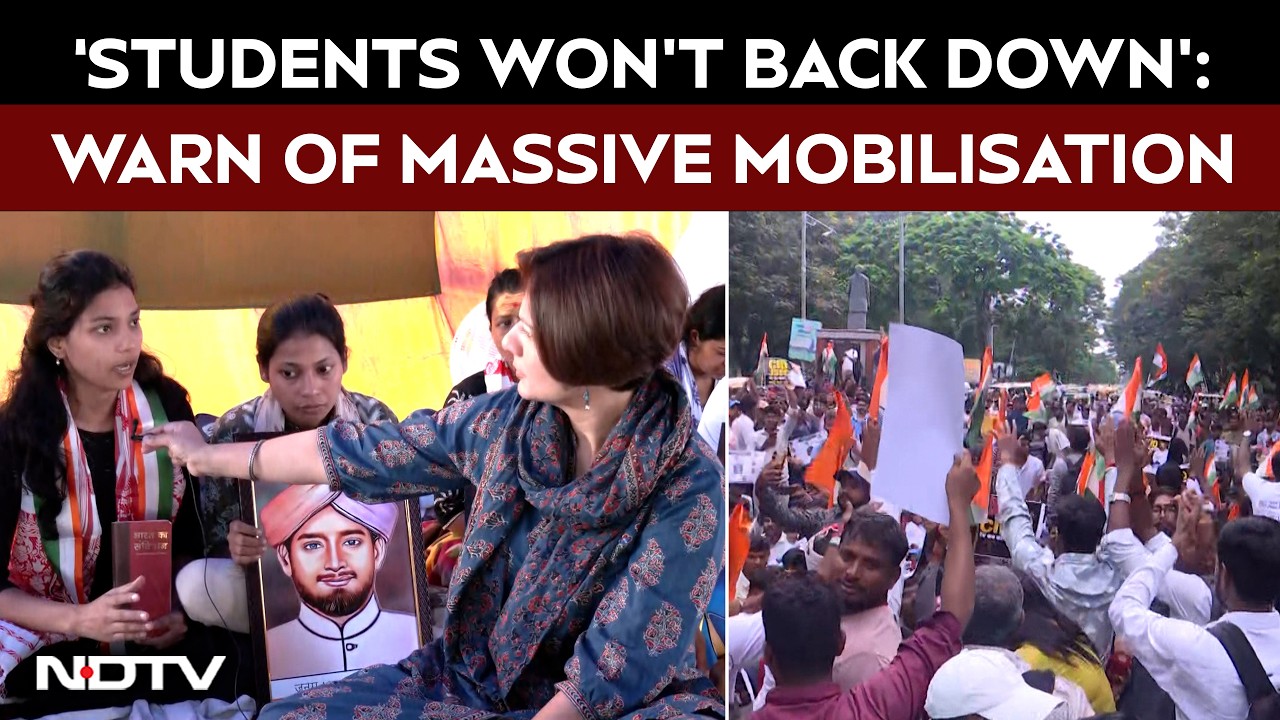
Thousands of JPSC-JSSC aspirants marched toward the Jharkhand Vidhan Sabha in Ranchi on Monday after negotiations with the state government broke down. The Jharkhand students protest has grown into one of the state’s largest youth-led movements this year, with demonstrators demanding the full cancellation of the JSSC-CGL recruitment exam over alleged irregularities.
Police detained several opposition leaders outside the chief minister’s residence as the crowd pushed past barricades. Senior officers had earlier promised no action against protesters as long as the march stayed peaceful.
Background
The unrest traces back to complaints about how the Jharkhand Public Service Commission and the Jharkhand Staff Selection Commission have handled recent recruitment exams. Aspirants allege that paper leaks, inconsistent scoring, and poor transparency have repeatedly derailed the hiring process for government jobs in the state.
Frustration had already been building for months. Candidates began a sit-in protest at Ranchi’s Jaipal Singh Munda Stadium in late July, demanding a fair probe into the JPSC exam. That protest gradually swelled as more student groups, social organisations, and political figures lent their support.
An eleven-member delegation was later formed to hold talks between protesters and the state government. Officials reportedly agreed to review several complaints, but the central demand — scrapping the JSSC-CGL exam entirely — remained unresolved. That gap is what pushed the movement toward Monday’s assembly march.
Details
The protesting students had called for a “Vidhan Sabha gherao” on Monday morning, gathering first at the Old Vidhan Sabha before setting off toward the state assembly building. Organisers had asked participants to keep the demonstration peaceful and disciplined.
Ranchi police had braced for the march for days, with additional forces deployed around the assembly and the chief minister’s residence. Senior police officers assured students that no action would be taken against them as long as the protest stayed non-violent.
Despite that assurance, the crowd broke through police barricades during the march and continued moving toward the assembly. Authorities also detained senior BJP leaders, including former chief minister Babulal Marandi, who had gathered outside the chief minister’s residence in solidarity with the students.
Student leader Devendra Nath Mahato, who has been on a hunger strike over the exam issue, joined the march in an ambulance after his health weakened. Even so, he continued urging fellow protesters to keep the demonstration peaceful.
The march also fell on the chief minister’s birthday, a coincidence organisers referenced while urging protesters not to let the day turn confrontational.
Quotes
Student leader Ravindra Paswan told reporters the march would begin from the Old Vidhan Sabha and stay within constitutional limits, while urging the wider public to extend moral support to the aspirants.
Fellow student leader Devendra Nath Mahato struck a similarly cautious tone, stressing that the protest should remain peaceful and that no clashes should mar the day.
He also acknowledged that the government had accepted some of the students’ demands, but said the exam-cancellation issue remained the movement’s core grievance.
Impact
The Jharkhand students protest carries weight well beyond Ranchi’s streets. Government job recruitment is a major source of formal employment in the state, and repeated exam controversies have deepened distrust among young jobseekers toward the commissions responsible for hiring.
A prolonged standoff could delay recruitment drives that thousands of candidates are depending on, some of whom have waited years for a single exam cycle to be resolved fairly. It also puts political pressure on the state government, with opposition parties using the moment to criticise the administration’s handling of youth employment.
Beyond Jharkhand, the protest adds to a broader pattern seen across several Indian states in recent years, where student groups have pushed back hard against exam paper leaks and recruitment delays. How the state responds here could influence how other governments handle similar disputes going forward.
Conclusion
With talks between the government and student representatives having failed to produce a resolution, the coming days are likely to determine whether the Jharkhand students protest cools down or escalates further. Much will depend on whether the state agrees to cancel the disputed JSSC-CGL exam or offers an alternative that satisfies protesters.
For now, both sides appear cautious about further confrontation. Police have signalled restraint as long as demonstrations stay peaceful, while student leaders continue to appeal for discipline within their own ranks. Further updates are expected as the assembly march develops through the day.
Frequently Asked Questions
Why is Sonam Wangchuk protesting?
Sonam Wangchuk, the Ladakh-based engineer and educator, has for years led hunger strikes and marches demanding Sixth Schedule constitutional status and full statehood for Ladakh, arguing that the region needs stronger protections for its land, culture, and local employment after being separated from Jammu and Kashmir in 2019. In 2026 he also joined a separate youth-led protest in Delhi calling for reforms to how national entrance exams are managed, after irregularities in exam conduct sparked outrage among students. His activism is distinct from the ongoing Jharkhand students protest but reflects a similar frustration with how examination and recruitment systems are run across India.
Why are Gen Z protesting in India?
Young Indians have increasingly taken to the streets over issues tied to education and employment, including exam paper leaks, delayed recruitment results, and a sense that opportunities for government jobs are shrinking relative to the number of qualified applicants. Movements such as the Jharkhand students protest and the Ladakh statehood agitation reflect this wider generational frustration, where students feel that institutional processes meant to serve them have instead become sources of delay and mistrust. Social media has also made it easier for these localised protests to gain national attention quickly.
Why are students protesting in India?
Across several states, students have organised protests largely centred on recruitment exam irregularities, delayed results, and a lack of transparency from public service commissions. In Jharkhand specifically, aspirants are demanding the cancellation of the JSSC-CGL exam over alleged malpractice, while similar frustrations have driven protests in other states over the years. These movements tend to escalate when students feel that official assurances and committee reviews are not translating into concrete action on their core demands.