

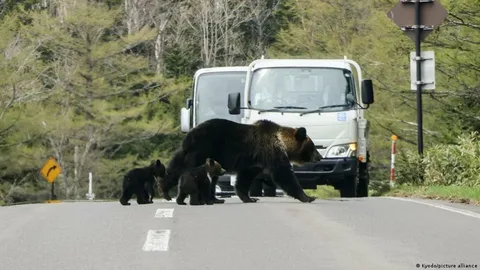
A new Japan bear attack 2026 incident has renewed concerns about the growing number of encounters between humans and bears across the country. Authorities spent hours attempting to capture a bear that entered a factory building before escaping through a window, highlighting the challenges Japan faces as wildlife increasingly enters urban and industrial areas.
The event comes amid a broader rise in Japan bear attacks and sightings, prompting experts to examine why bears are appearing more frequently near human settlements and what can be done to prevent future incidents.
Background
The relationship between humans and bears in Japan has changed significantly over the past decade. Traditionally, bears remained deep inside forested mountain regions where contact with people was relatively rare. However, recent years have seen a notable increase in encounters between wildlife and humans.
The latest Japan bear attack 2026 story emerged after a bear entered a factory facility, creating panic among workers and triggering a large-scale response from local authorities. While no fatalities were reported in the incident, it underscored the growing concerns surrounding the bear problem in Japan.
Officials have repeatedly warned that shrinking habitats, demographic changes in rural communities, and changing environmental conditions are contributing to increased interactions between bears and humans.
Bear Escapes After Entering Factory
According to authorities, the bear entered an industrial facility, prompting workers to immediately alert emergency services. Wildlife experts, police officers, and local officials arrived at the scene to contain the animal and prevent injuries.
The operation lasted several hours as teams attempted to secure the building and guide the bear toward a safe capture zone. However, the animal eventually escaped by breaking through or accessing a factory window, surprising officials who had hoped to safely relocate it.
The unusual nature of the escape attracted widespread attention across Japan and internationally. Images and reports from the scene quickly circulated online, fueling discussions about the growing frequency of bear incidents in populated areas.
Although the incident ended without major injuries, authorities emphasized that the situation could easily have become more dangerous had workers been unable to evacuate quickly.
Why Are Bears Appearing More Often?
Experts point to several factors behind the increase in Japan bear attacks and sightings.One major reason is habitat pressure. As forests change and food availability fluctuates, bears are increasingly searching for alternative food sources. Agricultural fields, residential areas, and industrial zones can sometimes provide easier access to food than natural habitats.
Another factor involves demographic shifts. Many rural communities in Japan have experienced population decline. As fewer people live in remote areas, abandoned farmland and less human activity create environments that wildlife can more easily enter.
Climate conditions may also play a role. Changes in seasonal food supplies, including nuts and berries that bears depend on, can push animals toward human settlements in search of nutrition.Together, these factors are contributing to what many experts describe as a long-term wildlife management challenge.
Understanding the Bear Problem in Japan
The bear problem in Japan is not limited to a single region. Reports of bears entering towns, schools, farms, and industrial facilities have emerged from multiple prefectures.
Japanese black bears are among the species most commonly involved in these incidents. While generally shy and avoiding human contact, they can become dangerous when startled, threatened, or searching for food.
The expansion of human infrastructure into natural habitats has increased opportunities for encounters. At the same time, reduced hunting activity and conservation efforts have contributed to healthier bear populations in some areas.
This combination of ecological and social factors has created a situation where wildlife management has become a growing national concern.
Are Bears in Japan Dangerous?
Many people ask: Are bears in Japan dangerous?The answer depends largely on the circumstances. Most bears prefer to avoid people and will retreat if given the opportunity. However, bears remain powerful wild animals capable of causing serious injuries.
A black bear attack Japan incident typically occurs when a bear feels cornered, surprised, or threatened. Encounters involving cubs can be especially risky because mother bears are highly protective.
Experts advise people to remain calm if they encounter a bear, avoid sudden movements, and slowly back away without turning their backs on the animal.Authorities also recommend avoiding areas where bear activity has recently been reported and following local safety guidance.
Japan Bear Attack Map Shows Expanding Encounters
Wildlife researchers increasingly use a Japan bear attack map to track incidents across the country.These maps reveal that encounters are no longer confined to remote mountain regions. Instead, reports have appeared closer to residential neighborhoods, agricultural areas, transportation routes, and industrial facilities.
The geographic spread of incidents suggests that the issue is becoming more widespread rather than remaining isolated to specific locations.Monitoring systems help authorities identify high-risk zones and allocate resources more effectively. They also provide valuable information for residents living in areas with increased bear activity.
Government Response and Safety Measures
Local governments have introduced a variety of measures aimed at reducing conflicts between humans and bears.These efforts include installing warning systems, increasing public awareness campaigns, deploying wildlife monitoring technology, and supporting trained response teams.
Some municipalities have also improved waste management practices to reduce food sources that may attract bears into populated areas.Officials stress that long-term solutions will require cooperation between environmental agencies, local governments, researchers, and communities.Public education remains one of the most important tools in preventing dangerous encounters.
Impact on Communities and Industry
The latest Japan bear attack 2026 incident highlights the economic and social impacts of wildlife encounters.Businesses may face temporary shutdowns during emergency responses. Schools sometimes adjust schedules when bears are reported nearby. Farmers can suffer crop losses, while residents may feel less secure in affected communities.Tourism can also be influenced by reports of wildlife incidents, particularly in regions known for outdoor recreation.
At the same time, experts caution against portraying bears solely as threats. Conservation remains important, and many specialists advocate balanced approaches that protect both people and wildlife.
What Happens Next?
Authorities continue to investigate the factory incident and review response procedures. Wildlife experts are also analyzing broader trends to better understand why bear encounters are increasing.Future strategies may include expanded monitoring networks, improved habitat management, and enhanced public education campaigns.
As Japan continues to address this growing challenge, balancing conservation goals with public safety will remain a key priority.The latest incident serves as another reminder that human-wildlife interactions are becoming an increasingly important issue in modern Japan. Whether through improved planning, better awareness, or stronger wildlife management policies, officials will likely face continued pressure to reduce the risk of future encounters while preserving the country’s natural ecosystems.
FAQs
What is the biggest problem in Japan right now?
Japan faces several major challenges, including an aging population, labor shortages, economic pressures, and increasing human-wildlife conflicts. In some regions, rising encounters between humans and bears have become a significant public safety concern, especially as wildlife moves closer to populated areas.
Why are bear sightings increasing in Japan?
Bear sightings are increasing due to a combination of factors, including habitat changes, reduced food availability in forests, rural depopulation, and environmental shifts. As bears search for food and encounter fewer people in remote areas, they are more likely to enter towns, farms, factories, and residential neighborhoods.
What is Japan’s top predator?
Japan’s largest land predators include the brown bear in Hokkaido and the Japanese black bear found across several regions. These animals occupy the highest levels of the food chain in their respective habitats and play important roles in maintaining ecological balance.