

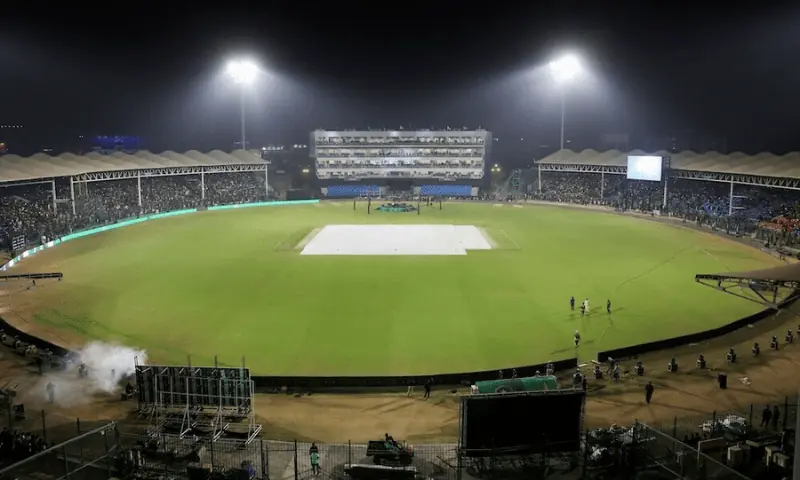

The Islamabad cricket stadium project has reached its most decisive stage yet, with the Capital Development Authority confirming a winning construction bid worth Rs 8.9 billion for what will become the federal capital’s first-ever purpose-built cricket venue. The stadium, planned near Sector D-12 at the foothills of the Margalla Hills, is expected to give Islamabad its own international-standard cricket ground for the first time in the city’s history.
Background
Islamabad has never had a dedicated cricket stadium capable of hosting international matches, relying instead on the Rawalpindi Cricket Stadium for major fixtures involving the twin cities. Plans for a capital-based venue have circulated for decades, dating back to a 1960 master plan by Greek firm Doxiadis Associates that originally earmarked land in Shakarparian for a sports centre, a project later scrapped after the area was folded into a national park in 1979.
More recent efforts to revive the Islamabad cricket stadium project began gaining real momentum in 2023, when the CDA and Pakistan Cricket Board signed a memorandum of understanding for a site near D-12 in the Margalla foothills. Since then, the project has moved through several rounds of design revision, technical review, and site clearance, evolving from an early concept with 50,000-plus seats into its current, more compact form.
Details
Under the finalized plan, the Islamabad cricket stadium capacity now stands at more than 35,000 spectators, according to CDA officials, though earlier design documents had floated a figure closer to 32,000. The stadium will be built on roughly 50 acres within a larger 175-acre Olympic Village development near Sector D-12, with parking facilities for around 10,000 vehicles situated about one kilometer from the venue itself.
On the Islamabad cricket stadium design front, officials have said the venue will closely resemble the Dubai International Cricket Stadium, featuring a three-tier structure with an open view toward the Margalla Hills. The project’s PC-I originally estimated total costs at Rs 12 billion, though the final construction bid came in lower after design refinements brought the figure down to roughly Rs 8.9 billion for the core build, with total project costs, including external development, estimated near Rs 11.9 billion.
The winning bidder, a joint venture between Habib Construction and ZKB-EA, was confirmed after CDA opened financial bids in July, beating out a rival joint venture between Lemar Builders and BK Consultants. Habib-ZKB-EA previously worked as an EPC contractor on renovations to Lahore’s Gaddafi Stadium through the Frontier Works Organisation, giving the consortium direct prior experience in large-scale stadium construction.
Regarding the Islamabad cricket stadium completion date, officials have set an ambitious target of finishing construction within roughly one year of the project’s start, in line with directives from the interior minister and CDA leadership pushing for a fast-tracked timeline. Of the total contracted amount, Rs 5.8 billion is allocated to the three-tier stadium structure itself, while Rs 3.1 billion will fund external development, including three kilometers of newly built access roads.
The project has not proceeded without scrutiny. The Islamabad Wildlife Management Board has repeatedly questioned CDA over whether the site falls within or near the protected 100-meter buffer zone of Margalla Hills National Park, a concern rooted in the Islamabad Nature Conservation and Wildlife Management Act of 2024. CDA has maintained that the site sits within Zone III, where sports and recreational facilities are permitted under the city’s 1992 zoning regulations.
Quotes
A CDA official overseeing the project said the interior minister, CDA chairman, and member environment have been closely monitoring progress, with a clear directive that the stadium be completed within a year of construction starting. That kind of oversight shows how much political weight sits behind the Islamabad cricket stadium project.
PCB Chairman Mohsin Naqvi, who has chaired several design review meetings for the venue, previously stressed that the stadium should offer an open, scenic view of the Margalla Hills, a detail officials say shaped several of the final design revisions.
The Islamabad Wildlife Management Board, in written correspondence to CDA, formally sought clarification on whether the proposed site falls within, abuts, or otherwise overlaps the notified boundaries of Margalla Hills National Park or its surrounding protected buffer zone, a question that remains part of the project’s ongoing environmental review.
Impact
For Pakistani cricket, a completed Islamabad stadium would mark a significant shift, giving the federal capital its own venue for the first time and reducing reliance on Rawalpindi for international fixtures. Cricket fans searching for CDA cricket ground booking online options are likely to gain a new venue option once the facility opens, potentially easing pressure on existing grounds during major tour schedules.
Regionally, the project also carries implications for Islamabad’s broader urban development, since the surrounding 175-acre Olympic Village is expected to include hotels and commercial development alongside the sports facility, pending additional federal government approvals given the site’s Margalla Hills location.
Environmental groups continue to watch the project closely, given past controversies over development near protected areas in Islamabad. How CDA resolves outstanding buffer-zone questions with the Islamabad Wildlife Management Board could set a precedent for future infrastructure projects proposed near the national park’s boundaries.
Conclusion
With the financial bid now confirmed and construction expected to begin shortly, the coming months should offer clearer answers on both the Islamabad cricket stadium name and a firm groundbreaking date. If the one-year construction timeline holds, Islamabad could have its first international-standard cricket venue completed sometime in 2027, giving Pakistan cricket a long-awaited new home in the federal capital.
Frequently Asked Questions
Who is the owner of Ekana Stadium?
Ekana Cricket Stadium in Lucknow, India, formally known as Bharat Ratna Shri Atal Bihari Vajpayee Ekana Cricket Stadium, is owned and operated by the Ekana Sports City Private Limited in partnership with the Uttar Pradesh Cricket Association. The stadium was built through a public-private partnership model and has hosted various international and Indian Premier League matches since opening in 2017. Ownership and maintenance responsibilities are shared between the private developer and the state cricket association, a structure similar in spirit to how Pakistan’s CDA and PCB are jointly developing the new Islamabad cricket stadium project.
Why is it called Gaddafi Stadium?
Lahore’s Gaddafi Stadium was named in honor of former Libyan leader Muammar Gaddafi, in recognition of Libya’s support for Pakistan during the 1974 Organisation of Islamic Cooperation summit held in Lahore. The stadium, originally known as Lahore Stadium when it opened in 1959, was renamed in 1974 as a diplomatic gesture reflecting the close ties between Pakistan and Libya at the time. Interestingly, the same construction consortium selected for the new Islamabad cricket stadium project, Habib-ZKB-EA, previously worked as an EPC contractor on renovation work at Gaddafi Stadium, giving them direct experience relevant to the Islamabad build.
What is the capacity of Niaz Stadium?
Niaz Stadium, located in Hyderabad, Pakistan, has a seating capacity of approximately 15,000 spectators, making it one of the smaller international-standard venues in the country compared to larger grounds like Gaddafi Stadium or the National Stadium in Karachi. The venue has hosted several One Day International and first-class matches over the years and remains an important cricket ground for domestic competitions in Sindh province. By comparison, the planned Islamabad cricket stadium, with a projected capacity of more than 35,000, would be more than double the size of Niaz Stadium once construction is completed.