
Qatar’s Prime Minister Sheikh Mohammed bin Abdulrahman Al Thani has declared he is proud as a Qatari following Iranian attacks Qatar has absorbed since the US-Israel war on Iran began. The Iranian attacks Qatar has sustained include over 101 ballistic missiles and dozens of drone strikes targeting critical infrastructure and Al Udeid Air Base. Qatar attack today monitoring shows Iranian attacks continue despite international condemnation and a UN Security Council resolution, while Iran strikes US base operations at Al Udeid remain ongoing.
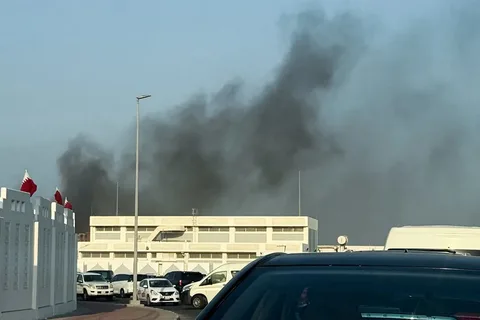
Background: Iranian Attacks Qatar — Why Qatar Is a Target
Qatar’s unique geopolitical position explains why Iranian attacks Qatar has faced are both surprising and predictable at the same time.
Qatar simultaneously hosts the largest US military base in the Middle East, maintains diplomatic relations with Iran, mediates between Israel and Hamas, and shares the world’s largest natural gas field with Iran. This combination made Qatar indispensable to every major regional player — but the Iran Qatar relationship collapsed the moment Iranian attacks began targeting Al Udeid Air Base.
Iran Qatar relations before the war were paradoxical. The two countries share the North Dome — South Pars gas field, the foundation of Qatar’s extraordinary wealth. But the IRGC’s targeting logic prioritised striking US military installations over preserving the Iran Qatar energy partnership — with Iran strikes US base operations at Al Udeid reflecting that calculation.
Details: Iranian Attacks Qatar — What Has Happened
Qatar Attack Today — Scale of Iranian Attacks
Qatar attack today monitoring confirms 101 confirmed ballistic missiles directed at Qatar since February 28, 2026 — with 98 intercepted by Qatar’s Patriot PAC-3 and THAAD systems. Three missiles caused structural damage in uninhabited areas south of Doha and near Hamad port.
Approximately 39 Iranian drones targeted Qatari airspace — 36 intercepted, three causing minor damage in industrial zones outside central Doha. Qatar attack today casualty figures include 16 injured with no confirmed Qatari fatalities from direct Iranian attacks.
Iran strikes US base operations at Al Udeid — hosting approximately 10,000 US personnel — have targeted runway infrastructure, fuel storage, and hardened aircraft shelters. US CENTCOM confirmed damage but stated that operational capability has been maintained throughout the Iranian attacks Qatar campaign.
Qatar PM’s Response to Iranian Attacks Qatar
Qatar’s Prime Minister delivered a nationally televised address following the latest Iranian attacks Qatar has absorbed — declaring he stood proud as a Qatari and saluting the resilience of the Qatari people and the professionalism of Qatar’s armed forces.
The address struck a carefully calibrated tone. The Prime Minister reaffirmed Qatar’s right to self-defence while notably refraining from direct denunciation of Iran — instead reiterating that regional countries are not an enemy of Iran and calling for diplomatic dialogue to replace military confrontation.
Iran Qatar — Diplomatic Channel Under Strain
Qatar has not expelled the Iranian ambassador or severed diplomatic relations — standing in contrast to Bahrain, which broke ties within 48 hours of the first Iranian attacks. The Iran Qatar diplomatic channel remains open because both sides and the United States recognise its potential value in any eventual negotiated resolution.
Qatar’s Foreign Minister has continued communicating with his Iranian counterpart through encrypted channels even as Iranian attacks Qatar faces continue — a pragmatic reality that reflects the complexity of Gulf geopolitics that simple ally-versus-adversary frameworks cannot capture.
Quotes
Qatar’s Prime Minister stated he stood proud as a Qatari, saluting the resilience of the Qatari people and the professionalism of Qatar’s armed forces in responding to Iranian attacks — adding that Qatar’s sovereignty was inviolable and would be defended.
Qatar’s Foreign Minister reiterated that Qatar did not consider Iran an enemy and called for immediate diplomatic dialogue, stating Qatar stood ready to facilitate any negotiation that could stop the killing and reopen the Strait of Hormuz.
US Secretary of State Marco Rubio praised Qatar’s composure and resolve, confirming that Iran strikes US base operations at Al Udeid had not degraded US operational capability and that American forces would continue their mission.
A senior Western diplomat told Reuters that Qatar’s decision to keep the Iran Qatar channel open while absorbing Iranian attacks was both extraordinarily difficult and extraordinarily valuable — describing it as perhaps the most important balancing act in the current conflict.
Impact
Iran Qatar — Energy Security
Qatar is the world’s largest LNG exporter supplying approximately 30 percent of global LNG trade. Qatar’s Energy Minister has warned that Iranian attacks Qatar infrastructure and the Strait of Hormuz closure could halt LNG exports within weeks. European gas prices have already risen sharply — with futures markets pricing in the risk of a sustained Qatari export disruption that would devastate European energy security still recovering from the 2022 Russia-Ukraine war supply shock.
Iran Strikes US Base — Strategic Implications
Iran strikes US base operations at Al Udeid have demonstrated that US military installations in the Gulf are not invulnerable — a finding with profound implications for US deterrence strategy. Gulf host nations are caught in an extraordinarily difficult position — dependent on US military protection while being targeted by Iranian attacks precisely because they host US forces.
Regional Solidarity and Fractures
Iranian attacks Qatar has absorbed have both strengthened GCC solidarity and exposed its fractures. Saudi Arabia, the UAE, Bahrain, Kuwait, and Oman have all expressed solidarity with Qatar. But responses ranging from Bahrain’s complete severance of Iran Qatar relations to Qatar’s continued back-channel engagement reflect the reality that six GCC states are navigating the crisis from very different strategic positions.
Frequently Asked Questions
Why Are the USA Protecting Qatar?
The United States protects Qatar because of Al Udeid Air Base — the largest US military installation in the Middle East hosting approximately 10,000 US personnel and CENTCOM’s air operations headquarters. Qatar is also a critical diplomatic intermediary with Iran, Hamas, and the Taliban, and the world’s largest LNG exporter supplying European energy security. Iran strikes US base operations at Al Udeid have reinforced rather than weakened the US commitment to Qatar’s defence.
How Many Missiles Did Iran Fire at Qatar?
Iran has fired 101 confirmed ballistic missiles at Qatar since February 28, 2026. Of these, 98 were intercepted by Qatar’s Patriot PAC-3 and THAAD air defence systems. Three caused minor structural damage in uninhabited or industrial areas. Additionally approximately 39 Iranian drones targeted Qatari airspace — 36 intercepted, three causing minor damage outside central Doha.
Is Qatar a Friend of Israel?
Qatar and Israel have no formal diplomatic relations and Qatar does not recognise Israel. However Qatar has served as the primary mediator between Israel and Hamas — hosting Hamas political leadership in Doha and facilitating multiple ceasefire and hostage negotiations with direct Israeli participation. Qatar also hosts a covert Israeli liaison office. The relationship is not friendship but pragmatic interdependence driven by Gaza conflict management.
Conclusion
Iranian attacks Qatar has absorbed and the Prime Minister’s proud as a Qatari declaration capture the extraordinary position this small Gulf state occupies in the current regional crisis. Qatar is simultaneously a target of Iranian attacks, a host of US forces conducting strikes on Iran, a mediator preserving the Iran Qatar diplomatic channel, and the LNG supplier underpinning European energy security. Whether Qatar’s unique position ultimately makes it the indispensable mediator that ends this war — or simply its most diplomatically complicated casualty — remains the defining question of the crisis.