
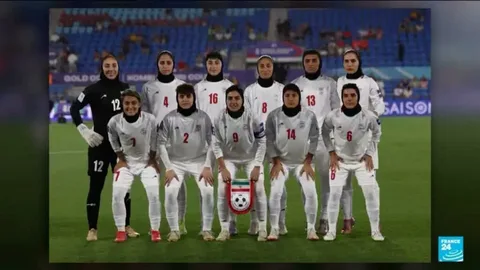
Iran women footballers asylum Australia has become one of the most compelling human interest stories to emerge from the broader Iran war crisis — with 5 members of Iran’s women’s national football team refusing to board their return flight to Iran following a tournament visit to Australia and formally applying for asylum under the 1951 Refugee Convention.
Iran women footballers asylum Australia applications were granted by the Australian Department of Home Affairs following an expedited review process — with Australian officials citing the well-founded fear of persecution that the players would face upon return to Iran given both the current war and the Islamic Republic’s longstanding repression of women athletes.
Iran women’s national football team players who chose asylum in Australia now face a complex future — potentially eligible to represent Australia in international competition after completing FIFA’s mandatory waiting period, while Iranian Football Federation officials have condemned the decision and demanded their return.
Background: Iran Women Footballers Asylum Australia — Why This Story Matters
To understand why Iran women footballers asylum Australia has resonated so powerfully across the world, it is necessary to understand what it means to be a female athlete in the Islamic Republic of Iran.
Women’s football in Iran has existed in a state of perpetual institutional hostility since the 1979 Islamic Revolution. Female athletes in Iran operate under a framework of restrictions that have no parallel in international sport — required to wear full hijab during training and competition, banned from attending men’s football matches as spectators until 2019, subjected to gender verification tests that have exposed intersex Iranian athletes to public humiliation, and operating under Football Federation leadership that has consistently prioritised Islamic Republic ideological compliance over athletic development.
Iran women’s national football team players have historically competed under conditions that would be considered unacceptable in any other football-playing nation. Training facilities are inadequate. Salaries are minimal or non-existent for most players. International travel is tightly controlled by Football Federation officials who double as government monitors. Players who speak publicly about their conditions risk not only career termination but personal legal consequences under Iran’s laws criminalising criticism of state institutions.
The Iranian women’s soccer team’s FIFA ranking — outside the top 100 globally — reflects decades of institutional neglect, not a lack of talent or dedication among Iranian women who love the game. Iran women footballers asylum Australia must be understood against this backdrop of systematic suppression that has defined the lives of every player on the Iranian women’s national football team.
The broader Iran war context has added an acute dimension to the Iran women footballers asylum Australia story. With Iran under active US-Israeli military assault, Supreme Leader Mojtaba Khamenei newly installed after his father’s death, and the Islamic Republic under unprecedented existential pressure, the prospect of returning to Iran for any Iranian national — let alone female athletes who have publicly defied Islamic Republic norms by seeking asylum abroad — carries risks that are qualitatively different from those that existed before February 28, 2026.
How Iran Women Footballers Sought Asylum in Australia
The Tournament Visit
The Iran women footballers asylum Australia story began when Iran’s women’s national football team travelled to Australia for an international football tournament — one of the limited number of international competitive opportunities available to Iran women’s national football team players given Iran’s FIFA ranking and the Islamic Republic’s selective approach to international athletic engagement.
The Iran women footballers arrived in Australia under standard international sports visa arrangements — accompanied by Football Federation officials and government monitors whose role was to ensure the delegation’s compliance with Islamic Republic travel protocols and their timely return to Iran.
The tournament provided Iran women’s national football team players with their first sustained exposure to a country where female athletes compete, train, and live without the restrictions that have defined their entire athletic careers. The contrast between the conditions experienced by Iranian women’s soccer team players in Australia and their lives under the Islamic Republic created the conditions for the asylum decisions that followed.
The Decision to Stay
5 Iran women footballers asylum Australia applications were filed in the days immediately following the conclusion of the tournament — with the players informing Australian immigration authorities of their intention not to return to Iran and formally invoking the 1951 Refugee Convention’s protection framework.
The Iran women footballers asylum Australia applications were filed with the support of legal representatives provided by Australian refugee advocacy organisations — who moved quickly to ensure the players’ legal status was formalised before their tournament visas expired.
Australian Department of Home Affairs officials confirmed that Iran women footballers asylum Australia applications were processed on an expedited basis given the acute security situation in Iran following the outbreak of the US-Israel war — with officials citing the well-founded fear of persecution standard that the players met given both the general danger of the war and the specific risks facing female athletes who had publicly defied Islamic Republic authority by seeking asylum abroad.
Iranian Football Federation Response
The Iranian Football Federation responded to the Iran women footballers asylum Australia news with immediate condemnation — issuing a statement demanding the players return to Iran and describing their asylum applications as a politically motivated betrayal of the Islamic Republic.
Football Federation officials accompanying the delegation reportedly attempted to prevent the players from accessing legal representation — an interference that Australian immigration advocates described as consistent with the controlling behaviour that Iran women’s national football team players experience throughout their careers under Islamic Republic supervision.
Who Are the Players
Iran women’s national football team players who sought asylum in Australia include 5 members of the squad who travelled for the tournament. Their identities have been partially protected by Australian refugee processing protocols — though several players have chosen to speak publicly about their decisions.
The Iranian women’s soccer team members who sought Australia asylum include a combination of senior players who have represented Iran internationally for several years and younger squad members for whom the Australia tournament represented one of their first international competitive experiences.
Iran women’s national football team players who sought asylum range in age from their early 20s to early 30s — representing the core competitive generation of Iranian women’s football that has spent its entire career navigating the Islamic Republic’s restrictions on female athletic participation.
Iranian Women’s Soccer Team — Life Under the Islamic Republic
Restrictions on Iranian Women’s Soccer Team
The Iranian women’s soccer team operates under a framework of restrictions that makes meaningful athletic development extremely difficult.
Iranian women’s soccer team players must wear full hijab — including headscarf and modest clothing covering all hair and body contours — during all training sessions, matches, and public appearances related to their football careers. This requirement applies even in extreme heat during outdoor training sessions and creates genuine athletic disadvantage in competitive situations.
Iranian women’s soccer team travel is tightly controlled — with Football Federation officials and government monitors accompanying all international delegations to ensure compliance with Islamic Republic protocols and prevent exactly the kind of Iran women footballers asylum Australia situation that has now occurred.
Iranian women’s soccer team players who have previously spoken publicly about their conditions — or who have been perceived as insufficiently compliant with Islamic Republic expectations — have faced career consequences ranging from squad exclusion to legal harassment.
Iran Women’s National Football Team Players — Achievements Against the Odds
Iran women’s national football team players have achieved international competitive participation despite systematic institutional disadvantage. The Iranian women’s soccer team has participated in AFC Women’s Asian Cup qualifying competitions and has produced individual players of genuine talent who have attracted interest from European clubs — interest that the Islamic Republic’s restrictive approach to player contracts and international transfers has largely prevented from being realised.
The Iran women’s national football team players who sought asylum in Australia represent a generation that has given years of their athletic lives to representing a country whose government has consistently failed to give them the support, respect, and freedom they deserve.
What Happens Next for Iran Women Footballers Asylum Australia
FIFA Eligibility — Can They Play for Australia?
The Iran women footballers asylum Australia story’s most practically significant next chapter involves FIFA eligibility to represent Australia in international competition.
FIFA regulations governing international player eligibility require a waiting period before a player who has represented one national team can represent another. The standard FIFA waiting period is 3 years from the player’s last appearance for their previous national association — though FIFA has provisions for expedited eligibility in humanitarian cases that the Iran women footballers asylum Australia situation may qualify for.
Iran women’s national football team players who have never made a senior international appearance for Iran — or whose last appearance predates the FIFA waiting period — may be eligible to represent Australia sooner than those with recent caps.
Australian Football Federation officials have indicated they will work with FIFA to clarify the eligibility timeline for the Iran women footballers asylum Australia players — with Football Australia CEO James Johnson stating that Australia stood ready to support the players in every way possible including exploring all available pathways to international eligibility.
Settlement in Australia
Beyond football eligibility, the Iran women footballers asylum Australia players face the practical challenges of building new lives in a country whose language, culture, and social framework are unfamiliar.
Australian refugee support organisations have committed to providing the Iran women’s national football team players with settlement support — including language training, housing assistance, employment support, and psychological counselling to help them process the trauma of leaving their families, country, and previous lives behind.
Several Australian A-League Women’s clubs have reportedly expressed interest in offering contracts to the Iranian women’s soccer team asylum players — providing both income and the structured football environment that will help them maintain their athletic careers during the waiting period before international eligibility is established.
Quotes on Iran Women Footballers Asylum Australia
Australian Home Affairs Minister Tony Burke confirmed that Iran women footballers asylum Australia applications had been granted, stating that Australia had a proud tradition of providing protection to people fleeing persecution and that the courage shown by these players in making this decision deserved Australia’s full support.
Football Australia CEO James Johnson welcomed the Iran women footballers asylum Australia decision, stating that Australia’s football community stood ready to embrace these players and that Football Australia would work with FIFA to explore all available pathways to make their talents available to Australian football as quickly as possible.
One of the Iran women footballers — speaking publicly after her asylum application was granted — stated that she had spent her entire career being told what she could wear, where she could go, and what she could say, and that coming to Australia and experiencing what it meant to be a female athlete treated with dignity and respect made returning to Iran impossible.
Iranian Football Federation Secretary General Mahdi Taj condemned the Iran women footballers asylum Australia decisions as a betrayal of the Islamic Republic and a politically motivated act — demanding that Australian authorities facilitate the players’ return to Iran and threatening FIFA sanctions against any Australian club that signed the players before their eligibility status was clarified.
FIFA issued a statement expressing deep concern for the welfare and safety of the Iran women’s national football team players — declining to comment on the specific Iran women footballers asylum Australia case while confirming that FIFA’s regulations include humanitarian provisions that may be applicable to the players’ eligibility situation.
Human rights organisation Amnesty International praised the Iran women footballers asylum Australia outcome, stating that the players’ decision reflected the impossible conditions that female athletes face in Iran and calling on FIFA to grant expedited eligibility so that Australia could benefit from their talents without delay.
Impact: What Iran Women Footballers Asylum Australia Means
For Iranian Women Athletes
The Iran women footballers asylum Australia story will resonate powerfully among Iranian women athletes across all sports — demonstrating that international competition can provide a pathway to freedom for athletes willing and able to take the risk of seeking asylum abroad.
Iranian sporting authorities will almost certainly respond by tightening supervision of future international delegations — reducing the number of players permitted to travel, increasing the ratio of government monitors to athletes, and implementing more restrictive visa and travel documentation procedures. The Iran women footballers asylum Australia outcome may therefore make it harder for future Iranian women athletes to access the international opportunities that made this asylum story possible.
For FIFA and Women’s Football
The Iran women footballers asylum Australia story places FIFA in an uncomfortable position regarding Iran’s continued membership of the international football community. FIFA has previously sanctioned Iran’s Football Federation over the treatment of female fans — but has stopped short of the more decisive action that human rights organisations have demanded.
The Iranian women’s soccer team asylum story adds to the body of evidence that FIFA’s engagement with Iran has failed to produce meaningful improvement in the conditions facing women in Iranian football — a failure that will increase pressure on FIFA to take stronger action against the Iranian Football Federation.
For Australia-Iran Relations
The Iran women footballers asylum Australia decision has added a further complication to Australia-Iran diplomatic relations already strained by the broader Iran war context. Iran’s Foreign Ministry has lodged a formal diplomatic protest with Australia over the asylum grants — describing the decision as interference in Iran’s internal affairs.
Frequently Asked Questions
How Many Iranian Women’s Soccer Players Stayed in Australia?
5 Iranian women’s soccer players stayed in Australia and formally applied for asylum following their team’s tournament visit. All 5 Iran women footballers asylum Australia applications were granted by the Australian Department of Home Affairs following an expedited review process. The players filed their applications with the support of Australian refugee advocacy organisations after informing Australian immigration authorities of their intention not to return to Iran. The remaining members of the Iranian women’s soccer team delegation returned to Iran as scheduled — accompanied by Football Federation officials who reportedly attempted to persuade the 5 players to abandon their asylum applications before their tournament visas expired.
Why Did the Iranian Soccer Players Seek Asylum?
The Iranian soccer players sought asylum for reasons rooted in both the immediate crisis and the longstanding conditions facing female athletes in Iran. The immediate trigger was the outbreak of the US-Israel war on Iran — which transformed the prospect of returning to Iran from difficult to genuinely dangerous for women athletes who had publicly defied Islamic Republic authority by seeking asylum abroad. The underlying reasons reflect years of systematic repression — mandatory hijab requirements during training and competition, restricted international travel, minimal financial support, career consequences for any public criticism of Islamic Republic sports policy, and the broader denial of rights and freedoms that female athletes experience in Iran. The combination of acute war danger and chronic institutional repression gave the 5 players well-founded fear of persecution meeting the 1951 Refugee Convention standard that Australia’s asylum system requires.
Who Was the Australian Woman Detained in Iran?
The most prominent Australian woman detained in Iran was Kylie Moore-Gilbert — a British-Australian academic and journalist arrested in Iran in 2019 and sentenced to 10 years in prison on espionage charges that she and Australian authorities consistently denied. Moore-Gilbert was held in Evin Prison in Tehran — Iran’s most notorious political detention facility — for over 800 days before being released in November 2021 in a prisoner exchange involving 3 Iranians held in Thailand. Her case drew sustained Australian government and public attention to Iran’s practice of detaining foreign nationals on disputed charges — a practice that human rights organisations describe as hostage diplomacy. The Moore-Gilbert case is part of the broader Australia-Iran relationship context within which the Iran women footballers asylum Australia story has unfolded — with Australian public opinion already sensitised to Iran’s treatment of individuals it considers to have violated Islamic Republic authority.
Conclusion
Iran women footballers asylum Australia has given the world 5 stories of extraordinary personal courage — athletes who chose freedom over familiarity, uncertainty over oppression, and the risk of the unknown over the certainty of a life constrained by a government that has never valued what they have to offer.
The Iran women’s national football team players who sought asylum in Australia did not make their decisions lightly. They left behind families, friends, and the only country they have ever known — in the middle of a war that has turned Iran into one of the most dangerous places on earth.
What happens next — FIFA eligibility, Australian football careers, diplomatic consequences, and the ripple effects on Iranian women athletes still competing under Islamic Republic restrictions — will unfold over months and years. But the Iran women footballers asylum Australia story has already delivered its most important message: that for women athletes in Iran, the cost of freedom is everything — and some are willing to pay it.