
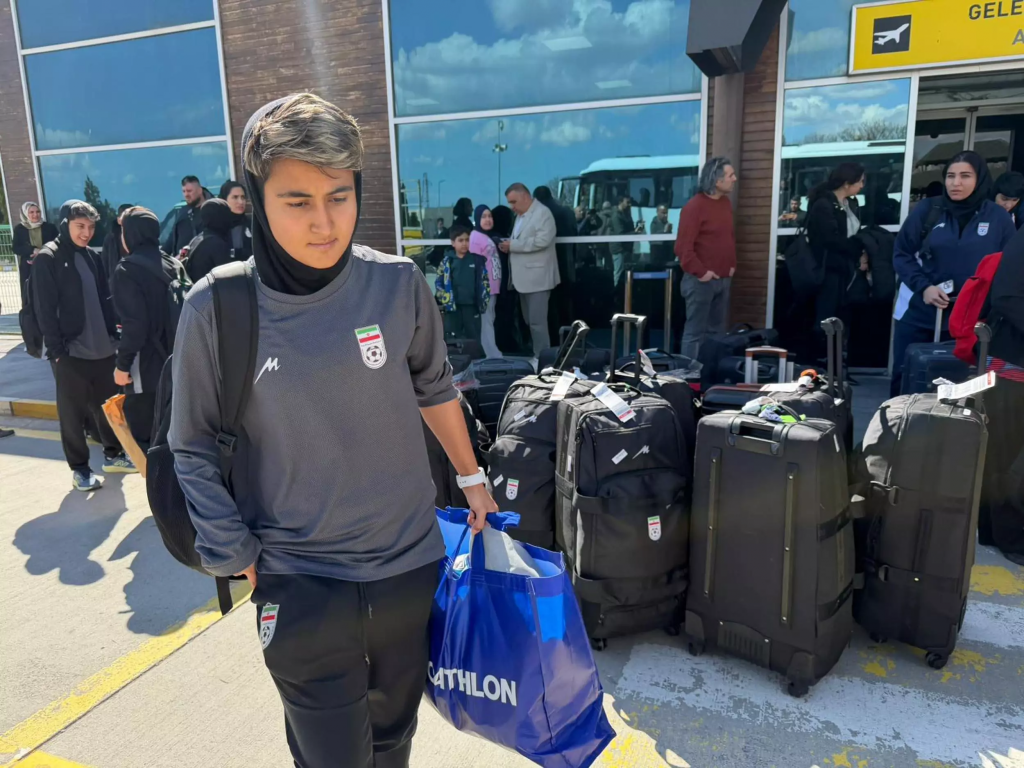
The Iran women football team has arrived in Türkiye on their journey home from Australia — where the squad had been stranded following their AFC Women’s Asian Cup qualifier after multiple players sought asylum in the context of the devastating Iran war that began in late February 2026. The Iran women football team asylum crisis saw players from the national squad request refugee protection in Australia rather than return to a country under active US-Israeli military bombardment — triggering one of the most emotionally charged and politically complex sports stories of the year. The Iran women football team return was confirmed on March 17, 2026, with the majority of the squad now transiting through Türkiye — but with two Iran women football team players who sought asylum in Australia remaining in the country under refugee protection proceedings.
Background: What Is the Iran Women Football Team Crisis and How Did It Begin?
The Iran women football team asylum crisis grew directly out of the 2026 Iran war — the US-Israeli military campaign against Iran’s nuclear and military infrastructure that began on February 28, 2026, and resulted in the killing of Supreme Leader Ali Khamenei and the installation of Mojtaba Khamenei as the new supreme leader.
The Iran women football team had been in Australia for the AFC Women’s Asian Cup qualifying tournament — a multi-match competition that kept the squad abroad during the critical early weeks of the Iran war. As US-Israeli strikes destroyed Iranian military and infrastructure targets — and as the security situation inside Iran became increasingly uncertain — members of the Iran women football team and their support staff faced the question that confronted every Iranian national abroad during those weeks: whether returning home was safe.
The Iran women football team asylum request was not entirely unprecedented in Iranian sports history. Iranian athletes — both men and women — have sought asylum at international competitions in previous years, motivated by concerns about persecution, human rights restrictions, and political repression inside Iran. But the Iran women football team 2026 asylum crisis carried a qualitatively different dimension — the players were not fleeing a repressive government in normal times. They were stranded abroad while their country was being bombed by the world’s most powerful military.
The Iran women football team’s situation drew immediate global media attention — with the Australian government, FIFA, the AFC, and human rights organisations all asked to respond to the unfolding crisis.
Details: Iran Women Football Team — Full Asylum Crisis Story
Iran Women Football Team — The Asylum Requests in Australia
The Iranian women soccer team Australia asylum crisis began in early March 2026 — approximately one week after the Iran war’s opening strikes. Multiple Iran women football team players approached Australian immigration authorities requesting refugee protection — citing the active military conflict in Iran, concerns about personal safety upon return to a war zone, and in some cases existing fears about political repression under Iran’s new leadership following Mojtaba Khamenei’s succession.
The Iranian women soccer team Australia asylum numbers evolved rapidly. At the peak of the crisis, reports indicated that as many as seven Iran women football team players and staff members had contacted Australian immigration authorities about protection options. The Australian government’s response was careful — confirming that all asylum applications would be processed according to normal legal procedures regardless of the applicants’ sporting status, while declining to accelerate or politicise the process.
The Iranian women soccer team asylum situation created an immediate diplomatic problem for Australia — which had no desire to become the focal point of an Iran war-related refugee dispute involving a national sports team. Australian officials worked quietly with FIFA and the AFC to manage the Iran women football team situation in a way that respected both refugee law and the team’s collective sporting obligations.
Iran Women Football Team — The Return Decision
The majority of the Iran women football team decided to return to Iran — a decision that Iran women’s national football team players described in terms that reflected both genuine desire to be with their families and awareness of the pressure they were under to return. The Iran women football team’s team officials — working in coordination with the Iran Football Federation and the Iranian government — facilitated the return journey through Türkiye, which serves as a transit hub for Iranian nationals returning from international travel.
The Iran women football team’s decision to return was not universal. Two Iran women football team players chose to remain in Australia — pursuing their Iranian women soccer team Australia asylum applications through the formal refugee determination process. Their identities have been protected by Australian immigration authorities under standard procedure. Their Iranian women soccer team asylum applications were confirmed as lodged and under review.
The Iran women football team’s transit through Türkiye — confirmed on March 17, 2026 — means the majority of the squad are en route back to a country that has undergone enormous change in the weeks they were abroad. The Iran women football team will return to a nation with a new supreme leader, a devastated military infrastructure, an uncertain political future, and millions of civilians trying to resume normal life after the most traumatic military campaign in modern Iranian history.
Iran Women Football Team — The ‘Traitors’ Label and Pressure to Return
One of the most disturbing dimensions of the Iran women football team asylum crisis was the public labelling of asylum-seeking players as traitors by Iranian state media and some government officials. Iranian state television described the Iran women football team players who sought asylum in Australia as acting against the national interest — using language that Iran women’s national football team players‘ advocates say was designed to pressure other players into returning and to stigmatise those who remained.
The traitors label applied to Iran women football team players who sought asylum is particularly concerning in the context of what they would face upon return to Iran. Human Rights Watch and Amnesty International both noted that Iranian athletes who have previously been labelled traitors or defectors by the state have faced harassment, interrogation, and in some cases detention upon returning to Iran. The Iran women football team’s asylum-seeking players were therefore not choosing between football careers and protection — they were choosing between staying safe and returning to an uncertain fate.
The Iranian women soccer team asylum situation has drawn formal responses from the FIFA Players’ Union (FIFPro) — which stated that all Iran women football team players who sought asylum had the right to do so under international refugee law and that FIFA would ensure no sporting sanction was imposed on players for exercising that right.
Iran Women Football Team — What Happened in Australia
The Iran women football team had been in Australia for the AFC Women’s Asian Cup qualifying round — a tournament that placed them in a competition environment when the Iran war broke out. The qualifying matches — played across multiple Australian cities — were completed before the asylum crisis fully developed, with the Iran women football team’s sporting results secondary to the human crisis unfolding within the squad.
Australian football authorities — Football Australia and the relevant match hosting organisations — provided the Iran women football team with appropriate welfare support during the crisis period, including access to legal advice, welfare services, and the ability to communicate safely with family members inside Iran. The Australian government’s handling of the Iranian women soccer team Australia situation was widely praised by human rights organisations as appropriate, measured, and consistent with Australia’s refugee law obligations.
Iran Women’s National Football Team Players — Who They Are
The Iran women football team has competed in AFC competitions for decades — facing the particular challenges of representing a country where women’s football has historically operated under significant restrictions. Iran women’s national football team players compete under regulations that require hijab on the field — a restriction that has created periodic controversy and has complicated the team’s participation in some international competitions.
Despite these restrictions, Iran women’s national football team players have developed genuine technical quality and competitive spirit — qualifying for AFC tournaments and building a programme that, before the 2026 war crisis, was slowly gaining recognition within Asian football. The Iran women football team asylum crisis has now brought Iran women’s national football team players’ stories to global audiences in a way that years of sporting achievement had not.
Iranian Women Soccer Team Australia — The Two Who Stayed
The two Iran women football team players who chose to remain in Australia represent the Iranian women soccer team Australia asylum process in its most individual and human form. Their decision to stay — when the majority of the Iran women football team chose to return — was made with full knowledge of what it means: separation from family, uncertainty about their futures, and the loss of their place in the Iran women football team for the foreseeable future.
The Iranian women soccer team Australia asylum process will now proceed according to Australia’s Migration Act — with applications assessed by the Department of Home Affairs on their individual merits. The Iranian women soccer team asylum timeline for assessment can range from months to years — meaning the two remaining players face an extended period of uncertainty in Australia even as the Iran women football team continues its journey home through Türkiye.
Quotes
Iran women football team player (speaking anonymously before departure), on the decision to return: “My family is in Iran. My mother, my sisters — I need to be with them. The war is terrifying. But I cannot stay away from them. I am going home, whatever comes.”
Iranian women soccer team Australia asylum applicant (through a representative), on her decision to stay: “I cannot go back to a country where I do not know if I will be safe. I am not a traitor. I am a woman who is afraid. I love Iran but I need to be alive to love it.”
FIFPro spokesperson, on the Iranian women soccer team asylum rights: “All Iran women football team players have the right to seek asylum under international refugee law. FIFA and FIFPro will ensure that no sporting sanction is imposed on any player for exercising that legal right. The safety of players is our first concern.”
Human Rights Watch, on the traitors label applied to Iran women football team asylum seekers: “Labelling Iran women football team players who sought asylum as traitors is a form of intimidation designed to suppress the legitimate exercise of refugee rights. Iranian athletes who have been labelled defectors have faced serious consequences upon return. The international community must monitor the treatment of returning Iran women football team players closely.”
Australia’s Immigration Minister, on the Iranian women soccer team Australia asylum applications: “All asylum applications in Australia are processed according to law. We will not politicise this process. Every person who has applied for protection — including Iran women football team players — will have their application fairly assessed.”
AFC spokesperson, on the Iran women football team sporting situation: “The AFC is deeply concerned about the welfare of all Iran women football team players and staff. We have been in communication with the Iran Football Federation and FIFA throughout this crisis. The safety of our athletes comes before all sporting considerations.”
Impact: What the Iran Women Football Team Crisis Means
For the Players Who Returned
The Iran women football team players transiting through Türkiye are returning to a country profoundly changed by six weeks of war. They return to uncertain conditions — a new supreme leader, an economy under severe pressure from the conflict, and the social and political uncertainty that accompanies any major military campaign. The Iran women football team players who return carry the additional burden of knowing that some of their teammates chose to stay — and of not knowing what their own relationship with the Iranian state will now look like.
For the Two Players Who Stayed
The two players who remained in Australia face the Iranian women soccer team asylum process — a legal journey that could take years and whose outcome is not guaranteed. They have chosen protection over homeland, safety over certainty, and the hope of a future in Australia over the fear of what returning to Iran might mean. Their courage in making that choice, in the face of public condemnation from Iranian state media, is a story that deserves the same global attention as any athletic achievement.
For Women’s Football in Iran
The Iran women football team asylum crisis has brought international attention to the conditions under which Iran women’s national football team players compete — restrictions on dress, limitations on public participation, and the ever-present political sensitivity of women’s sport in Iran. The crisis may accelerate international pressure on Iran to implement the FIFA requirements for women’s participation in football that the Islamic Republic has historically resisted.
For FIFA and Athlete Protection
The Iran women football team crisis is a test of FIFA’s athlete protection frameworks — which prohibit member associations from punishing players for exercising legal rights including asylum applications. FIFA’s response to the Iranian women soccer team Australia situation will determine whether its athlete protection commitments are real or merely rhetorical.
Conclusion
The Iran women football team’s arrival in Türkiye on their journey home marks the end of one chapter of a crisis that is far from over. The majority of the Iran women football team are going home — to families, to a changed country, to an uncertain future under a new supreme leader in a nation recovering from war.
Two Iran women football team players are staying in Australia — exercising the universal human right to seek protection from persecution and danger. Their Iranian women soccer team Australia asylum applications will determine whether that right is honoured by the legal system they have entrusted with their futures.
The Iran women football team’s story is not primarily a football story. It is a human story — about women who played football for their country, found themselves stranded abroad while their country went to war, and had to make the hardest choice any person can face: whether home is safe enough to return to.
Some said yes. Some said no. Both answers deserve to be heard with respect, compassion, and the understanding that neither choice was easy.
FAQs
Are women allowed to attend football matches in Iran?
Iranian women allowed into football stadiums but journey is far from over. It’s been a long road from the Islamic Revolution in 1979 and the start of the ban on women from watching football at stadiums to allowing access to the female half of a football-loving population.
Do Iran have a women’s football team?
Iran’s sports ministry said in a statement that “the national spirit and patriotism of the Iranian women’s national football team defeated the enemy’s plans against this team”, adding that Australia’s government was “playing in Trump’s field”.
Can a woman go out alone in Iran?
Most women in Iran rarely go out on their own, let alone travel to foreign countries. Preferably they go with their husbands, fathers or brothers, but at least with friends or family. For iranians, going together is just much more fun.