
Iran targets Gulf nations with an unprecedented wave of ballistic missiles and drones as oil prices soar past $100 per barrel — marking the most intensive Iranian assault on Gulf infrastructure since the US-Israel war began on February 28, 2026. All six Gulf Cooperation Council member states have been struck as Iran targets Gulf nations across the entire Arabian Peninsula in what military analysts describe as a deliberate strategy to impose maximum economic pain on US allies while simultaneously disrupting global energy markets. Iran war countries involved now include the United States, Israel, and every GCC member state — with Iran latest attack on Israel overnight adding a further dimension to a conflict that is rapidly expanding beyond its original parameters.
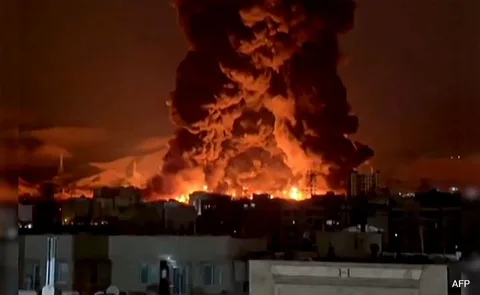
Background: Why Iran Targets Gulf Nations
To understand why Iran targets Gulf nations rather than limiting its retaliation to US and Israeli targets alone, it is necessary to understand Iran’s strategic logic in the current conflict.
Iran’s decision to target Gulf nations reflects a calculated assessment that the GCC states — by hosting US military bases, providing diplomatic support for the strikes, and continuing to pump oil that partially offsets the economic impact of Iran’s Strait of Hormuz strategy — are active participants in the war against Iran rather than neutral bystanders.
The Iran war countries involved list has expanded significantly since February 28. The United States launched the initial strikes on Iranian nuclear and military infrastructure. Israel participated directly in the opening phase of the campaign. Saudi Arabia, the UAE, Bahrain, Qatar, Kuwait, and Jordan all host US military installations from which strikes on Iran are being coordinated — making them, in the IRGC’s targeting framework, legitimate military objectives.
Iran latest attack on Israel overnight involved a salvo of ballistic missiles targeting Tel Aviv and Haifa — the largest single Iranian missile attack on Israeli territory since the war began. Israel damage by Iran from overnight strikes includes significant damage to residential and commercial districts in northern Haifa, with Israeli emergency services reporting multiple casualties and extensive structural damage.
The decision to simultaneously sustain Iran targets Gulf nations campaign while escalating Iran latest attack on Israel operations reflects the IRGC’s multi-front warfare doctrine — designed to stretch US and Israeli defensive resources across as many simultaneous threat vectors as possible.
Details: Iran Targets Gulf Nations — Country by Country
Iran Targets Gulf Nations — UAE
The UAE has borne some of the heaviest Iranian attacks among the Gulf nations. Iran targets Gulf nations campaign has directed 186 ballistic missiles at the UAE — of which 172 were intercepted by Patriot and THAAD air defence systems. The 14 missiles that penetrated UAE air defences caused damage across multiple locations including industrial zones in Abu Dhabi and logistics facilities near Dubai’s Jebel Ali port.
Dubai airport operations have been severely disrupted by the Iranian attacks — with the world’s busiest international airport suspending commercial flights multiple times in response to active missile and drone threats. The Palm Jumeirah and Burj Al Arab areas of Dubai sustained minor structural damage from drone impacts, generating dramatic imagery that has circulated globally and contributed to the psychological impact of Iran targets Gulf nations campaign beyond the physical damage caused.
Iran Targets Gulf Nations — Saudi Arabia
Saudi Arabia has been targeted in Iran targets Gulf nations campaign with particular intensity given its status as the world’s largest oil exporter and the location of Saudi Aramco’s critical Ras Tanura export terminal — the single largest crude oil export facility on earth.
Iranian attacks on Ras Tanura have forced a partial shutdown of the terminal — removing significant volumes of Saudi crude from global markets and contributing directly to the Brent crude oil price surge past $100 per barrel. Every successful strike on Saudi oil infrastructure in the context of Iran targets Gulf nations campaign amplifies the global economic impact of the conflict beyond the immediate military and political dimensions.
Iran Targets Gulf Nations — Bahrain
Bahrain has suffered the highest per capita impact of any nation in the Iran targets Gulf nations campaign — reflecting both its small geographic size and its hosting of the US Navy Fifth Fleet headquarters. Iran strikes on Bahrain have included 73 ballistic missiles and 91 drone attacks — with Bahrain’s oil refinery sustaining a direct hit that disrupted domestic fuel production.
Bahrain responded to the Iranian attacks by severing diplomatic relations with Iran within 48 hours of the first strikes — the most decisive diplomatic response to Iran targets Gulf nations campaign among the GCC member states.
Iran Targets Gulf Nations — Kuwait and Jordan
Kuwait and Jordan — both of which host US military installations — have also been targeted in the Iran targets Gulf nations campaign. Kuwait has recorded five fatalities from Iranian attacks, while Jordan has reported 14 injuries from drone and missile strikes on military facilities.
Jordan’s position in Iran war countries involved is particularly sensitive — the Hashemite Kingdom has long maintained a pragmatic relationship with Israel while also managing a large Palestinian population deeply sympathetic to the Palestinian cause. Jordan’s participation in the US-led coalition — however reluctant — has made it a target in Iran targets Gulf nations campaign despite Amman’s efforts to maintain some distance from the conflict.
Iran Latest Attack on Israel — Overnight Escalation
Iran latest attack on Israel overnight represents a significant escalation in the direct Iran-Israel military confrontation running parallel to the broader Iran targets Gulf nations campaign. The salvo targeting Tel Aviv and Haifa involved an estimated 47 ballistic missiles — of which Israel’s Iron Dome, David’s Sling, and Arrow air defence systems intercepted 41.
Israel damage by Iran from the six missiles that penetrated Israeli air defences includes significant structural damage to residential buildings in Haifa’s Neve Shaanan neighbourhood and commercial district damage in northern Tel Aviv. Israeli emergency services confirmed multiple casualties from the Iran latest attack on Israel — with the Israeli Defence Forces announcing retaliatory strikes on Iranian military targets within hours of the overnight attack.
Israel damage by Iran across the full course of the conflict has been more limited than Iranian planners likely hoped — reflecting the extraordinary performance of Israel’s multi-layered air defence architecture. But Israel damage by Iran has been real and psychologically significant — demonstrating that even the most sophisticated air defence systems cannot achieve perfect interception rates against large ballistic missile salvoes.
Quotes on Iran Targets Gulf Nations
UAE President Sheikh Mohamed bin Zayed Al Nahyan stated that the UAE categorically condemned the Iranian attacks and reserved the right to respond to any further aggression against Emirati sovereignty — adding that the UAE’s air defence forces had performed with exceptional professionalism in intercepting the majority of missiles in the Iran targets Gulf nations campaign.
Saudi Crown Prince Mohammed bin Salman described Iran targets Gulf nations attacks as an act of regional terrorism that would not go unanswered, calling on the international community to hold Iran accountable for attacks on civilian energy infrastructure that were driving global oil prices to levels that hurt ordinary people worldwide.
Israeli Prime Minister Benjamin Netanyahu stated that Iran latest attack on Israel had been met with immediate and devastating retaliation, adding that Israel damage by Iran would be repaid many times over until Iran’s military capacity to threaten Israel and the region was permanently eliminated.
US President Donald Trump called the Iran targets Gulf nations campaign a sign of desperation from a regime that was losing the war, adding that American forces were working around the clock with Gulf allies to intercept Iranian missiles and drones and that the conflict would end on US terms.
A senior IRGC commander — speaking through Iranian state media — stated that Iran targets Gulf nations campaign would continue and intensify for as long as US and Israeli strikes on Iranian territory continued, adding that no Gulf state that hosted American forces could consider itself a non-combatant in the war Iran was defending itself against.
Impact: What Iran Targets Gulf Nations Means for Oil and the World Economy
Oil Prices Soar as Iran Targets Gulf Nations
The most immediate global consequence of Iran targets Gulf nations campaign is the oil price surge that is now sending shockwaves through the world economy. Brent crude oil price has surged from approximately $73 per barrel before February 28 to peaks above $119 per barrel — driven by the simultaneous disruption of Strait of Hormuz transit, Saudi Aramco Ras Tanura shutdown, and the broader uncertainty generated by Iran targets Gulf nations attacks on energy infrastructure.
US crude oil has surged approximately 35 percent in its biggest weekly gain since 1983. Goldman Sachs has warned that Brent crude could reach $150 per barrel by end of March 2026 if the Strait of Hormuz remains effectively closed and Iran targets Gulf nations energy infrastructure attacks continue.
Every $10 sustained increase in crude oil prices costs the average US household approximately $450 per year in additional energy costs — meaning the current oil price surge, if sustained, represents a tax of several thousand dollars annually on ordinary American families.
Iran War Countries Involved — Expanding Conflict
The Iran war countries involved list expanding to include all GCC member states alongside the United States and Israel transforms the conflict from a bilateral US-Israel versus Iran confrontation into a genuinely regional war with no clear boundaries and no obvious off-ramp.
Iran war countries involved now include nations that collectively produce approximately 25 percent of the world’s oil, host the majority of US forward military presence in the Middle East, and sit astride the shipping lanes through which 20 percent of global oil trade passes. The economic and strategic stakes of the Iran war countries involved constellation are therefore orders of magnitude larger than the military dimensions of the conflict alone suggest.
Israel Damage by Iran — Domestic Political Consequences
Israel damage by Iran from overnight and previous attacks has generated significant domestic political pressure on the Netanyahu government to escalate Israeli military operations against Iran. The Israeli public — which has experienced unprecedented direct Iranian missile attacks on Israeli cities — is demanding decisive action to eliminate the threat permanently.
Israel damage by Iran therefore creates a feedback loop of escalation — each successful Iranian strike on Israeli territory generates Israeli domestic political pressure for more intensive Israeli military action against Iran, which generates further Iranian retaliation, which causes more Israel damage by Iran, which generates more Israeli domestic pressure for escalation.
Frequently Asked Questions
Why Is Iran Attacking Dubai Airport?
Iran is targeting Dubai airport as part of its broader Iran targets Gulf nations campaign because Dubai International Airport is the world’s busiest international hub and a critical node in global aviation, logistics, and commerce. Disrupting Dubai airport operations imposes maximum economic pain on the UAE — one of the US military’s key Gulf hosts — while generating dramatic global media coverage that amplifies the psychological impact of Iran targets Gulf nations campaign. Dubai airport is also adjacent to significant logistics and military supply infrastructure that the IRGC considers legitimate military targets. Iran is not targeting Dubai airport exclusively for its civilian significance — the airport’s role as a hub for military logistics and supply chains supporting US operations in the region makes it a dual-use target in the IRGC’s operational assessment.
Can Iran Legally Close the Strait of Hormuz?
No — Iran cannot legally close the Strait of Hormuz under international law. The Strait of Hormuz is an international waterway governed by the United Nations Convention on the Law of the Sea — UNCLOS — which guarantees the right of transit passage through international straits used for international navigation. All nations, including Iran, are bound by the freedom of navigation principle that makes unilateral closure of the Strait of Hormuz illegal under international law. Iran has never formally declared a legal closure of the Strait — instead using mines, Iranian drone boats, and military threats to de facto deter commercial shipping without making a formal closure declaration that would constitute an unambiguous act of war against every nation dependent on the waterway. The distinction between a legal closure and a de facto closure through military intimidation is one Iran has deliberately maintained to preserve diplomatic ambiguity.
Who Are Iran’s Enemies?
Iran’s primary declared enemies are Israel — which Iran does not recognise and whose elimination has been a stated objective of the Islamic Republic since 1979 — and the United States, which Iran describes as the Great Satan and whose military presence in the Middle East the IRGC is explicitly committed to ending. Saudi Arabia is Iran’s principal regional rival — competing for religious leadership of the Muslim world between Shia Iran and Sunni Saudi Arabia, and for political dominance across the Arab world. The UAE, Bahrain, and other GCC states that host US military forces are considered adversaries in the current conflict. Israel damage by Iran and Iran targets Gulf nations campaign together reflect this enemy list in operational terms. Iran also considers the MKO — Mujahedin-e Khalq — an Iranian opposition group backed by some Western governments, a terrorist organisation and enemy of the state. Outside the region, Iran’s adversarial relationships extend to the United Kingdom and the broader Western alliance that has imposed economic sanctions on Iran for decades.
Conclusion
Iran targets Gulf nations campaign — combined with Iran latest attack on Israel and the oil price surge past $100 per barrel — has transformed a US-Israel military operation into a genuinely regional war whose economic and strategic consequences are being felt from Doha to London to Tokyo. Iran war countries involved now spans the entire Gulf region. Israel damage by Iran is mounting. Oil markets are pricing in scenarios that would represent the worst energy crisis since the 1970s. The Iran targets Gulf nations strategy has achieved its core objective — imposing maximum pain on US allies and global energy markets — even as Iran absorbs devastating military losses from US and Israeli strikes. The question is no longer whether the world is in a serious energy and security crisis. The question is whether the political will exists anywhere to stop it before the damage becomes irreversible.