
Iran pollutants air quality Pakistan threat has been flagged in an urgent warning from the Pakistan Meteorological Department, stating that winds may carry pollutants from Iran and deteriorate air quality in the western parts of the country. The warning comes as massive plumes of toxic smoke continue to rise over Tehran and surrounding areas following repeated US-Israeli strikes on Iran’s oil refineries and fuel facilities. Air quality Iran data and air pollution index Iran readings are worsening by the hour.
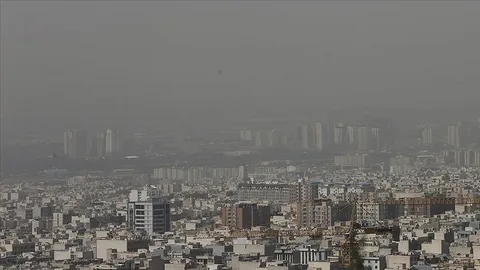
Background: Iran War Smoke Meets Pakistan’s Border Winds
The Iran pollutants air quality Pakistan threat did not emerge in isolation. The ongoing US-Israeli military campaign against Iran has created a direct environmental crisis for millions of Pakistanis living near the Iranian border.
Smoke was seen rising after a reported strike on fuel tanks at an oil refinery in Tehran on March 8, 2026. Burning oil refineries and fuel storage facilities release enormous quantities of toxic pollutants — including PM2.5, PM10, sulfur dioxide, nitrogen dioxide, and carbon monoxide — all of which can travel hundreds of kilometres on wind currents, making the Iran pollutants air quality Pakistan warning a serious public health concern.
Pakistan shares a long border with Iran and prevailing westerly winds from Iran toward Pakistan’s Balochistan and Khyber Pakhtunkhwa provinces create a natural pathway for airborne pollutants to cross international boundaries. Transboundary pollution has long been a documented challenge across South Asia — but the scale of the Iran pollutants air quality Pakistan risk is now unprecedented.
Details: PMD Warning and the Iran Pollutants Air Quality Pakistan Crisis
Iran Pollutants Air Quality Pakistan — PMD’s Full Warning
The PMD predicted that rain and thunderstorms were likely in the upper parts of Pakistan under the influence of a westerly wave approaching on Monday evening and persisting until March 12. However, before that weather system arrives, calm wind conditions in western Pakistan could allow Iran pollutants air quality Pakistan readings to worsen without dispersal.
The western provinces of Balochistan and parts of Khyber Pakhtunkhwa — which share direct geographic exposure to Iranian airflow — are the most at risk. Cities including Quetta, Turbat, Gwadar, Chaman, and Zhob could see the Iran pollutants air quality Pakistan impact intensify over the coming days.
What Is in the Smoke Driving Iran Pollutants Air Quality Pakistan Risk?
The smoke rising from Iran’s burning oil facilities contains some of the most dangerous pollutants known to public health. Research on air quality Iran conditions shows that PM2.5, PM10, sulfur dioxide, nitrogen dioxide, ozone, and carbon monoxide are the six major pollutants monitored across Iranian cities.
Oil refinery fires dramatically spike all six categories simultaneously — making the Iran pollutants air quality Pakistan threat far more severe than ordinary seasonal smog. Iran’s transportation and industrial sectors were already among the country’s largest sources of air pollution under normal peacetime conditions. War-related refinery strikes add an entirely new and uncontrolled layer of toxic emissions on top of baseline air quality Iran pollution levels.
Air Quality Iran: What the Data Shows Right Now
Air Pollution Index Iran — Current Situation
Air quality Iran data under normal peacetime conditions already placed the country in the moderate pollution bracket, with a PM2.5 reading of 24.27 μg/m³. Cities including Tehran, Ahvaz, Zabol, and Isfahan are Iran’s most chronically polluted urban centres under the air pollution index Iran system.
Even before the current war escalation, air pollution index Iran readings in cities around Tehran province including Damavand, Varamin, Pakdasht, Gharchak, and Shahriar ranged between 150 and 170 — firmly in the unhealthy for all category. The addition of large-scale refinery fire smoke has pushed air quality Iran and air pollution index Iran readings dramatically higher, directly feeding the Iran pollutants air quality Pakistan crisis.
Kish Air Quality — An Early Warning Signal
Kish Island in Iran’s Hormozgan Province — located in the Persian Gulf directly south of the Iranian mainland — serves as an important bellwether for Iran pollutants air quality Pakistan monitoring. AccuWeather’s real-time Kish air quality tracking measures PM2.5, ozone, and particulate concentrations that reflect the broader regional airflow pattern.
Any spike in Kish air quality data is a strong early indicator that toxic pollutants from the Iranian mainland are moving toward the Gulf and onward to Pakistan’s Balochistan coast. Current Kish air quality readings are being closely monitored by Pakistani environmental authorities as part of the Iran pollutants air quality Pakistan response.
Quotes on Iran Pollutants Air Quality Pakistan
The PMD stated in its press release that due to the recent situation in Iran, the winds may carry pollutants and deteriorate air quality in the western parts of the country — the clearest official acknowledgement yet of the Iran pollutants air quality Pakistan risk.
The PMD has previously warned that increased pollutant levels may trigger a surge in respiratory illnesses, asthma cases, and other pollution-related health problems, noting that vulnerable groups including children, the elderly, and people with pre-existing health conditions are particularly at risk from worsening air quality Iran conditions crossing into Pakistan.
Environmental experts note that transboundary pollution from war zones is notoriously difficult to predict or contain, and that international air quality bodies have little authority to intervene when air quality Iran pollution originates from active conflict areas.
Impact: Who Is at Risk from Iran Pollutants Air Quality Pakistan
Pakistan was already battling a severe air quality crisis before the Iran pollutants air quality Pakistan warning. Pakistan’s average PM2.5 concentration in 2024 was 73.7 μg/m³ — equivalent to an AQI of 160, classified as unhealthy — and nearly 15 times higher than the WHO annual guideline of 5 μg/m³. This placed Pakistan third globally in the 2024 World Air Quality Report.
Adding transboundary war smoke from worsening air quality Iran conditions to this already critical baseline could push western Pakistan’s air pollution index Iran-influenced readings into the hazardous category — the highest and most dangerous AQI level — posing serious and immediate health risks to all age groups.
The most immediately at-risk communities from the Iran pollutants air quality Pakistan crisis include residents of Quetta, Gwadar, and border towns in Balochistan, as well as agricultural and nomadic communities in western Pakistan who have no access to indoor air filtration or medical care.
The Iran pollutants air quality Pakistan situation also highlights how the Iran war is no longer just a military and geopolitical crisis — it is now a cross-border environmental and public health emergency affecting countries that are not parties to the conflict.
Conclusion
Pakistan’s air quality crisis has gained a dangerous new dimension through the Iran pollutants air quality Pakistan threat — one it has no control over. As Iranian oil infrastructure continues to burn under US-Israeli bombardment, the westerly winds that typically bring weather relief to Pakistan’s western regions are now potentially carrying a toxic cocktail of industrial pollutants across the border.
Wind and rain can lower concentrations within days, but calm cool conditions can trap pollutants for prolonged periods. Pakistanis in western provinces are advised to monitor real-time air quality Iran and local AQI data, limit outdoor exposure, wear masks when outside, and keep windows closed until the PMD issues an all-clear.
The government must begin tracking Iran pollutants air quality Pakistan cross-border pollution as a national health emergency — not just a weather footnote. Monitor live air quality at IQAir.com/pakistan and aqicn.org/map/pakistan for real-time AQI updates in your city.