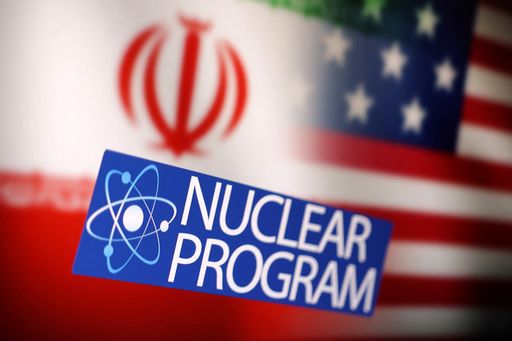
Does Iran have a nuclear weapon? Is it close to getting one? And what happens if it does?These questions have been circulating in diplomatic circles, intelligence agencies, and newspaper headlines for decades. In 2026, they’re louder than ever. The combination of stalled inspections, advancing enrichment capabilities, and simmering regional tensions has pushed the Iran nuclear question back to the top of the global security agenda and kept it there.Here’s an honest look at where things actually stand.
How Did We Get Here? A Brief History
Iran’s nuclear story starts earlier than most people realize all the way back to the 1950s, when the country began civilian nuclear cooperation under international development programs. The goal then was straightforward: energy, science, modernization.
The 1979 Islamic Revolution disrupted everything. Nuclear projects slowed, priorities shifted, and the program largely stalled. But it didn’t die. By the 1990s, Iran was quietly rebuilding its nuclear infrastructure, always with the official explanation that this was about energy independence and scientific development.
Then came 2002. Previously undisclosed nuclear facilities became public knowledge, and the international community’s patience shortened considerably. The United Nations imposed sanctions in 2006. Years of tense negotiations followed.
The 2015 JCPOA the Iran nuclear deal was meant to be the breakthrough. Iran agreed to limit enrichment activities in exchange for sanctions relief. For a few years, it held. Then in 2018, the United States withdrew from the agreement and reimposed sanctions. Iran, in response, gradually walked back its own commitments and began expanding enrichment far beyond the limits it had previously accepted.By 2026, the gap between where Iran’s program was in 2015 and where it is today is significant.
So Does Iran Have Nuclear Weapons?
Based on publicly available assessments from international agencies and major governments — no confirmed evidence of an operational Iranian nuclear weapon exists as of 2026.
But that single sentence requires some unpacking, because “no confirmed evidence” is doing a lot of work there.
There’s an important distinction between having enriched uranium and having a functional nuclear weapon. Weaponization involves several additional steps beyond material production — designing a working device, integrating it with a delivery system, testing it. These aren’t minor technicalities.
What’s not in dispute is that Iran’s technical capabilities have advanced considerably. The country has produced uranium enriched to 60% purity well above what civilian nuclear power requires, though still short of the roughly 90% typically associated with weapons-grade material. It has expanded its centrifuge infrastructure. It has accumulated significantly larger stockpiles of enriched material than it held during the JCPOA years.
Whether that amounts to a weapon is a different question. Whether it amounts to a serious capability that part is harder to argue against.
The “Breakout Time” Debate
Security analysts use the concept of “breakout time” to estimate how long it would take a country to produce enough weapons-grade material for a nuclear device if it made that political decision. It’s an imperfect measure, but it’s the most concrete one available.
Most assessments suggest Iran has shortened its theoretical breakout time significantly compared to where it stood during the JCPOA period. Some estimates put it in the range of weeks to a few months for the material production stage alone though completing an actual weapon would take considerably longer.
Iran consistently rejects the premise of these discussions, maintaining that it has no intention of building nuclear weapons and that its program serves civilian purposes. Critics point to the enrichment levels and the resistance to full inspection access as reasons not to take those assurances at face value.
The honest answer to “when will Iran have nuclear weapons?” is: nobody outside Iran’s leadership knows for certain, and possibly nobody inside it has made that decision yet.
Where Does Iran Rank Globally?
Iran is not recognized as a nuclear-armed state under international frameworks. The countries generally understood to hold nuclear weapons are the United States, Russia, China, France, the United Kingdom, India, Pakistan, North Korea, and Israel though Israel operates under deliberate ambiguity and neither confirms nor denies its arsenal.
Within the Middle East, however, Iran is the most technically advanced nuclear program by a considerable margin. That matters for regional calculations even if no weapon has been produced.
The better description for Iran’s status in 2026 is probably this: a technologically sophisticated nuclear-capable state that could, if it chose to and was willing to accept the consequences, move toward weaponization but has not confirmed doing so.
How the Rest of the World Is Responding
The United States and European governments have consistently pushed for stronger transparency measures and more robust inspection access. The core argument is simple: if the program is genuinely peaceful, verification shouldn’t be a problem.
Israel has been the most vocal and the most direct about treating Iran’s nuclear program as an existential threat. Israeli officials have repeatedly stated they will not allow Iran to acquire nuclear weapons though exactly what action that commitment implies has never been fully spelled out publicly.
Gulf states watch the situation carefully for a different reason. A nuclear-armed Iran would fundamentally alter the regional power balance in ways that concern Saudi Arabia, the UAE, and others even if they’re not the direct target of any potential Iranian capability.
Iran’s position remains that international pressure unfairly singles out its lawful nuclear activities while ignoring the nuclear capabilities of other regional actors a reference to Israel that Iran consistently raises in diplomatic forums.
These competing perspectives haven’t brought anyone closer to agreement. They’ve mostly produced more rounds of the same argument.
Why This Goes Beyond the Middle East
The Iran nuclear issue isn’t only a regional problem. It has implications that stretch well beyond the countries directly involved.
Oil markets are sensitive to Middle East tensions. Shipping routes through the Gulf handle an enormous portion of global energy trade. Any significant escalation military strike on Iranian facilities, Iranian retaliation, further breakdown of inspection regimes would send tremors through global energy prices and economic stability in ways that affect people far removed from the conflict.
There’s also the proliferation concern. If Iran does acquire nuclear weapons, the calculation for other regional states changes. Countries that have relied on US security guarantees or conventional military strength may reconsider their own nuclear options. The possibility of a cascade effect is something nuclear security experts take seriously.
What Experts Actually Agree On
Despite genuine disagreements about the severity of the threat and the right policy response, there’s more expert consensus than the headline debates suggest.
Most analysts agree that transparency and verification are the most reliable tools for managing the situation. Inspections aren’t perfect, but they’re the best mechanism available for reducing dangerous uncertainty.
Most also agree that negotiations remain preferable to the alternatives. Military action against Iranian nuclear facilities would set the program back temporarily but probably not permanently, and the regional consequences could be severe.
And most agree that the current trajectory advancing capabilities, restricted inspections, stalled diplomacy is not a stable situation. Something shifts eventually. The question is whether that shift happens through agreement or through escalation.
The Bottom Line
Iran does not have a confirmed nuclear weapon. It does have a nuclear program that is more advanced than it’s ever been, enrichment levels that can’t be fully explained by civilian purposes alone, and a relationship with international inspectors that is more restricted than transparency would require.
Whether that adds up to a program racing toward a bomb or a sophisticated civilian capability used as a diplomatic bargaining chip that debate is genuinely unresolved, and anyone who tells you they know for certain is overstating their confidence.
What’s clear is that the Iran nuclear program status will remain one of the defining security questions of this decade, and probably the next one too.
FAQs
Who holds 90% of the world’s nuclear weapons?
The United States and Russia between them account for roughly 90% of all nuclear warheads globally. Both inherited enormous arsenals from the Cold War era. Their strategic forces span land-based missiles, submarine-launched systems, and long-range bombers. No other country comes close to matching either of them in sheer numbers, though China has been steadily expanding its own arsenal in recent years.
Why did Iran start a nuclear program in the first place?
The original program in the 1950s was straightforwardly civilian electricity generation, medical applications, scientific research. It had international support at the time. Over decades, political transformation, regional security concerns, and the belief that nuclear capability confers strategic leverage gradually complicated the picture. Iran’s official position has never changed: the program is peaceful. Whether that was always true, or remains true today, is precisely what the international community disputes.
Who has uranium enriched to 60%?
Iran. International monitoring has confirmed that Iran has produced uranium enriched to 60% purity — substantially above the level needed for civilian power generation, which typically requires around 3-5%. It falls short of the roughly 90% enrichment level associated with weapons-grade material. That gap is what Iran points to when arguing its program is not weapons-oriented. Critics argue that 60% enrichment has no credible civilian justification and represents a deliberate step toward weapons capability. This single data point has become one of the most debated figures in international nuclear diplomacy.