
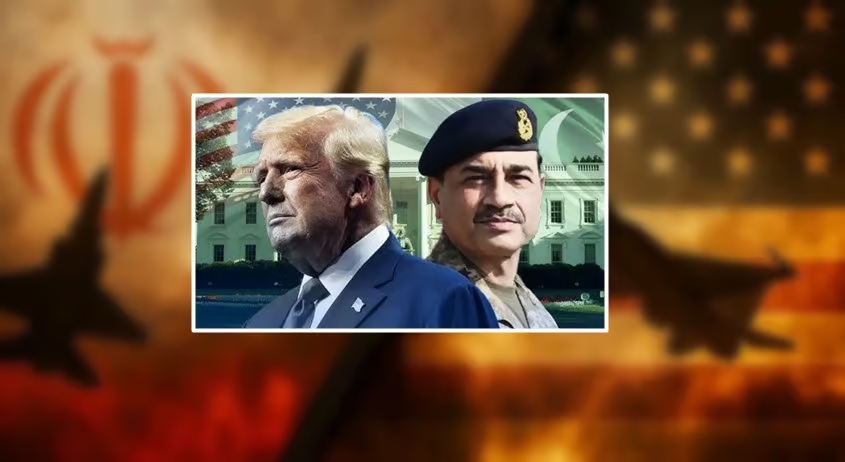
Iran conflict de-escalation has become the world’s top diplomatic priority as the US-Israel war on Iran enters its 25th day. Pakistan has formally offered to host direct peace negotiations. President Trump delayed new military strikes, citing “very productive conversations” with Tehran. Iran, however, publicly denies any direct talks — calling Trump’s move an attempt to “buy time.” The war has already claimed thousands of lives and sent global energy prices soaring.
Background: How the Iran War Started
On 25 February 2026, Iranian Foreign Minister Abbas Araghchi stated that a historic agreement with the United States to avert military conflict was “within reach” ahead of renewed talks in Geneva, emphasizing that diplomacy must be prioritized to avoid further escalation.
That diplomatic window collapsed. Attempts to renegotiate a nuclear deal in 2025 and 2026 were unsuccessful. Given Iran’s weakened position following years of sanctions, the 12-day war of June 2025, and mass domestic protests, the United States and Israel calculated they had greater opportunity to advance their objectives through military means than diplomatic ones.
On 28 February 2026, Israel and the United States began a series of strikes against Iran, stating they aimed to induce regime change and target Iran’s nuclear and ballistic missile programme. In response, Iran launched counter-strikes against Israel, US military bases in the region, and military and civilian locations in Arab states housing US forces.
Iran War News: Latest Developments on De-Escalation
Iran conflict de-escalation signals intensified dramatically over the past 48 hours — with contradictory statements emerging simultaneously from Washington and Tehran.
President Trump announced that the US and Iran had held “very good and productive conversations” over two days focused on ending hostilities, and that he was postponing planned strikes against Iran’s power plants and energy infrastructure for five days, citing the progress of discussions.
Iran responded by stating there had been no direct talks, calling Trump’s move a strategy to lower energy prices and buy time for his military plans.
Meanwhile, White House press secretary Karoline Leavitt cautioned that the situation is “fluid” and that speculation about meetings should not be considered final until officially announced.
Who Is Winning the Iran War?
Who is winning the Iran war have included degrading Iran’s nuclear programme, ballistic missiles, naval forces, drones, and proxy control. According to Atlantic Council analysts, the United States is well on its way to achieving these military objectives, with more than fifty Iranian naval vessels destroyed and Iran’s key military capabilities severely degraded.
However, the picture is complicated. Iran has pursued what analysts describe as an “escalate to de-escalate” strategy — striking not only Israeli and US targets but also relatively friendly regional countries such as Oman, Qatar, and Turkey, betting that pain inflicted on US allies will pressure Washington to end the war.
Analysts warn this calculation may not hold. Iran’s leadership perceives the conflict as existential and does not appear to be seeking an immediate off-ramp, calculating that a slow war of attrition favours Tehran over the long term.
Quotes: What Officials Are Saying
Pakistan’s Prime Minister Shehbaz Sharif, in a phone call with Iranian President Masoud Pezeshkian, emphasized the “urgent need for de-escalation, dialogue, and diplomacy,” reaffirming Pakistan’s commitment to playing a constructive role in advancing peace in the region.
Qatar’s Foreign Ministry spokesperson Majed al-Ansari stated that diplomacy should be the path to ending the conflict, urging warring parties to reach the negotiating table as soon as possible.
UN human rights experts condemned the military attacks launched by the United States and Israel against Iran, stating that unprovoked attacks launched amid active diplomatic negotiations and without UN Security Council authorization violate the fundamental prohibition on the use of force under the UN Charter.
Impact: War in Iran — Regional and Global Consequences
The war has had Iran war News impacts on global travel and trade. Flights across the Middle East came to a near-complete halt, stranding residents, expatriates, and tourists. Dubai International Airport — one of the world’s busiest — was damaged by drone strikes and temporarily closed, reopening only at limited capacity days later.Iran has launched more than 90 attempted strikes against Israel in the first five days of the conflict alone, with around 20 directly hitting civilian areas and killing at least 10 people — surpassing 60% of all Iranian attacks recorded during the entire 12-day war of June 2025.
Gulf states face a new reality. Most GCC countries had pursued de-escalation with Iran and reduced their dependence on oil revenues through tourism and foreign investment, but the current conflict has exposed the limits of existing deterrence strategies across the region.
War in Iran: When Will It End?
Analysts caution there is an assumption in Washington that Iran will stop fighting when Trump and Israel choose to end the war — but this reasoning has already been proven wrong once. Iran’s leadership sees this as an existential conflict and is calculating that their country is more willing to absorb casualties and pain than either the United States or Gulf countries. Iran’s conditions for any ceasefire remain steep. These include guarantees against future military action, the closure of all US military bases in the Gulf, full war reparations, an end to regional conflicts involving Iranian-aligned groups, and a new legal framework governing the Strait of Hormuz.
Pakistan’s formal offer to host US-Iran peace talks is now seen as one of the most credible diplomatic pathways on the table. China’s top diplomat also encouraged Tehran to pursue dialogue, telling his Iranian counterpart that “talking is always better than to keep fighting.”
Conclusion: What Comes Next
Iran conflict de-escalation remains fragile but possible. Trump’s five-day pause on strikes against Iranian energy infrastructure is the most significant signal yet that War in Iran when will it end to a negotiated exit. The next 72 hours are critical — with Pakistan ready to host talks, China pushing for dialogue, and the UN Human Rights Council convening an emergency session.
Whether this war ends at the negotiating table or escalates further into a prolonged regional conflict will depend on whether both sides can agree on a face-saving formula — one that neither has yet publicly offered.
FAQs
What is the reason behind the Iran conflict?
Various reasons have been given for the Iran–Israel conflict. Iran and Israel had previously enjoyed warm ties due to common threats, but by the 1990s the USSR had dissolved and Iraq had been weakened. Iranian Islamists have long championed the Palestinian people, whom they perceive as oppressed.
Which army is stronger, Iran or Israel?
While Israel has an advantage in technology and air force, as well as one of the world’s most effective intelligence services, Iran’s relative size and regional reach could help it withstand a longer war.
Who started the Iran War in 2026?
In January 2026, Iranian security forces killed thousands of protesters during their largest protests since the Iranian Revolution. US president Donald Trump responded by threatening military action against Iran and launching the largest U.S. military buildup in the region since the US-led 2003 invasion of Iraq.