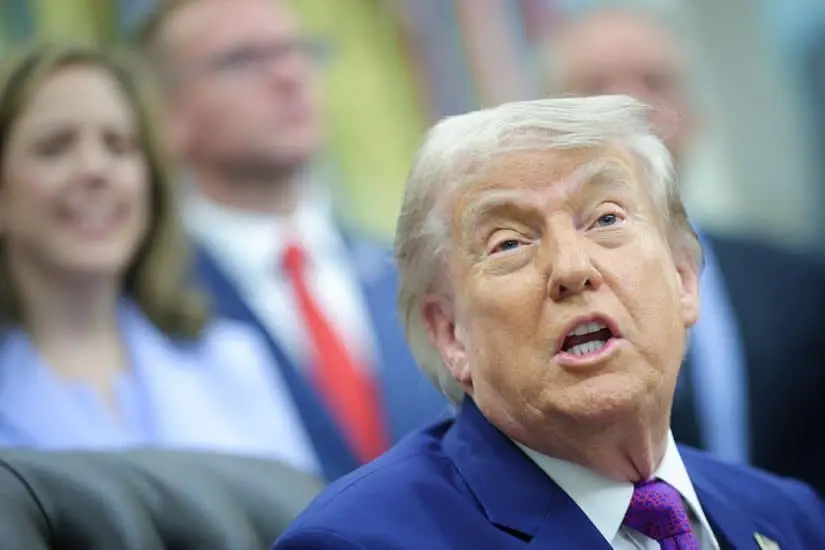
The Iran-Israel ceasefire confirmed on April 8, 2026, is now teetering on the edge of collapse. President Donald Trump declared on May 11, 2026, that the Iran-US ceasefire is on “massive life support,” after dismissing Tehran’s latest counter-proposal as “garbage.” With the Iran ceasefire end date unclear and both sides far apart, the world watches nervously.
Background: How the Iran-US Ceasefire Was Confirmed
The roots of this crisis go back to February 28, 2026, when the United States and Israel launched a major military campaign against Iran. The strikes targeted Iran’s nuclear facilities, military infrastructure, and government targets. Iran’s Supreme Leader Ali Khamenei was killed in these strikes, sending the region into deep shock.
Iran responded with counter-strikes against Israel, US military bases in the region, and by closing the Strait of Hormuz a critical waterway through which roughly 20% of global oil passes. This single act sent shockwaves through global energy markets and triggered urgent diplomatic activity worldwide.
The Road to the Iran Ceasefire Agreement
After weeks of escalation, Pakistan stepped forward as a mediator. On April 8, 2026, the Iran-Israel ceasefire was officially confirmed. The United States and Iran agreed to a two-week ceasefire, brokered by Pakistan, temporarily halting the fighting. Iran claimed victory at the time, asserting that the deal accepted its 10-point plan including lifting all US sanctions and withdrawing American forces from regional bases.
However, JD Vance, the US Vice President, immediately called the ceasefire a “fragile truce.” Trump later extended the ceasefire beyond its original two-week window, saying time was needed for Iran to submit a formal peace proposal. The Iran ceasefire end date was never firmly set, with negotiations described as ongoing.
Iran’s 10-Point Plan What Does It Demand?
Iran’s 10-point plan, which it released in multiple versions with slight differences, lays out Tehran’s conditions for a permanent peace. The demands include:
- A full end to US and Israeli attacks on Iran and Iranian-backed forces in Lebanon and Iraq
- Complete lifting of all US sanctions on Iran
- Release of all frozen Iranian assets held abroad
- War reparations paid to Iran for damages caused
- Withdrawal of US military forces from all regional bases
- International recognition of Iranian sovereignty over the Strait of Hormuz
- Security guarantees that prevent future US and Israeli military action against Iran
- A ceasefire on all fronts, including Lebanon where Hezbollah is fighting Israel
- End to the US naval blockade of Iranian ports
- Deferral of nuclear program discussions to later stages of talks
The United States rejected these terms as maximalist and unacceptable. Washington’s own proposal, delivered earlier via Pakistan, demanded that Iran end all nuclear enrichment, limit its ballistic missile program, reopen the Strait of Hormuz, and cut support for armed groups like Hezbollah in exchange for sanctions relief and support for a civilian nuclear program.
Iran Ceasefire Update May 11, 2026
As of today, the Iran ceasefire update is deeply troubling for those hoping for peace. Trump made his feelings crystal clear in a Monday statement.
“It’s unbelievably weak,” Trump said, referring to Iran’s latest counter-proposal. “After reading that piece of garbage they sent, I didn’t even finish reading it.”
Trump declared the ceasefire between the US and Iran is on “massive life support,” signaling that a return to full-scale conflict remains very much on the table. He called Iran’s response “stupid” and “simply unacceptable.”
Iran’s top negotiator, Parliament Speaker Mohammad Bagher Ghalibaf, responded defiantly. He stated that Iran is “prepared for every option” and warned: “Our armed forces are prepared to deliver a lesson-giving response to any aggression.”
Iran’s Foreign Ministry pushed back on Trump’s characterization, calling Tehran’s proposal “reasonable” and “generous.” Iranian officials argue there is a “cloud of mistrust” toward the United States, pointing out that negotiations were already underway twice before when US-Israeli strikes were launched and they do not want to fall into that same cycle again.
The Strait of Hormuz The World’s Biggest Chokepoint
At the center of the Iran ceasefire agreement terms debate lies the Strait of Hormuz. Iran closed this vital shipping lane after the February 2026 attacks, and it has now remained effectively shut for over ten weeks.
The Strait of Hormuz is the world’s most critical oil chokepoint. Roughly one-fifth of global petroleum trade flows through it. Saudi Arabia, Iraq, the UAE, Kuwait, and Qatar all depend on it to export oil. Its closure has caused massive global oil price spikes, disrupted supply chains, and hammered economies worldwide.
Saudi Aramco, the world’s largest oil exporter, has publicly acknowledged the severity of the supply shock. Oman’s foreign minister has called for an “urgent” reopening of the strait. Britain and France have been leading coalition meetings involving dozens of countries to restore freedom of navigation but have stressed they will not act until a sustainable ceasefire is in place.
The US has imposed a naval blockade on Iran in an effort to cut off Iranian oil exports and pressure Tehran into a deal. Iran has warned that any attack on Iranian oil tankers or commercial vessels would be met with a “heavy assault” on US interests.
Key Quotes From Officials
Donald Trump (US President): “The ceasefire is the weakest right now after reading that piece of garbage they sent us.”
Mohammad Bagher Ghalibaf (Iran’s top negotiator): “A strategy of miscalculation and mistaken decisions will always produce mistaken results; the whole world has understood this by now.”
JD Vance (US Vice President): The US’s core goal is for Iran to give “an affirmative commitment that they will not seek a nuclear weapon, and they will not seek the tools that would enable them to quickly achieve a nuclear weapon.”
Pakistani PM Shehbaz Sharif: Pakistan has been in contact with the US and Iran “day and night” to extend the ceasefire and reach a peace deal.
Al Jazeera correspondent from Tehran: “Iranians are saying that they were already engaged in negotiations not once, but twice, in the last year, when their country faced unprecedented airstrikes. Now they are looking for security assurances.”
Global and Regional Impact
The Iran ceasefire 2026 situation is not just a bilateral conflict it is reshaping the entire global order. The closure of the Strait of Hormuz has triggered one of the most severe oil supply shocks in modern history. Energy prices have soared, inflation has worsened in dozens of countries, and major shipping companies have halted routes through the region.
The conflict has also destabilized Lebanon, where Israel continues striking Hezbollah targets, killing civilians including children. The Lebanese government has called Israeli strikes in Lebanon war crimes. Hezbollah says it has paused attacks, but fighting continues.
China has remained a key player. Reports indicate that Chinese intelligence may be preparing to deliver new air defense systems to Iran. Russian President Vladimir Putin has also weighed in, saying Moscow’s offer to take enriched uranium from Iran to help broker a settlement remains on the table. These developments suggest the Iran-US conflict has drawn in major global powers, making a simple bilateral resolution even harder.
Bahrain, which hosts the US Fifth Fleet, announced it arrested 41 people allegedly affiliated with Iran’s Revolutionary Guard a sign of just how regionally dangerous the situation has become.
Opinion A Fragile Peace Nobody Can Afford to Lose
From an opinion standpoint, both sides appear to be posturing ahead of a crucial moment. Trump is pushing for a quick, clean deal that he can present as a victory especially with domestic economic pressure mounting, including calls to suspend the federal gas tax to ease pain at the pump.
Iran, on the other hand, is playing for time. Having lost its Supreme Leader and suffered enormous military damage, Tehran needs a deal that gives it dignity, economic relief, and security guarantees not just a paper ceasefire that leaves it vulnerable to the next round of strikes.
The gap between the two sides is real but not unbridgeable. Analysts note that the talks are unlikely to progress meaningfully until Trump meets Chinese President Xi Jinping later this week a summit that could shift the diplomatic landscape significantly. China’s leverage over Iran and its role in global oil markets make Beijing a silent but powerful player in these negotiations.
The Iran ceasefire 2026 is not dead yet. But it is, as Trump himself admits, on life support.
Conclusion: What Comes Next?
The coming days will be decisive for the Iran-Israel ceasefire confirmed in April. If talks remain deadlocked, Trump has repeatedly threatened to resume full-scale bombing. Iran has shown it is not backing down easily. Pakistan continues to mediate, and China may play a larger role following the upcoming Trump-Xi summit.
The Iran ceasefire end date remains undefined which is itself part of the problem. Without a clear timeline and agreed framework, both sides are operating in a diplomatic grey zone that could tip into renewed war at any moment. The world is watching, and the stakes global oil supply, nuclear proliferation, and regional stability could not be higher.
FAQs
Q: How long is the ceasefire between Iran and the US?
The Iran-US ceasefire was originally agreed on April 8, 2026, as a two-week deal mediated by Pakistan. President Trump later extended it to allow time for Iran to submit a formal peace proposal. As of May 11, 2026, no end date has been firmly set, but the ceasefire is described by Trump as being on “massive life support” due to stalled negotiations.
Q: Which army is stronger, Israel or Iran?
By conventional military metrics, Israel is widely considered to have a stronger and more technologically advanced military. Israel possesses a highly capable air force, advanced missile defense systems like Iron Dome and Arrow, and is believed to have nuclear capabilities. Iran has a larger standing army in terms of personnel and a significant ballistic missile arsenal, along with a network of regional proxy forces including Hezbollah. However, the 2026 conflict demonstrated that US-Israeli airstrikes caused enormous damage to Iran’s military infrastructure, including the destruction of many key targets.
Q: Who buys most of Iran’s oil?
China is by far the largest buyer of Iranian oil, purchasing the vast majority of Iran’s crude exports despite US sanctions. Before the 2026 conflict and the closure of the Strait of Hormuz, China was estimated to be buying over 80% of Iran’s oil exports, largely through shadow shipping networks and intermediaries. Iran’s ability to export oil has been severely disrupted since the US imposed a naval blockade in 2026 and Iranian tankers have faced attack.