

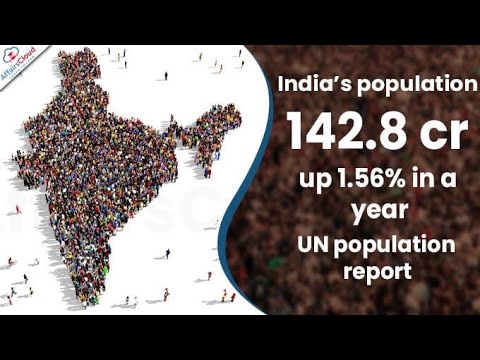
India population trends are becoming a major topic of discussion after new demographic reports showed the country’s fertility rate has fallen below replacement level. Experts say the shift could reshape India’s economy, workforce, and long-term development plans. The latest data has also increased global attention on India population vs China comparisons as India remains the world’s most populated country.
The changing India population trends are being closely monitored by economists, policymakers, and international organizations. Analysts believe the falling birth rate may bring both opportunities and challenges in the coming decades. While slower population growth could reduce pressure on resources, it may also create future labor shortages and economic imbalances.
India Population 2026 and Demographic Changes
India population 2026 estimates suggest the country’s population continues to grow, but at a slower pace than previous decades. According to demographic experts, India’s fertility rate has dropped below the replacement level of 2.1 children per woman. This means families are having fewer children than needed to maintain stable population growth over time.
The Population of India in billions is still increasing because of population momentum and longer life expectancy. However, experts say the growth rate is slowing rapidly in urban areas. Cities such as Mumbai, Delhi, Bengaluru, and Chennai are seeing changing family structures, delayed marriages, and lower birth rates.
The Population of India in crore remains extremely high despite declining fertility. India’s population is estimated at more than 145 crore people in 2026. The large youth population continues to support economic activity, but experts warn that the country must prepare for an aging population in future decades.
India Population Trends 2022 Compared With Current Data
India population trends 2022 already showed early signs of slowing population growth. Reports released during that period highlighted declining fertility levels in several Indian states. Southern states including Kerala and Tamil Nadu had already fallen well below replacement level years earlier.
Current demographic reports show the trend has expanded across many regions of the country. Rural areas are also experiencing smaller family sizes compared to previous generations. Rising education levels, urban migration, and increased participation of women in the workforce are considered key reasons behind the demographic shift.
Researchers comparing India population trends 2022 with present figures say the decline is happening faster than earlier predictions. This has increased discussions about long-term economic planning, pension systems, healthcare infrastructure, and employment strategies.
India Population vs China: Global Comparison
The debate around India population vs China has intensified after India officially became the world’s most populous nation. China has already experienced years of declining birth rates and an aging population. Experts now believe India may follow a similar demographic path in the future.
China introduced several policies to encourage higher birth rates after decades of population control measures. However, the country continues to struggle with demographic decline. India is currently in a stronger demographic position because of its younger population and growing workforce.
Despite this advantage, experts warn that India population trends indicate similar long-term challenges could emerge if fertility rates continue falling rapidly. Economists say India must improve job creation, education, and healthcare to fully benefit from its population advantage.
Population of India in Crore and Urban Pressure
The Population of India in crore has created enormous pressure on urban infrastructure, housing, transportation, and public services. Major cities are facing overcrowding, rising pollution, and water shortages. Experts believe slower population growth could eventually reduce some of these pressures.
However, demographic experts also warn that regional population imbalance may increase. Some states may experience labor shortages while others continue facing unemployment challenges. Policymakers are discussing new strategies to balance development across urban and rural areas.
The Population of India in billions also affects global climate discussions. India remains one of the largest consumers of energy and natural resources. Sustainable development policies are expected to become even more important in the coming years.
India Population 2011 Census Compared With 2026 Estimates
India population 2011 census data showed the country had crossed 121 crore people at that time. Since then, population growth has continued, but the pace has gradually slowed. Experts say comparing India population 2011 figures with India population 2026 estimates reveals major social and economic changes.
Education levels have improved significantly in many regions. More women are entering higher education and professional careers, which has influenced family planning decisions. Increased access to healthcare and contraception has also contributed to declining fertility rates.
Researchers say the shift from large joint families to smaller nuclear households is another major factor affecting India population trends. Urban lifestyles and rising living costs have made smaller families more common among younger generations.
Experts Explain Why India’s Birth Rate Is Falling
Population experts believe multiple factors are responsible for India’s declining birth rate. Economic pressure is considered one of the biggest reasons. Many families are choosing to have fewer children because of rising education, healthcare, and housing expenses.
Women’s education and employment opportunities have also changed family planning patterns. Studies show women with higher education levels are more likely to delay marriage and childbirth. Increased awareness about reproductive health has further contributed to declining fertility rates.
Government healthcare programs and expanding access to contraception have played a major role as well. Experts say India’s demographic transition reflects broader global trends seen in many developing economies over the past two decades.
Economic Impact of India Population Trends
India population trends will have a major impact on the country’s economy over the next several decades. A large working-age population can support economic growth if enough jobs are created. Economists often describe this as a demographic dividend.
However, experts warn that failure to generate employment opportunities could create economic stress. Youth unemployment remains a serious challenge in many regions of India. Policymakers are focusing on manufacturing, technology, and infrastructure development to support future growth.
An aging population may also increase pressure on healthcare systems and pension programs in coming decades. Countries with low fertility rates often face rising costs related to elderly care and social support systems.
Global Attention on India Population Trends PDF Reports
International organizations and research institutions are publishing India population trends PDF reports to study the country’s demographic future. These reports are widely used by universities, policymakers, economists, and development agencies.
India population trends wikipedia pages and demographic databases have also seen increased traffic as people search for updated information. Public interest has grown after reports confirmed India’s fertility rate had fallen below replacement level.
Experts say demographic data will remain important for future planning in areas such as education, labor markets, healthcare, urban planning, and environmental sustainability.
Future Outlook for India’s Population
Experts believe India will continue experiencing population growth for several more decades, although at a slower rate. The country is expected to remain one of the world’s largest economies because of its large workforce and expanding consumer market.
However, demographic experts warn that long-term planning is necessary to manage future challenges linked to aging populations and slower birth rates. Investments in healthcare, education, technology, and employment opportunities are expected to shape India’s demographic future.
India population trends will continue influencing global economic and political discussions. As the country balances growth with sustainability, policymakers face important decisions about how to manage one of the world’s largest populations in the decades ahead.
FAQs
Which small city in India?
India has many small and rapidly developing cities that are becoming important economic centers. Cities such as Mysuru, Dehradun, Siliguri, Udaipur, and Hubli are often considered smaller cities with growing infrastructure, tourism, education, and business opportunities. These cities are attracting new residents because of better living conditions and lower costs compared to major metropolitan areas.
Which country will be no. 1 in 2100?
Population experts believe India could remain one of the largest countries by population in 2100, although some projections suggest African nations such as Nigeria may experience rapid population growth. Economically, countries like the United States, China, and India are expected to compete for global leadership depending on technological development, economic policies, and demographic changes.
Is India’s birth rate dropping?
Yes, India’s birth rate is dropping according to recent demographic reports. Experts say the country’s fertility rate has fallen below replacement level, meaning families are having fewer children on average. Rising education levels, urbanization, economic pressures, delayed marriages, and better healthcare access are considered major reasons behind the decline.