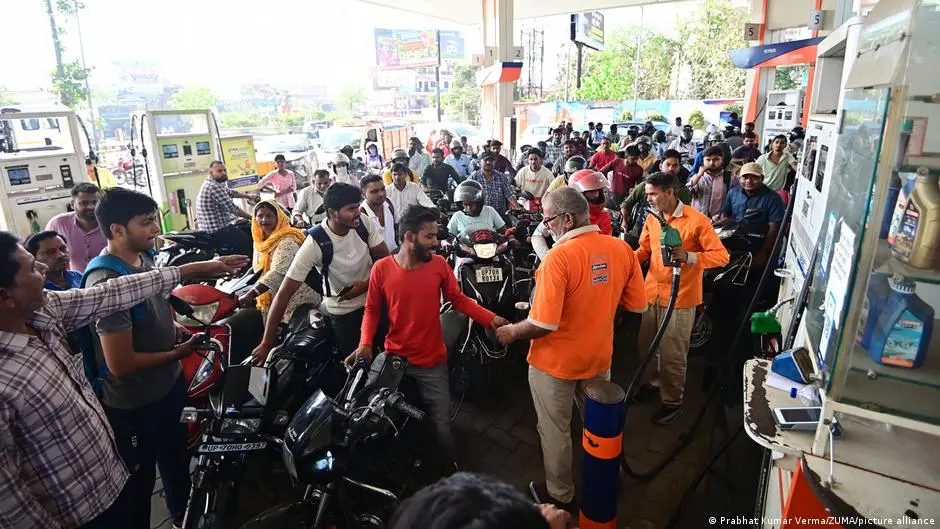
India is facing a deepening fuel crisis as supply disruptions from the ongoing Middle East war push the country toward an energy emergency. Prime Minister Narendra Modi has made a rare public appeal urging every Indian citizen to reduce their petrol and diesel consumption immediately. The energy crisis in India is now considered one of the most serious since the post-Covid economic slowdown.
Background: How the Middle East War Triggered a Global Fuel Crisis
The ongoing conflict involving US-Israeli strikes on Iran has sent shockwaves across global energy markets. Iran responded by enforcing a near-total blockade of the Strait of Hormuz one of the world’s most critical oil shipping routes. This single development has triggered a severe fuel crisis in the world, pushing crude oil prices to alarming highs.
India, which imports the majority of its crude oil through this route, has been hit particularly hard. The fuel crisis in India has rapidly moved from a supply concern to a national emergency. Regions like Kurnool in Andhra Pradesh are already experiencing a visible petrol shortage, with long queues reported at fuel stations.
Modi’s Direct Appeal to the Nation
Indian Prime Minister Narendra Modi on Sunday urged the public to cut down on petrol and diesel consumption amid supply disruptions caused by the Middle East war. Addressing a large gathering in Telangana’s southern region, he made several specific recommendations to ease the energy crisis.
“We have to reduce our use of petrol and diesel. In cities with metro lines, we should try to travel by metro… If we must use a car, then we should try to car pool,” Modi told the crowd.
This kind of direct public appeal from a sitting Prime Minister on fuel conservation signals just how serious the energy crisis in India has become. Analysts say it mirrors the urgency seen during wartime rationing periods in other nations.
LPG Shortage in India Hits Households Hard
While petrol and diesel prices for retail consumers remain officially unchanged, the ground reality is different for cooking fuel. India has raised prices of liquefied petroleum gas (LPG) the primary cooking fuel for millions of households following disruptions caused by the US-Israeli strikes on Iran and the resulting blockade of the Strait of Hormuz.
The LPG shortage in India is hitting low- and middle-income families the hardest. Women in rural areas, in particular, are struggling to afford cylinders as prices continue to rise. The shortage is not merely economic it is a humanitarian issue that threatens the daily lives of crores of Indians.
The petrol shortage in Kurnool and similar Tier-2 cities reflects a broader pattern. As supply chains tighten and import costs rise, smaller cities receive fewer allocations from state oil marketing companies, creating visible scarcity on the ground.
Current Fuel Price in India What Are People Paying?
The current fuel price in India remains a deeply sensitive topic. While the Modi government has so far resisted a formal retail price hike on petrol and diesel, India is one of the few countries in the region that has not officially increased petrol and diesel prices for domestic consumers or rationed supplies.
However, this policy is coming at an enormous cost. “OMCs are buying crude, gas and LPG at higher cost, but in order to protect consumers, they are selling final products at lower cost, leading to massive mounting losses of up to 1,000 crore rupees per day,” said Hardeep Singh Puri, India’s minister for petroleum and natural gas.
These losses are unsustainable in the long run. Experts warn that if the fuel crisis in the world continues for several more weeks, India will have no choice but to revise its current fuel price policy, resulting in a sharp petrol diesel price hike that could ripple across the entire economy.
Energy Crisis in India Echoes of Lockdown-Era Policies
Modi also drew a direct comparison to measures taken during the Covid-19 pandemic. He urged people to resume energy-saving schemes from the Covid period, saying: “We should prioritise work from home, online conferences, and virtual meetings again.”
The energy crisis lockdown parallel is intentional. During Covid, India saw a dramatic drop in fuel consumption demand fell by over 30% at the peak of the lockdown. The government is now hoping that voluntary conservation can replicate even a fraction of those savings, reducing pressure on imports and stabilising the energy crisis in India.
Industries that rely heavily on diesel including transport, agriculture, and manufacturing are being asked to switch to alternatives wherever possible. The push for energy conservation is also tied to India’s long-term goal of energy independence.
Impact Regional and Global Consequences of the Fuel Crisis
The fuel crisis in the world extends well beyond India’s borders. Countries across South Asia, Southeast Asia, and Africa that depend on Middle Eastern crude are all facing similar pressures. Global shipping costs have spiked, airlines are warning of service cuts, and inflation in energy-importing nations is climbing steadily.
Within India, the petrol diesel price hike risk is weighing on the stock market. Transport and logistics sectors are especially vulnerable. Puri noted that the government itself has faced revenue losses of 14,000 crore rupees in a single month due to tax reductions on diesel and petrol intended to cushion consumers from the global price surge.
For cities like Kurnool, where the petrol shortage is already visible, local businesses dependent on transportation are facing higher operating costs. Small traders, auto-rickshaw drivers, and daily wage workers are among the worst affected. The energy crisis in India is, at its core, a crisis for ordinary people.
E20 Fuel India’s Long-Term Answer to the Energy Crisis?
One structural response India has been pursuing is the rollout of E20 fuel a blend of 20% ethanol and 80% petrol. The government has been pushing this initiative as part of its Ethanol Blended Petrol (EBP) programme to reduce dependence on imported crude oil.
E20 fuel in India is seen as a strategic buffer against exactly the kind of external shock that the Middle East conflict represents. By substituting a fifth of petrol volume with domestically produced ethanol largely derived from sugarcane and surplus grain India aims to cut its import bill and reduce vulnerability to global fuel crisis events.
However, critics point out that the transition to E20 is gradual and uneven across states. The fuel crisis in India has exposed how dependent the country still remains on international oil markets, making accelerated adoption of E20 and other alternatives an urgent national priority.
Expert Quotes and Official Statements
Modi also stressed the importance of saving foreign currency, saying: “We must also place a strong emphasis on saving foreign exchange, as petrol and diesel have become so expensive globally.”
Puri called on citizens to turn Modi’s “empathetic appeal” into a national mass movement to save and conserve energy. Senior economists have echoed this view, warning that without a rapid reduction in demand, India’s foreign exchange reserves could come under significant pressure in the coming months.
Energy analysts note that India’s oil import bill was already one of the largest drains on its current account. With global crude prices elevated due to the fuel crisis in the world, every additional barrel imported adds to macroeconomic stress.
Conclusion What Comes Next for India’s Energy Future?
The energy crisis in India has arrived at a moment when the country was beginning to show genuine momentum in renewable energy development. The immediate challenge is managing the current petrol diesel price hike risk while protecting vulnerable households from the worst effects of the LPG shortage in India.
The government faces a difficult balancing act: keeping domestic fuel prices stable enough to avoid public unrest while managing billion-dollar daily losses at state oil companies. If the Middle East conflict persists, a formal revision of the current fuel price in India appears increasingly inevitable.
In the meantime, Modi’s call for voluntary conservation is a signal that India is preparing for a longer crisis than initially anticipated. Whether citizens respond in meaningful numbers the way they did during the energy crisis lockdown of 2020 will shape how India weathers this storm.
Frequently Asked Questions (FAQs)
Q1: In which country is petrol most expensive?
As of 2026, petrol prices are among the highest in countries like Hong Kong, Iceland, Norway, and several Western European nations where heavy fuel taxes are in place. Among major economies, petrol in the UK, Germany, and the Netherlands regularly costs the equivalent of over $2.50 per litre. In contrast, oil-rich nations like Kuwait, Saudi Arabia, and Venezuela maintain some of the cheapest fuel prices due to heavy state subsidies. India’s current fuel price, despite the ongoing crisis, remains lower than most developed nations due to government intervention.
Q2: Will we have gas in 50 years?
Most energy experts agree that natural gas and petroleum reserves will still exist in some form 50 years from now, but their accessibility and affordability are expected to decline significantly. The world is projected to hit peak oil demand in the 2030s, after which renewable energy sources solar, wind, green hydrogen are expected to dominate. However, the fuel crisis in the world today is accelerating investment in clean alternatives, meaning that by 2075, gas may still be available but far less central to daily life than it is today.
Q3: Why is E20 fuel being introduced in India?
E20 fuel in India is a government initiative under the National Biofuel Policy to blend 20% ethanol into petrol. The primary reasons are to reduce India’s dependence on costly crude oil imports, lower carbon emissions, support domestic farmers who produce ethanol feedstock, and improve energy security. The energy crisis in India has made the E20 programme even more urgent, as every percentage point of ethanol blending reduces how much foreign crude India needs to import.