

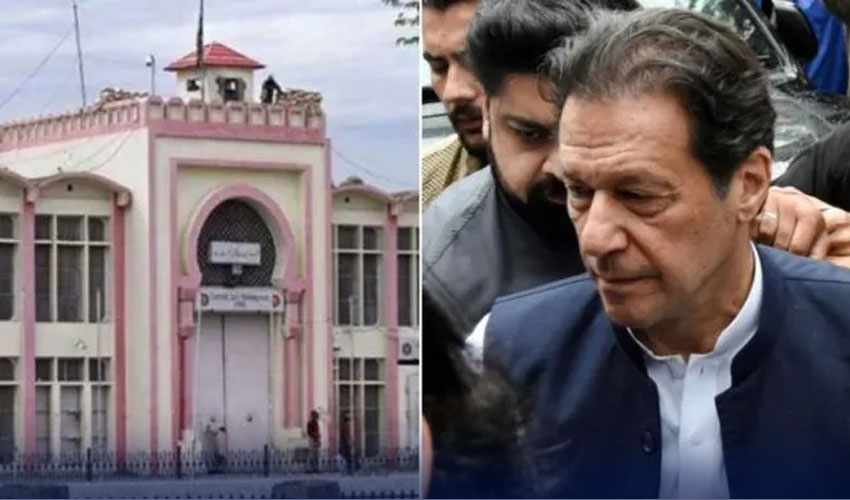

Imran Khan, the jailed founder of Pakistan Tehreek-e-Insaf (PTI), continues to face isolation inside Adiala Jail in Rawalpindi. In the latest development, not a single PTI leader showed up to meet him on a court-mandated visit day, fueling intense speculation about deepening cracks within the party. Despite a list of six leaders being formally submitted by PTI Secretary General Salman Akram Raja a day prior, none of the nominated leaders arrived at Adiala Jail before the 4 PM cut-off time for inmate meetings.
Background
Imran Khan has been held at Adiala Jail in Rawalpindi since August 2023, facing over 180 cases across Pakistan. His detention has drawn significant international attention from human rights organizations, with calls for his release citing alleged violations of due process.
His arrest in August 2023 followed a conviction in the Toshakhana case related to misuse of state gifts. Subsequent convictions included a 10-year sentence in the cypher case later overturned in June 2024 and a 14-year term in the Toshakhana case, which was suspended in April 2024.
Despite some convictions being overturned, Imran Khan has remained behind bars. His imprisonment has become one of the most politically charged issues in Pakistan’s recent history, with mass protests erupting at multiple points across the country.
Details: PTI Leaders Absent from Adiala Jail Visit
PTI leadership failed to visit Adiala Jail for meeting with Imran Khan on Thursday, which is a weekly court-designated meeting day for inmates’ families and friends. Notably, this marks the third time in two and a half years that no party leader came to Adiala Jail on the scheduled meeting day, with the previous week also seeing an absence of leadership.
The Islamabad High Court has allowed Imran Khan twice-weekly meetings on Tuesdays and Thursdays with his family, lawyers, and political associates. Despite the court order, he has reportedly remained largely deprived of such meetings for several months as the directives remain unimplemented
The repeated failure to utilize court-mandated access has raised serious questions about PTI’s organizational unity. Observers note that the absence is not simply logistical it reflects broader tensions building within the party’s ranks over strategy, leadership, and the path forward for Imran Khan’s release.
Imran Khan’s Health Condition at Adiala Jail
Adding to the growing concern around Imran Khan’s detention is the alarming state of his health. A court-appointed lawyer, Barrister Salman Safdar, conducted a two-hour interview with Khan in February 2026 and submitted a detailed seven-page report, revealing that the former prime minister had been left with just 15 percent vision in his right eye after authorities allegedly ignored his complaints for three months.
The medical report dated February 6, 2026, diagnosed his condition as “right central retinal vein occlusion” a blood clot that can cause severe retinal damage. Despite repeated complaints of blurred and hazy vision, no action was taken by jail authorities to address his concerns.
He has been held in Adiala Jail in what Barrister Safdar’s report confirms as solitary confinement for approximately two years and four months. The report also noted that Khan had been denied access to his lead counsel and legal team for five months, and his sisters and other immediate family members had not been permitted to visit him.
Quotes: PTI’s Response to the Adiala Jail Situation
PTI Central Information Secretary Sheikh Waqas Akram stated that the party had taken strict notice of the absence and would deliberate on the “unfortunate development” in an upcoming leadership meeting. He said, “There are thousands of leaders and workers who want to meet Imran Khan. Many workers go to Adiala Jail every week despite not being on the list and are not allowed to meet him.”
Imran Khan’s sister Aleema Khan, speaking outside Adiala Jail, reiterated that she is not seeking any party role and remains focused solely on securing her brother’s release. She also remarked on broader political issues, referring to stolen party votes and raising concerns over international conflicts and human rights situations.
Senior political analyst Benazir Shah commented that “the government has mishandled Imran Khan’s health from the very start first by concealing the news until it was reported by a local newspaper, then by dismissing it as a routine matter, and ultimately by performing a procedure without the knowledge or presence of his family.”
Protests and Crackdowns Near Adiala Jail
The situation around Adiala Jail has not been limited to courtrooms and party meetings. Multiple protests organized by PTI near the prison have been forcibly broken up by authorities.
A PTI protest planned outside Adiala Jail was disrupted after law enforcement detained several party leaders and workers, including Imran Khan’s sisters Noreen Niazi and Uzma Khan. The district administration had enforced Section 144 across Rawalpindi for 15 days, prohibiting public gatherings.
Early one morning, authorities used water cannons to disperse protesters, including the sisters of the PTI founder, who were staging a sit-in outside Adiala Jail after being denied a meeting with the former prime minister. Senior party members, including PTI Secretary General Salman Akram Raja and PTI KP Provincial President Junaid Akbar Khan, had also joined the demonstration.
On one occasion, Aleema Khan expressed her disappointment over the authorities’ refusal to allow family members to meet Imran Khan, stating that “it was unfortunate that family members were not being allowed to meet the incarcerated former prime minister despite clear court orders.”
Internal PTI Divisions Intensify
Beyond the access issue, the repeated absences have sharpened the perception of divisions within PTI itself.
Reports and murmurs of internal differences within PTI have intensified, with the repeated absence of leaders from jail meeting lists being linked to growing factional strains. Earlier, Imran Khan’s sister Aleema Khan had criticized PTI leadership, including the secretary general, over what she described as failure to secure Imran Khan’s release. In response, the secretary general reportedly expressed intent to submit his resignation.
One PTI MNA stated that ever since Aleema Khan took control of the party’s social media operations, online trolling targets anyone who speaks with logic or suggests a practical approach to securing Imran’s release. Another MNA claimed that messages had been received from certain quarters indicating that if they “calm down,” meetings with Imran Khan may be allowed within a few weeks.
The internal discord raises serious questions about PTI’s ability to mount a sustained, unified campaign for its founder’s release particularly as courts have already granted access that the party itself is failing to fully use.
International and Human Rights Dimension
Imran Khan’s imprisonment has not gone unnoticed beyond Pakistan’s borders. In June 2024, a United Nations Working Group on Arbitrary Detention concluded that Khan’s detention had no legal basis and appeared to have been intended to disqualify him from running for political office.
As of February 2026, his imprisonment has polarized Pakistani politics significantly, with PTI boycotting aspects of the 2024 elections and alleging military interference in the judicial process.
Human rights organizations have repeatedly raised alarms about conditions at Adiala Jail and the treatment of political prisoners more broadly, putting pressure on the Pakistani government to ensure due process and access to legal counsel.
Impact: What This Means for Pakistani Politics
The ongoing saga at Adiala Jail is no longer just about one man’s imprisonment. It reflects a broader crisis in Pakistan’s democratic and judicial institutions. The failure to implement court orders from an Islamabad High Court that has explicitly mandated access for family, lawyers, and party leaders undermines public trust in the rule of law.
For PTI, the absence of coherent, united action is a strategic liability. Supporters who travel from across Punjab at significant personal expense to demonstrate solidarity are growing frustrated with a leadership that cannot even show up on a court-mandated day. The optics are deeply damaging at a time when the party needs to project strength and discipline.
For the government, continued restrictions on Imran Khan’s access to legal counsel and family risk escalating both domestic and international criticism, particularly as the health concerns raised by Barrister Safdar’s report remain a live issue.
Conclusion: What Comes Next
PTI has indicated it will review the meeting arrangements and take action to ensure that those who cannot attend should not submit names for court-mandated visits. The party leadership is set to deliberate on the issue in an upcoming meeting.
Meanwhile, court proceedings in the Al Qadir Trust case continue. Observers expect that access-related petitions will remain active before the Islamabad High Court and Supreme Court as PTI pushes for full implementation of existing orders.
The situation at Adiala Jail is a microcosm of Pakistan’s larger political crisis and until systemic reforms address access, due process, and political accountability, episodes like Thursday’s empty meeting day will continue to define the Imran Khan narrative both at home and abroad.
FAQs
How many cities have had “No Kings” protests?
“No Kings” protests in the United States have taken place in dozens of cities simultaneously, spanning major metropolitan areas including New York, Los Angeles, Chicago, Washington D.C., Houston, and many smaller cities. Reports from recent protest movements have documented organized demonstrations in over 50 cities across multiple states during peak mobilization periods.
What was the most violent protest in history?
Historically, some of the most violent protests include the 1871 Paris Commune, the 1919 Amritsar Massacre in India, and the 1989 Tiananmen Square crackdown in China. In Pakistan’s recent context, the May 9, 2023 protests linked to Imran Khan’s arrest resulted in attacks on military installations, over 9,000 arrests, and at least 10 deaths, making it one of the most turbulent civil unrest events in Pakistan’s modern history.
Can I get in trouble for protesting?
In democratic countries, peaceful protest is a constitutionally protected right. However, participating in protests that turn violent, block traffic without permission, or violate local laws such as Section 144 in Pakistan which bans public gatherings can result in arrest and prosecution. In Pakistan, PTI leaders and protesters near Adiala Jail have faced detention under Section 144 and anti-terrorism provisions. It is always advisable to understand the local laws governing public assembly before participating in any demonstration.