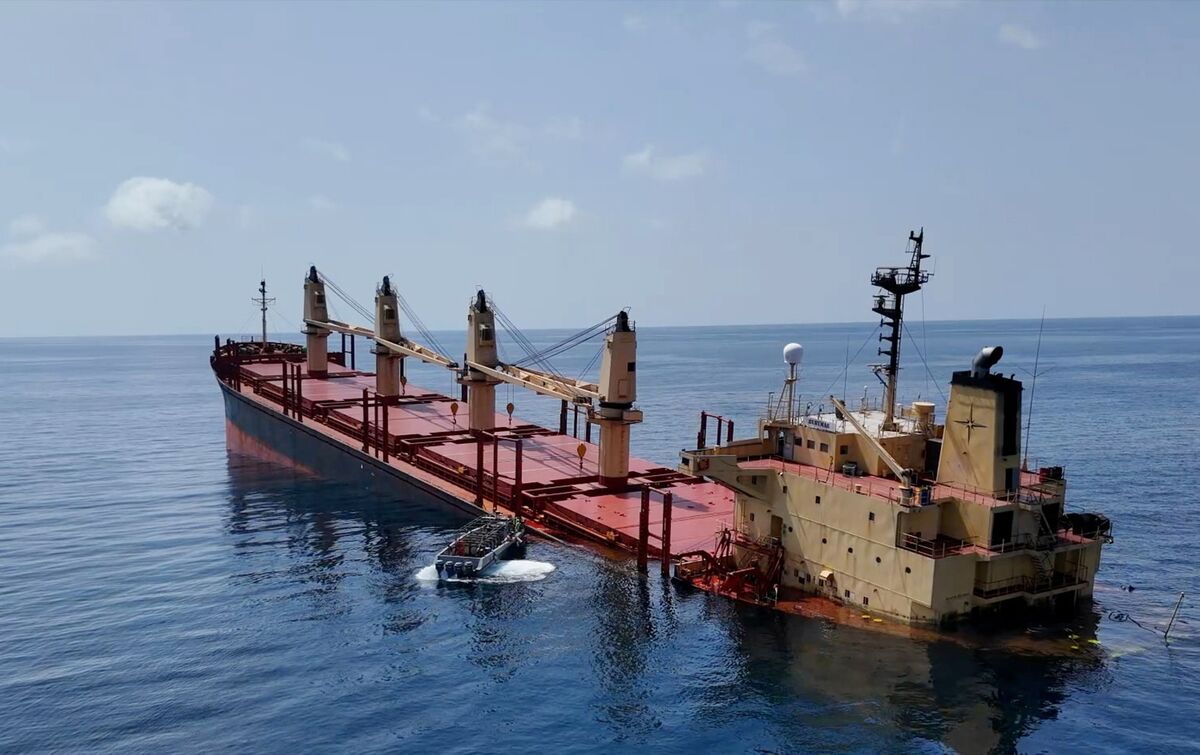
Yemen’s Houthi rebels have struck two Saudi oil tankers in the Red Sea this week, pushing Brent crude above $100 a barrel for the first time since May. The Houthi Red Sea crisis has entered a new phase, with the group declaring a formal naval blockade on Saudi shipments in direct response to the ongoing US-Israel war with Iran.
Background
Are the Houthis still attacking ships in the Red Sea? Yes, and the latest escalation marks one of the most serious phases of the conflict since it began. The group first started targeting vessels in the Red Sea in late 2023, tying its actions to the Israel-Hamas war and framing the attacks as solidarity with Palestinians in Gaza.
That original campaign forced major shipping firms, including Maersk and the Mediterranean Shipping Company, to reroute vessels around Africa’s Cape of Good Hope rather than risk the Bab el-Mandeb Strait. A relative lull followed after ceasefire efforts in Gaza, but tensions never fully disappeared given the Houthis’ continued arsenal of missiles and drones.
The current wave of Red Sea attacks today ties directly into the broader Iran conflict. After the United States and Israel struck Iranian targets and Iran responded by closing the Strait of Hormuz, the Iran-aligned Houthis declared they would block the alternate route Saudi Arabia had been using to move its crude, opening what analysts now describe as the Red Sea crisis 2026.
Details
On Monday, the Houthis formally declared a naval blockade against Saudi Arabia, warning they would target Saudi, Israeli, and US-linked tankers passing through the Bab el-Mandeb Strait, the narrow chokepoint linking the Red Sea to the Indian Ocean. Houthi military spokesperson Yahya Saree said the move followed the equation of “an eye for an eye,” accusing Saudi leaders of imposing a blockade on Yemen’s ports and airports for nearly 12 years.
Three days later, the group made good on that threat. Saree confirmed the Houthis had struck two Saudi oil tankers, named Encelia and Layla, using a combination of ballistic missiles, cruise missiles, and drones. Saudi Arabia’s Transport General Authority confirmed the Encelia had caught fire, though all crew members were reported safe.
A Houthi attacks Red Sea map of recent traffic shows a sharp drop in tanker crossings through Bab el-Mandeb, from 38 vessels on Tuesday to just 27 on Wednesday, including only five crude carriers and one LNG ship. Five Saudi oil tankers reportedly diverted course entirely following the blockade announcement, redirecting shipments meant for buyers in China and India.
Not every vessel has faced the same risk. Reports indicate Chinese-flagged tankers have secured Houthi clearance to pass through the strait after coordinating their routes in advance, described by one shipping intelligence firm as a sign that Chinese-linked vessels retain a degree of safe passage even amid the wider blockade.
Quotes
Houthi spokesperson Yahya Saree said the strikes were carried out because the two tankers had violated the blockade order issued by Houthi armed forces, describing the attacks as a direct response to what the group calls Saudi Arabia’s siege on Yemen.
Saudi Arabia’s state news agency SPA rejected the framing entirely, stating that the attacks represented a violation of international laws and conventions guaranteeing the safety of commercial vessels and their crews.
Homayoun Falakshahi, head of crude oil analysis at Kpler, told Al Jazeera that the real bottleneck isn’t whether alternate routes like the Suez Canal exist, but whether they can physically handle enough oil quickly enough to meet global demand, warning that maintaining current export rates would require materially higher terminal productivity.
Impact
Why are the Houthis attacking ships? The answer is tied directly to global energy markets right now. Brent crude jumped nearly 7 percent to just over $100 a barrel on Thursday, driven by the combined effect of the Red Sea blockade and Iran’s continued closure of the Strait of Hormuz, through which close to a fifth of the world’s oil once passed before the current war began.
The price shock has already reached consumers. The US national average for gasoline climbed to $4.09 a gallon, with analysts at GasBuddy warning of a further 10 to 20 cent rise over the coming weeks. Diesel prices have risen even more sharply, partly because Ukrainian drone strikes have knocked several Russian refineries offline at the same time.
Shipping companies now face a difficult calculation. Rerouting around Africa via the Cape of Good Hope adds significant time and cost, while relying on the Suez Canal raises separate concerns about whether Iran might attempt to interfere with vessels using that route as tensions with the US and Israel continue.
Regionally, the renewed Houthi Red Sea crisis threatens to widen an already volatile conflict. Saudi Arabia has firmly denied Houthi claims of an economic siege, while Houthi critics note the group rejected a Jordanian proposal to resume flights between Amman and Sanaa, complicating any narrative of purely defensive action.
Conclusion
With oil prices at their highest level since May and shipping companies still assessing which routes remain viable, today’s Red Sea crisis update points toward continued volatility rather than any near-term resolution. Analysts say markets will be watching closely to see which vessels the Houthis allow through the strait, since that pattern may offer the clearest signal yet of how the group intends to enforce its blockade going forward.
For now, neither side shows signs of backing down, and the overlapping conflicts in the Strait of Hormuz and the Red Sea suggest the broader regional crisis is likely to keep shaping global oil markets for weeks to come.
Frequently Asked Questions
Why are Houthis against Saudi Arabia?
The Houthis’ hostility toward Saudi Arabia dates back to 2015, when a Saudi-led coalition intervened militarily in Yemen’s civil war to try to restore the internationally recognized government after the Houthis seized the capital, Sanaa, the previous year. That intervention led to years of bombing campaigns, a naval blockade on Yemeni ports, and a humanitarian crisis that the Houthis frequently cite as justification for their current actions against Saudi shipping. The group has framed its latest naval blockade as retaliation for what it describes as nearly 12 years of economic strangulation by Saudi Arabia, even though Riyadh has consistently denied imposing a deliberate siege on the Yemeni population.
What did the Houthis do in the Red Sea?
Since late 2023, the Houthis have carried out repeated missile, drone, and small-boat attacks on commercial vessels transiting the Red Sea, initially targeting ships they associated with Israel before broadening their targets over time. Their most serious escalation came this week, when the group struck two Saudi oil tankers, the Encelia and Layla, with a combination of ballistic and cruise missiles as well as drones, causing a fire on at least one vessel. The group has also formally declared a naval blockade against Saudi Arabia, warning that any Saudi, Israeli, or US-linked tanker crossing the Bab el-Mandeb Strait could become a target going forward.
What countries support the Houthis?
The Houthis are widely described as an Iran-aligned group, receiving political, financial, and military support, including weapons and missile technology, from Tehran as part of Iran’s broader network of regional allies sometimes referred to as the “Axis of Resistance.” Saudi Arabia and much of the international community have consistently accused Iran of arming the Houthis, an allegation both Tehran and the Houthis themselves have denied. Beyond Iran, the Houthis have received more limited or indirect backing from other members of that same regional network, though Iran remains widely regarded as their most significant external supporter.