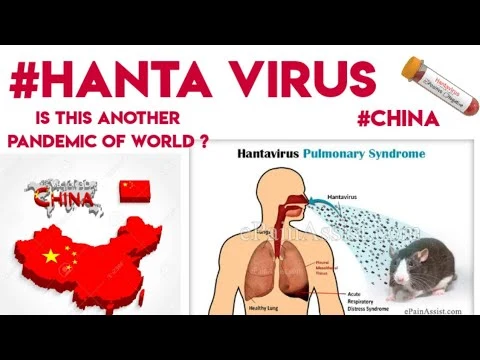
Hantavirus, a rare but deadly rodent-borne disease, has returned to global attention in May 2026. A cluster of passengers with severe respiratory illness aboard a cruise ship was reported to the World Health Organization on May 2, 2026, with three deaths, one critically ill patient, and multiple suspected cases confirmed by laboratory testing. This outbreak has alarmed health officials worldwide and triggered urgent questions about hantavirus symptoms, treatment, death rate, and incubation period.
Background What Is Hantavirus and Where Did It Come From?
Hantavirus is not a new disease. It has quietly existed for decades, primarily spread through contact with infected rodents. Hantaviruses are zoonotic viruses that naturally infect rodents and are occasionally transmitted to humans, causing severe illness and often death, though diseases vary by virus type and geographical location.
In 1993, an outbreak of severe respiratory illness in the Four Corners region of the United States where New Mexico, Arizona, Colorado, and Utah meet made national headlines, leading to the discovery of hantavirus pulmonary syndrome (HPS) and its carrier, the deer mouse. Since then, surveillance has been ongoing, but the world largely forgot about this killer until now.
Hantavirus Cases Per Year The Global Picture
The numbers are more alarming than most people realize. Worldwide, an estimated 10,000 to over 100,000 hantavirus infections occur each year, with the largest burden in Asia and Europe.
In 2025, eight countries within the Americas reported 229 cases and 59 deaths, with a case fatality rate of 25.7%. In Europe, 1,885 hantavirus infections were reported in 2023, marking the lowest rate recorded between 2019 and 2023.
In the United States, as of the end of 2023, 890 laboratory-confirmed cases of hantavirus disease were reported since surveillance began in 1993. That averages to roughly 30 cases per year in the US alone, though spikes have been recorded in recent years.
Hantavirus Deaths Per Year How Deadly Is This Virus?
Hantavirus deaths per year vary sharply depending on geography and strain. Hantavirus pulmonary syndrome is fatal in about 35% of people infected, while the death rate for hemorrhagic fever with renal syndrome varies from 1% to 15%.
Argentina’s health ministry reported that hantavirus led to 28 deaths nationwide in one recent year, with 101 hantavirus infections recorded since June 2025 roughly double the caseload from the same period the previous year.
In 2024 in Colorado alone, there were five cases of hantavirus and two people died. The deaths of Betsy Arakawa, wife of Hollywood actor Gene Hackman, in February 2025 in Santa Fe, New Mexico, brought fresh national attention to the virus.
Hantavirus Death Rate by Age Who Is Most at Risk?
While hantavirus can strike anyone exposed to infected rodents, some groups face higher risk. Older adults and those with underlying health conditions tend to experience worse outcomes. Gene Hackman, 95, who suffered from Alzheimer’s disease and cardiovascular disease, died approximately a week after his wife Betsy Arakawa, who died from confirmed hantavirus infection.
In Mono County, California in 2024, three fatal hantavirus cases were recorded, including a 26-year-old hotel employee and health officials noted that none of the victims had engaged in typical high-risk activities, suggesting possible exposure through routine daily activities. This underscores that hantavirus does not discriminate by age alone exposure risk is the primary factor.
Hantavirus Symptoms What to Watch For
Understanding hantavirus symptoms early is critical to survival. In humans, symptoms usually begin between one and eight weeks after exposure and typically include fever, headache, muscle aches, and gastrointestinal symptoms such as abdominal pain, nausea, or vomiting.
A distinct feature of the virus is severe leg, hip, and back pain that does not respond to ibuprofen or Tylenol. The virus can progress quickly, causing inflammation in the heart and lungs, leading to fluid buildup in the lungs and eventually death.
One cruise ship victim presented first with fever, headache, and mild diarrhea, then developed rapid respiratory distress within a week. Another passenger had only a fever and a general feeling of being unwell just days before dying from pneumonia. The speed of progression is what makes hantavirus particularly dangerous.
Hantavirus Incubation Period How Long Before Symptoms Appear?
The hantavirus incubation period is a key reason why outbreaks can go undetected. On average, symptoms of hantavirus start two weeks after exposure, but can appear anywhere between one and six weeks after contact with an infected rodent.
This long and variable hantavirus incubation period means a person can feel perfectly healthy for weeks before falling seriously ill. It also makes it harder for health officials to trace the original source of exposure as seen in the 2026 cruise ship outbreak, where illness onset was spread across a wide window of time.
Hantavirus Treatment Is There a Cure?
This is where the news is sobering. There is no treatment or cure for hantavirus, but medical experts say early diagnosis can increase the chance of survival.
While there are no specific treatments or vaccines for hantavirus infections, early supportive care and immediate referral to a facility with a complete ICU can improve survival. Treatment is therefore entirely focused on managing symptoms and keeping organs functioning. Oxygen therapy, mechanical ventilation, and blood pressure support are the primary tools doctors use. The earlier a patient reaches an ICU, the better the odds.
Is Hantavirus Spreading? The 2026 Cruise Ship Case Study
The 2026 MV Hondius cruise ship outbreak is perhaps the most alarming hantavirus case study in recent memory. The ship departed Ushuaia, Argentina on April 1, 2026, carrying 147 to 149 passengers and crew. By May 2, 2026, WHO had been notified of the cluster, with three deaths confirmed and multiple passengers sickened across a period spanning April 6 to April 28.
In May 2026, the WHO flagged a concern that rarely accompanies hantavirus cases: the possibility of human-to-human transmission, involving the Andes virus strain.
The WHO explains that human-to-human transmission of hantaviruses has been documented only with the Andes virus in the Americas, and when it occurs, it has been linked to close, prolonged contact, particularly among household members or intimate partners. The cruise ship setting made tracing that contact extremely difficult and raised new public health concerns.
Hantavirus Survivor Reddit What Survivors Say
Searching “hantavirus survivor Reddit” brings up deeply personal accounts from people who beat this disease and their stories are striking. Survivors consistently describe a terrifying experience: waking up feeling flu-like, then rapidly deteriorating within 24 to 48 hours. Many report not knowing what was wrong until they were already in an ICU.
Common themes in survivor accounts include: the shock of such a rapid decline, the role of early and aggressive hospital care, and the emotional aftermath of surviving a disease with such a high fatality rate. Medical experts confirm that ICU-level care, early oxygen support, and close monitoring are what separate survivors from fatalities. Anyone who suspects hantavirus exposure after contact with rodents or their droppings should seek emergency medical attention without delay.
Expert Quotes What Health Officials Are Saying
WHO Director of Epidemic and Pandemic Preparedness Maria Van Kerkhove said clearly: “This is not the next COVID, but it is a serious infectious disease. Most people will never be exposed to this.”
WHO Director-General Tedros Adhanom Ghebreyesus stated that “at this stage, the overall public health risk remains low,” even as three patients were evacuated from the cruise ship for medical care in the Netherlands.
Dr. Michelle Barron, senior medical director for infection control at UCHealth, emphasized that hantavirus transmission is “a function of inhaling the virus,” warning that human-to-human spread remains extremely rare outside of the Andes virus strain.
Global and Regional Impact of the 2026 Outbreak
The MV Hondius outbreak triggered a coordinated international emergency response spanning at least five continents, with emergency health officials from the Netherlands, United Kingdom, Germany, Cape Verde, Spain, South Africa, Switzerland, and Singapore all acting within days.
While WHO has assessed the global risk as low, the outbreak has reignited important policy conversations about rodent control, expedition travel safety, and the need for accelerated hantavirus vaccine research. There is currently no widely available vaccine to prevent hantavirus infection, and prevention focuses entirely on avoiding contact with rodents and their urine, droppings, or saliva.
How to Protect Yourself Prevention Tips
Public health experts say the best way to avoid hantavirus is to minimize contact with rodents and their droppings. Use protective gloves and a bleach solution when cleaning up rodent droppings. Never sweep or vacuum them, as this can cause virus particles to become airborne.
Wearing a properly fitted N95 mask when cleaning sheds, barns, garages, or any enclosed space with signs of rodent activity is strongly advised. Seal entry points in your home, store food in rodent-proof containers, and set traps in areas where rodents have been spotted.
Conclusion What Comes Next
The hantavirus story in 2026 is still developing. The cruise ship investigation is ongoing, vaccine research remains insufficient, and hantavirus cases per year continue to occur across the Americas, Asia, and Europe. What has changed is public awareness and that can save lives.
Hantavirus is not considered broadly contagious, and every documented case in the United States has been tied to direct exposure to infected rodents or their droppings with the key exception of the Andes virus. Staying informed, taking rodent exposure seriously, and seeking emergency care at the first sign of rapid respiratory decline are the most powerful tools available right now.
FAQs About Hantavirus
Has anyone survived hantavirus?
Yes, people do survive hantavirus. Survival rates depend heavily on how quickly a patient receives intensive medical care. While hantavirus pulmonary syndrome has a fatality rate of around 35%, early ICU intervention, oxygen support, and close monitoring have helped many patients recover fully. Reddit survivor communities include personal accounts of people who were critically ill and made complete recoveries.
How long can hantavirus live?
Hantavirus can survive outside a host for a limited time depending on environmental conditions. In cool, shaded, and humid conditions such as inside a barn or cabin the virus in rodent droppings or urine can remain active for several days. Direct sunlight and heat degrade the virus more rapidly. This is why disturbing old, dried rodent droppings especially indoors is particularly dangerous, as it can release airborne virus particles.
Is hantavirus spreading?
Hantavirus infections are relatively uncommon globally, and WHO’s overall risk assessment for the current 2026 cruise ship outbreak remains low for the general public. However, Argentina reported 101 hantavirus infections since June 2025, roughly double the caseload from the same period the previous year, indicating that regional transmission in South America is intensifying. The rare possibility of Andes virus human-to-human spread makes ongoing monitoring essential.