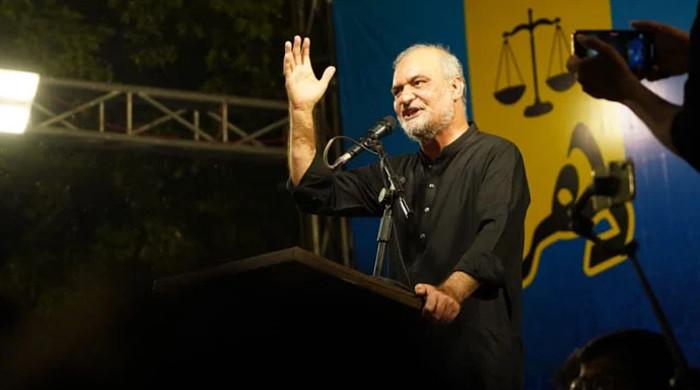
Jamaat-e-Islami chief Hafiz Naeem ur Rehman has escalated his campaign against the government’s fuel pricing policy by filing a formal petition in the Federal Constitutional Court. The petition challenges the government’s petroleum levy system and the newly introduced Climate Support Levy, arguing that both measures violate the Constitution, parliamentary supremacy, the federal system, and citizens’ fundamental rights. The move marks one of the most significant legal challenges to Pakistan’s fuel taxation regime in recent memory.
Background: A Long-Running Battle Over Fuel Prices
Hafiz Naeem ur Rehman has been one of the most vocal critics of Pakistan’s escalating petroleum levy since the government first introduced sweeping changes to the fuel pricing structure. At a public gathering in Lower Dir on May 17, he announced that Jamaat-e-Islami would file a petition in court against the petroleum levy, arguing that the continued rise in fuel prices has worsened inflation and added to the difficulties faced by ordinary citizens.The JI chief’s opposition to the levy is not new. In an earlier statement, Hafiz Naeem said that instead of eliminating the petroleum levy and unjust taxes, the government had increased fuel prices, which would further burden the middle and lower-income classes and harm industries and businesses. He has consistently demanded the levy be abolished altogether.
In a social media post, Hafiz Naeem said rulers were recovering a heavy levy from people in the name of international market prices, noting that the price had dropped by eight dollars in the international market while the burden on consumers remained unchanged, with over Rs150 per litre being recovered in taxes and levies.
Details: What the Petition Says
The petition was filed through senior counsel Imran Shafeeq and challenges the petroleum levy and climate support levy framework operating under the Petroleum Products Ordinance of 1961, as amended through Section 3 of the Finance Act 2025.At the heart of the legal challenge is the argument that the government has turned what was originally a regulatory instrument into a major revenue tool without proper legislative authority.
According to the petition, the petroleum levy is no longer a limited regulatory surcharge and has effectively become a major source of government revenue, being imposed through executive notifications and statutory regulatory orders instead of parliamentary legislation.
The petition further claimed that the levy on petrol has reached a historic high of approximately Rs117.41 per litre, accounting for nearly 43 percent of the ex-refinery price of petrol. This staggering proportion underlines just how much of the pump price is made up of government charges rather than actual fuel costs.
The petition requests the court to strike down Section 3 of the Finance Act 2025, declare the unlimited executive authority unconstitutional, and rule the petroleum levy invalid as an unconstitutional form of taxation.
The IMF Connection
The petroleum levy regime was introduced after the government announced a petroleum and carbon levy on June 14, 2025, under what was described as an iron-clad commitment with the International Monetary Fund. This commitment has been a source of significant public frustration, as it effectively tied domestic fuel pricing to conditions set by an international lender.
Last month, the government reduced the levy by Rs80 amid a global oil crisis linked to the Middle East situation. However, after the IMF required the restoration of an average Rs80 per litre petroleum levy on petrol and high-speed diesel, the government passed on only a slight reduction in international oil prices to consumers.The petroleum levy on petrol currently stands at Rs117.41 per litre, while the levy on high-speed diesel is Rs42.60 per litre figures that Hafiz Naeem and Jamaat-e-Islami argue represent an unconscionable burden on working-class Pakistanis.
Quotes: Hafiz Naeem’s Stance
Hafiz Naeem said that charging a heavy levy on the lower and middle class has been “cruelty,” specifically naming students, labourers, and motorcycle riders as those bearing the brunt of government taxes, while the ruling classes’ exorbitant spending and privileges continued unchecked.
He urged the government to immediately withdraw the fuel price increases and abolish the petroleum levy entirely, calling the moves unacceptable given the already high electricity and gas prices that have pushed up the cost of nearly everything.
Through the petition, Hafiz Naeem urged the Constitutional Court to intervene against what he described as economic exploitation of the public and to restore legal and parliamentary oversight over fuel-related charges.
Impact: What This Means for Ordinary Pakistanis
The petroleum levy debate goes far beyond politics it directly affects the daily lives of millions of Pakistanis. Transport costs, food prices, and business overheads are all directly linked to fuel prices. When the levy rises, the inflationary ripple effect spreads across the entire economy.
Hafiz Naeem has argued that higher transport fares and inflation are adding to public frustration, and the government first raised fuel prices sharply before providing only limited relief a pattern that has eroded public trust in the government’s economic management.
If the Federal Constitutional Court accepts Hafiz Naeem’s petition and rules in JI’s favour, it could force the government to redesign its entire petroleum levy framework potentially requiring parliamentary approval for any future changes. This would be a landmark shift in how Pakistan’s fuel taxation operates and could have significant implications for the government’s IMF commitments and fiscal targets.
Hafiz Naeem also announced a “decisive march” towards Islamabad after Eid ul Adha to protest inflation and what he described as anti-public economic policies, signalling that the legal challenge is just one front in a broader political campaign.
Conclusion: A Test for Parliament and the Courts
The JI chief’s petition is ultimately a test of two things: whether Pakistan’s judiciary will assert itself on matters of fiscal policy, and whether parliament will reclaim its authority over taxation decisions that currently bypass legislative scrutiny entirely. The outcome could reshape the relationship between executive power and democratic oversight in Pakistan’s economic governance.
For citizens already struggling with inflation, high electricity bills, and rising costs of living, the court’s response to this petition will be closely watched. Hafiz Naeem has framed this not just as a legal matter but as a fundamental question of whether the government serves the people or the other way around.
FAQs
What is the petroleum levy in Pakistan 2026?
The petroleum levy in Pakistan is a government-imposed charge on fuel products, separate from standard taxes. As of May 2026, the levy on petrol stands at approximately Rs117.41 per litre, which equals nearly 43 percent of the ex-refinery price. The levy was substantially expanded under commitments made to the International Monetary Fund as part of Pakistan’s bailout programme. Critics, including JI chief Hafiz Naeem, argue it has transformed from a regulatory surcharge into a major revenue tool imposed without proper parliamentary approval.
Why is Hafiz Naeem challenging the petroleum levy?
Hafiz Naeem ur Rehman filed a petition in the Federal Constitutional Court arguing that the petroleum levy framework is unconstitutional because it allows the government to impose taxation-level burdens on citizens through executive notifications and SROs rather than through parliamentary legislation. He contends this bypasses the constitutional requirement for taxes to be approved by parliament, violates citizens’ fundamental rights, and places an unbearable financial burden on working-class Pakistanis, particularly students, labourers, and small business owners.
What is the Climate Support Levy in Pakistan?
The Climate Support Levy (CSL) is a newly introduced charge on petroleum products, introduced alongside the existing petroleum levy. The government has presented it as a measure linked to environmental and climate financing goals. However, Jamaat-e-Islami’s petition challenges the CSL alongside the petroleum levy, arguing that both are being collected without a specific service or benefit being returned to citizens and without proper constitutional and parliamentary authority. Critics say the CSL is effectively an additional tax disguised under a different name.