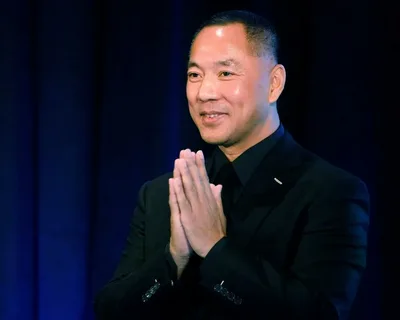
Guo Wengui, the self-exiled Chinese billionaire turned US-based Communist Party critic, was sentenced Monday to 30 years in federal prison by Judge Analisa Torres in Manhattan. The judge said his fraud cost more than 1,000 people worldwide hundreds of millions of dollars, telling the courtroom that he “preyed on those seeking to bring democracy to China” to fund a lavish personal lifestyle.
It’s the latest and most decisive chapter in years of legal trouble for Guo, who fled China a decade ago and built a second life in the US as a prominent dissident, complete with a Central Park apartment, a Mar-a-Lago club membership, and a public alliance with Steve Bannon. Prosecutors say the fraud ran from 2018 to 2023 and left, in their words, “a wreckage of victims and families” devastated financially and emotionally.
Who Is Guo Wengui?
Guo Wengui, also known by the names Miles Guo and Ho Wan Kwok, is a Chinese businessman who left China roughly a decade ago and reinvented himself in the United States as a vocal critic of the Chinese Communist Party. His defense has said his family became the largest shareholder of one of China’s biggest publicly traded securities companies before he became a target of the Chinese government.
In the US, Guo built an enormous following, both online and in person, with supporters who packed the Manhattan courtroom on sentencing day and applauded as he left. To them, he represented a political dissident standing up to Beijing. To prosecutors and the victims who testified against him, he was something else entirely: someone who used that image to take their money.
Guo’s connections extended well into American political and business circles. He grew close enough to Steve Bannon that the two announced a joint initiative in 2020 to overthrow the Chinese government, and he joined Donald Trump’s Mar-a-Lago golf club while living in a luxury apartment overlooking Central Park, before his arrest and pretrial detention three years ago.
Background of the Fraud Investigation
Federal investigators began looking into Guo after complaints from investors who said they’d been persuaded to put money into a series of business ventures that promised returns they never delivered.
Prosecutors say Guo raised hundreds of millions of dollars, by some estimates over $1 billion in total losses, from supporters through multiple companies and investment programs between 2018 and 2023. Rather than funding the ventures he promoted, prosecutors said much of that money went toward what they described in court filings as “a lifestyle of extraordinary excess and indulgence, a gilded life of mansions, yachts, race cars, designer clothes, and luxury furnishings.”
Court Delivers 30-Year Prison Sentence
After a trial and lengthy sentencing proceedings, Judge Analisa Torres handed down the 30-year sentence prosecutors had asked for, well above the 25 years the Probation Department had recommended.
Torres read excerpts from victim letters describing life savings lost, severe anxiety, shame, and in some cases family members turning against the victims over what looked, in hindsight, like a poor investment decision. Wei Chen, a victim who testified at trial, told the court that Guo’s fraud “destroyed my life” and her family’s.
Guo addressed the court before sentencing but spent most of his time describing mistreatment in jail, including an early-morning hospital visit that day, before briefly defending his broader mission: “The reason I came to the US was to destroy the CCP.”
How the Fraud Scheme Allegedly Worked
Prosecutors described a network of companies, online fundraising campaigns, membership programs, and investment products that funneled money from supporters into Guo’s accounts. Marketing materials reportedly promised significant returns on ambitious business and technology ventures, leaning heavily on Guo’s public image and claimed business success to win investor trust.
The government argued that complex financial transactions obscured where the money actually went, making it difficult for investors to trace their funds. Instead of legitimate ventures, prosecutors said the money supported Guo’s personal spending.
Luxury Spending Became a Major Focus
Court filings leaned hard on the contrast between what investors thought they were funding and what their money actually paid for: luxury residences, expensive vehicles, private aircraft, designer fashion, jewelry, yachts, and premium travel. Prosecutors framed this directly as evidence that investor funds were diverted for personal benefit rather than the projects pitched to contributors, and it became one of the central threads of the case.
Defense Responds to the Charges
Guo’s legal team pushed back hard, though not primarily on the financial facts. Their main argument was political: that Guo is the target of a “grand, pervasive, and life threatening” pursuit by the Chinese Communist Party, which they alleged had recruited figures in US business, entertainment, and politics to work against him.
They argued that a long sentence would validate Beijing’s smear campaign and embolden further efforts to push Chinese dissidents out of public life, and pointed out that defendants in comparable cases have received sentences of two to four years. A court probation officer also noted that Guo has scars from physical torture he says he endured in China, along with surgeries between 1993 and 2022 to repair the resulting injuries.
The government, for its part, said in presentence filings that Guo remained “entirely unrepentant,” having taken advantage of what they called lax US asylum laws to build his life in America. The jury ultimately found enough evidence to convict on multiple fraud-related counts, and the judge sided with prosecutors on sentencing length.
Impact on Investors
Thousands of people reportedly invested after following Guo’s livestreams, public appearances, and promotional campaigns, with many believing they were backing innovative, high-growth ventures. Some put in life savings based on trust built through his public profile.
The judge’s own comments captured the human cost directly: the letters she read described not just financial devastation but real psychological and family fallout from the losses. Authorities said victims were affected across multiple countries, and recovery efforts aimed at compensating them through legal channels are ongoing.
Guo Media and Online Influence
Guo’s reach went well beyond a typical fraud case because of the scale of his media presence. Through livestreams, interviews, and platforms associated with his network, often referred to as Guo Media, he reached millions of viewers who frequently treated these channels as an alternative to traditional news organizations.
Prosecutors argued that influence is exactly what made the fraud work: trust built through media presence translated directly into successful fundraising. The case has reopened broader questions about accountability for influential online figures who solicit money from their following, particularly when that following spans borders and regulatory systems.
Confusion Around Guo Guowen and Guo Gui
Searches for Guo Guowen and Guo Gui have spiked since the sentencing, mostly due to confusion around transliteration. Chinese names get Romanized differently across different reports, and Guo himself goes by several names, including Miles Guo and Ho Wan Kwok, in addition to Guo Wengui.
Worth double-checking identities carefully when following coverage involving Chinese names, since spelling variations can easily create confusion about who’s actually being discussed.
International Reactions
Financial crime specialists point to this case as another example of how international fraud investigations increasingly require cross-border cooperation, given how often these schemes move through digital fundraising platforms and international investment networks rather than staying within one jurisdiction.
The sentence is also a reminder for investors generally: due diligence matters before money goes into privately promoted ventures, especially ones built around a charismatic public figure rather than verifiable financial disclosures.
Broader Lessons for Investors
The basic lesson here isn’t new, but cases like this one make it concrete: research opportunities carefully before committing money. Check financial statements, confirm regulatory registrations, and talk to an independent financial adviser before trusting a pitch built mainly on someone’s public reputation.
Promises of unusually high returns paired with limited transparency are exactly the combination that should slow anyone down. Financial regulators consistently push the same advice: verify through official sources, not promotional materials or the personality behind the campaign.
Global Impact of the Verdict
This case reaches beyond Guo himself, raising real questions about international fundraising, digital financial promotion, and how investor protection works (or doesn’t) across borders.
Expect more scrutiny of online investment campaigns that target international audiences, and more attention from financial institutions toward complex transactions tied to fundraising organizations operating across multiple jurisdictions. Cases built around social media fundraising and cross-border financial networks are likely to draw closer attention going forward.
Conclusion
Guo Wengui’s 30-year sentence closes out one of the more closely watched fraud cases in recent memory, built on testimony describing devastated victims and prosecution evidence describing a life of extraordinary excess funded by their money. Whatever the political dimensions of his defense, the financial facts the jury found persuasive were enough to produce one of the longest sentences handed down in a case like this.
As asset recovery efforts continue, this case is likely to stay a reference point for regulators and investors thinking about how to evaluate high-profile fundraising campaigns, particularly ones built on a public persona rather than verifiable business fundamentals.
FAQs
Who is Guo Wengui and why is he famous?
Guo Wengui is a Chinese businessman who left China about a decade ago and became known in the US as a prominent critic of the Chinese Communist Party, also going by the names Miles Guo and Ho Wan Kwok. He built a large following through political commentary and online media, and forged ties with figures including Steve Bannon. He’s now most widely known for a major US fraud case that ended in a 30-year prison sentence in June 2026.
Why did Guo Wengui receive a 30-year prison sentence?
A federal jury convicted Guo of running a large-scale fraud scheme that raised hundreds of millions of dollars from over 1,000 investors between 2018 and 2023. Prosecutors successfully argued the money funded a lavish personal lifestyle, including mansions, yachts, and luxury goods, rather than the business ventures he promoted to investors. Judge Analisa Torres handed down the sentence, above even the Probation Department’s 25-year recommendation.
What is Guo Media?
Guo Media refers to the media platforms, livestreams, and communication channels associated with Guo Wengui and his network of supporters. These became known for political commentary, interviews, and fundraising campaigns that reached international audiences over several years and, according to prosecutors, helped build the trust that made his fraud scheme successful.