Attaullah Tarar Says Proof Will Be Shared “Very Soon”
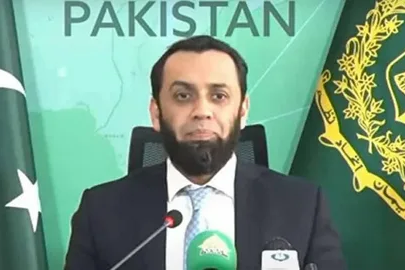
Information Minister Attaullah Tarar said on Tuesday that the Pakistan government has credible evidence that the Pakistan Tehreek-e-Insaf (PTI) was in contact with the banned Tehreek-e-Taliban Pakistan (TTP). He made the claim at a press briefing for foreign correspondents in Islamabad. He said the government would present details of the alleged PTI-TTP links at a later stage. No evidence has been made public so far, and PTI has rejected links to militancy.
Background: A Province Under Emergency
The claim comes two days after the federal government imposed an emergency and governor’s rule in Khyber Pakhtunkhwa (KP). The decision followed a cabinet meeting under Prime Minister Shehbaz Sharif and used Articles 232 and 234 of the Constitution. The Centre cited the worsening security situation and gaps in the provincial government’s counterterrorism efforts. The step ended the tenure of PTI’s chief minister, Sohail Afridi.
Tension between the two governments had been building for months. PTI began a long march on 4 October, demanding the release of jailed party founder Imran Khan. Mr Tarar had repeated his allegations about PTI and the TTP in several earlier press conferences. Those earlier remarks were opinions and did not come with evidence.
Details: What the Government Said
The Main Claim
Mr Tarar said the government had credible evidence that “PTI was in touch with the TTP,” as reported by The Express Tribune. He added that further evidence on the links would be shared soon. He also said the government would pursue the matter through the relevant process. He did not give details on what the evidence is or how it was gathered.
The Wider Allegations
According to Samaa, Mr Tarar alleged a nexus between politics, terrorism and crime in the province. He pointed to complaints about cross-border smuggling of minerals, timber, tobacco, gold and precious stones. He said the federal government had tried several times to reach an understanding with the provincial leadership. He also said it had not opposed PTI’s marches or political demands.
Security Figures and Legal Points
Arab News reported that the ministers said recorded terrorist incidents in the province rose from 2,911 between 2021 and 2024 to about 8,600 in 2024 to 2026. They accused the former provincial administration of failing to equip police, strengthen counterterrorism units or coordinate with federal authorities. Law Minister Azam Nazeer Tarar said the Constitution sets no time limit under Article 232. Attaullah Tarar also confirmed that Afridi is in “preventive custody.”
PTI’s Response and Earlier Disputes
PTI has denied links to militancy and has criticised the federal action in the province. In earlier rounds of similar accusations, the party rejected the allegations as absurd and politically motivated. PTI Secretary-General Salman Akram Raja also called the claims baseless and urged a comprehensive anti-terror strategy.
The history is also disputed. Afghanistan International noted that Imran Khan, while prime minister, spoke about efforts to bring TTP fighters and their families back to the tribal regions. PTI figures say those talks and resettlement plans were not solely the party’s initiative and that the military leadership was involved.
Impact: Why the Claim Matters
For domestic politics, the allegation raises the stakes in a fierce dispute between the federal government and the country’s largest opposition party. If the government publishes its evidence, courts and the public will be able to test it. If it does not, the claim is likely to remain one more contested political statement. The Centre has now tied the emergency in KP to security arguments, so the evidence will be closely watched.
For security, the stakes are high. The TTP was formed in 2007 and the 2026 Global Terrorism Index ranks it as the third-deadliest terrorist group in the world. A Soufan Center report cited the army’s figure of 3,145 terrorism incidents in Pakistan since the start of 2026. Pakistan also accuses Afghanistan of sheltering TTP fighters, which Kabul denies.
Conclusion: What Comes Next
The next step is the government’s promised evidence. Observers will look for who presents it, what it contains and whether it can be independently checked. PTI is likely to answer any material that is released, and the courts may be asked to examine it. Separate petitions over the emergency and Afridi’s detention are already before the Peshawar High Court.
Readers should treat the claim as an allegation until documents or court findings are made public.
FAQs
Why is TTP fighting Pakistan?
The Tehreek-e-Taliban Pakistan, or Pakistani Taliban, says it is fighting to impose its own Islamic system in Pakistan, modeled on the Taliban government in Afghanistan. It was formed in 2007 by several militant groups in what is now Khyber Pakhtunkhwa. Its attacks, mostly on security forces and police, rose sharply after the Afghan Taliban took power in 2021. Pakistan says TTP fighters operate from Afghan soil, and Kabul denies this. The state calls the group “Fitna al Khawarij.”
What is the full form of TTP?
TTP stands for Tehreek-e-Taliban Pakistan, also spelled Tehrik-i-Taliban Pakistan. It is commonly called the Pakistani Taliban. It is a separate organization from the Afghan Taliban, who govern Afghanistan, although the two are closely linked. Pakistan has banned the TTP. Do not confuse it with Tehreek-e-Insaf (PTI), which is a legal political party, so the abbreviations look similar but refer to completely different organizations.
Is the Taliban still in Pakistan in 2026?
The Afghan Taliban govern Afghanistan, not Pakistan. The group active inside Pakistan is the TTP, which carries out attacks mainly in Khyber Pakhtunkhwa and Balochistan. Reports in 2026 show the threat has continued. In September, the TTP claimed attacks that killed 20 security officials and three civilians in several districts. Pakistan and Afghanistan also fought their most sustained border conflict since 2021, beginning in February 2026.
Does Pakistan fund the Taliban?
The current reporting does not show Pakistan funding the Taliban. Pakistan was accused in the past of supporting the Afghan Taliban, which Islamabad has denied. Today the two governments are in open conflict, with border clashes and Pakistani strikes inside Afghanistan in 2026. A UN report cited by AFP says the TTP receives substantial logistical and operational support from the de facto authorities in Kabul, not from Pakistan. For the exact record, check recent UN and official statements.