
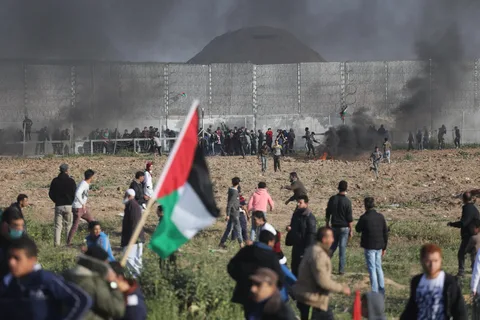
The streets across the Middle East are filling up again, and the anger driving people into them is not fading. Gaza protests today have grown into large-scale demonstrations spreading across multiple cities, with crowds gathering to demand an end to the violence and real humanitarian relief for people caught in the crossfire.
Pro Palestinian protests today are reflecting something deeper than a single moment of outrage. They are the expression of accumulated grief, political frustration, and a feeling that the international community is watching a humanitarian catastrophe unfold without doing nearly enough to stop it. Authorities across the region are watching Middle East unrest today with growing concern about where this is heading.
Background: How the Protests Began
These protests did not start last week. The wave of Gaza war protests is rooted in a conflict that has been generating civilian casualties, mass displacement, and recurring humanitarian emergencies for decades. Each escalation adds more weight to a collective burden that millions of people across the Arab world and well beyond it have been carrying for a long time.
When people ask “when did pro Palestinian protests start,” there is no single date that answers the question cleanly. What analysts point to instead is a pattern: major protest movements surge during escalations, gain visibility through social media, and then leave behind a slightly more organized and more determined base for the next wave. The protests that are happening today are built on everything that came before them.
Recent cycles of conflict ceasefire breakdowns, military operations, and the grinding daily reality of life under blockade — have all contributed to the conditions that are now producing demonstrations across the region. The protests are not spontaneous. They are the accumulated response to years of unresolved political and humanitarian failure.
Gaza Protests Today: What Is Happening Now
The scope of Gaza protests today is notable even by the standards of previous waves of regional unrest. Crowds have gathered in public squares, on university campuses, and in areas close to conflict zones chanting for an end to the fighting, demanding humanitarian corridors, and calling out what they see as the international community’s failure to act with adequate urgency.
The phrase “Gaza protests in Israel” has drawn particular attention, because it points to something that often gets lost in the broader coverage. Demonstrations have been reported within Israeli cities, where some groups Israeli citizens among them are calling for peace negotiations and a reduction in civilian harm. These are not large majorities, and they operate in a politically difficult environment, but their presence complicates any simple narrative about where opinion sits.
At the same time, Gaza protests against Hamas have emerged in certain areas, where residents have expressed frustration not with the external conflict alone but with their own governance situation the economic conditions, the lack of political alternatives, and the way ordinary people pay the heaviest price for decisions made above their heads. These voices are quieter and less visible, but they are there, and observers who are paying close attention have noted that they are becoming harder to ignore.
Pro Palestinian Protests Today Across the Region
Pro Palestinian protests today are far from a purely local phenomenon. Demonstrations have been reported across multiple Middle Eastern countries and in cities well beyond the region, reflecting solidarity movements that have grown more organized and more geographically spread with each cycle of conflict.
In some locations, protesters are focused on immediate demands ceasefire, humanitarian access, the release of prisoners, and accountability for civilian casualties. In others, the demonstrations are tied to broader political arguments about the right to self-determination and the long-term resolution of the conflict itself.
The term “pro Palestine protests in Israel” reflects the layered complexity of the situation. Some Israeli activists and peace groups have organized their own rallies, pushing back against military operations and calling for negotiations. They exist in a politically hostile environment for such views, which makes their visibility both notable and fragile. The internal Israeli debate about how to respond to the conflict is more divided than outside observers sometimes recognize.
Middle East Unrest Today: Rising Tensions
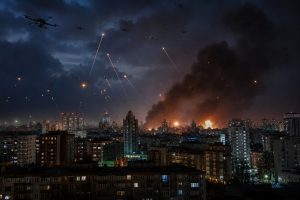
The Gaza protests are happening inside a broader regional picture that is already under significant strain. Middle East unrest today is not a single story with a single cause it is a convergence of political disputes, economic pressures, military operations, and governance failures that are creating instability across multiple countries simultaneously.
Security analysts watching the region are flagging the risk that Gaza war protests could expand further and become harder to manage if conditions on the ground continue to deteriorate. The relationship between what happens in Gaza and what happens in the streets of neighboring capitals is not abstract it is direct, emotional, and politically potent.
Governments across the region have increased security in major cities in anticipation of larger gatherings. The challenge they face is that heavy-handed responses to demonstrations can themselves become a grievance that drives further mobilization. Managing the protests without suppressing legitimate expression is a line that several governments are struggling to walk.
Gaza Protests Against Hamas: Internal Divisions
One of the less-covered dimensions of the current situation is the emergence of Gaza protests against Hamas in certain areas. These demonstrations are not uniform, they are not widespread in the way that external solidarity protests are, and they carry real personal risk for those participating. But they are happening.
The grievances being expressed internally are specific: poor governance, economic collapse, the concentration of political power, and the sense that ordinary Gazan civilians are bearing the consequences of decisions they had no part in making. These are not the same arguments being made by protesters elsewhere in the region, and they should not be collapsed into the same category.
Observers who have been watching Gaza’s internal political dynamics for years say that prolonged conflict consistently brings these internal pressures closer to the surface. People who might have stayed quiet in more stable times begin to speak out when the cost of everything has already become unbearable. Whether those voices translate into any kind of political change is a much harder question.
Gaza Protests in Israel: Peace and Security Debate
The “Gaza protests in Israel” framing captures a genuine internal division within Israeli society that gets relatively little attention in international coverage. On one side are majorities who support continued military operations on security grounds, arguing that the threat from armed groups cannot be left unaddressed. On the other are peace activists, human rights advocates, and some families of hostages who are pushing for negotiation and a political solution.
These competing positions play out not just in the streets but in media, in parliament, and in the ongoing disagreements within the Israeli government itself. The protests from peace groups are small relative to the broader political mood, but they represent a persistent strand of Israeli civic life that has not disappeared despite the enormous pressure to close ranks.
The tension between these positions security versus negotiation, military pressure versus diplomatic engagement is at the heart of the Israeli political debate about how this conflict ends. Gaza protests in Israel are one expression of that debate becoming visible on the streets.
When Did Pro Palestinian Protests Start?
The question “when did pro Palestinian protests start” is simpler to ask than to answer honestly. Protest movements in solidarity with Palestinians have existed for decades, but the scale, reach, and organization of modern demonstrations have grown dramatically in the social media era.
The most significant waves of the past two decades have coincided with major military operations in Gaza, each one producing larger and more globally coordinated responses than the one before. University campuses became major organizing centers in recent years. Youth networks, digital mobilization tools, and a generation that grew up watching conflict unfold in real time on their phones have all changed the shape of what these protest movements look like.
What is visible today is not a new phenomenon. It is the latest and in some ways most visible expression of a movement that has been building for a very long time.
Global Impact of Gaza Protests
The international dimensions of Gaza protests today are significant and growing. Governments in Europe and North America are facing sustained pressure from their own citizens to take stronger diplomatic positions, condition military support, and push harder for humanitarian access and ceasefire enforcement.
The political consequences are real. Some governments have shifted their public positions under protest pressure. Others have doubled down on existing alliances. In either case, the protests have become a factor in foreign policy calculations in ways that would have been less true in previous decades.
Diplomatic tensions between allied nations, intensified discussions about humanitarian aid, rising pressure on international organizations to act, and an increasingly polarized political debate in Western countries are all part of the picture. Pro Palestinian protests today are not just expressions of grief and solidarity they are exerting measurable pressure on institutional decision-making.
Quotes and Reactions
Security analysts monitoring Middle East unrest today have been consistent in their warning: sustained instability across the region carries long-term consequences that go beyond the immediate conflict. Each week of unresolved crisis makes eventual resolution harder.
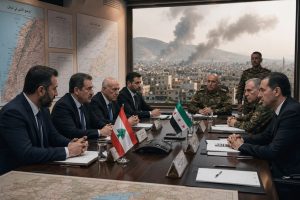
Diplomats who have been involved in previous rounds of negotiations have emphasized the urgent need for renewed engagement, noting that ceasefire mechanisms mean nothing if there is no political will to enforce them and no credible process behind them.
Human rights organizations have maintained their focus on the civilian dimension throughout calling for unrestricted humanitarian access, documentation of casualties, and accountability for violations regardless of which party is responsible. Those calls have become more urgent as the humanitarian situation has worsened.
Conclusion
Gaza protests today are not a passing moment of public emotion. They are the visible expression of a political and humanitarian crisis that has been allowed to deepen without adequate international response, and they reflect the frustration of people who have been watching that happen for far too long.
As pro Palestinian protests today continue to spread and Gaza war protests draw in more participants across more countries, the pressure on governments and international institutions is intensifying. Middle East unrest today is a signal that the current situation is not stable and that the absence of a political solution is itself a driver of ongoing crisis.
The weeks ahead will matter. Whether they bring meaningful diplomatic movement or simply more of the same is the question that millions of people in Gaza, across the region, and around the world are waiting to have answered.
FAQs
What is the reason for conflict in the Middle East?
The conflict in the Middle East, and specifically the Israel-Palestine dimension of it, is rooted in overlapping territorial claims, competing national narratives, and a series of political failures stretching back more than a century. Both peoples have deep historical and emotional connections to the same land, and every attempt to negotiate a final status agreement has broken down over borders, over Jerusalem, over refugees, and over security arrangements. Regional dynamics involving outside powers, sectarian divisions, economic competition, and the interests of neighboring states have all added layers of complexity that make resolution harder with every passing year. There is no simple explanation that does justice to the depth of the conflict, but the core of it is a political dispute that has never been resolved and has been left to generate humanitarian consequences in the meantime.
Who is Iran’s biggest rival?
Iran’s most significant regional rivalry is generally considered to be with Israel, rooted in decades of political hostility, mutual security concerns, and diametrically opposed regional alliances. Iran does not recognize Israel and has long supported armed groups that operate in opposition to Israeli interests. But Iran’s rivalry with Saudi Arabia runs nearly as deep, driven by competition for regional influence, opposing positions in several proxy conflicts, and a sectarian dimension that maps onto the Sunni-Shia divide within Islam. The result is a region where the major powers are pulling in multiple directions simultaneously, making collective action on almost any issue extraordinarily difficult.
Why is Gen Z protesting?
Gen Z has grown up in a world where global crises war, climate change, economic inequality, political dysfunction are visible in real time on devices they carry everywhere. That visibility has produced a generation with both a strong sense of global interconnectedness and a deep frustration at institutions that seem unable or unwilling to respond adequately. On Gaza specifically, young people across the world have watched civilian casualties mount and felt that the political responses from their governments were inadequate or actively complicit. Social media has given them tools to organize, amplify, and sustain movements in ways that were not available to previous generations and they are using those tools with considerable effectiveness.