

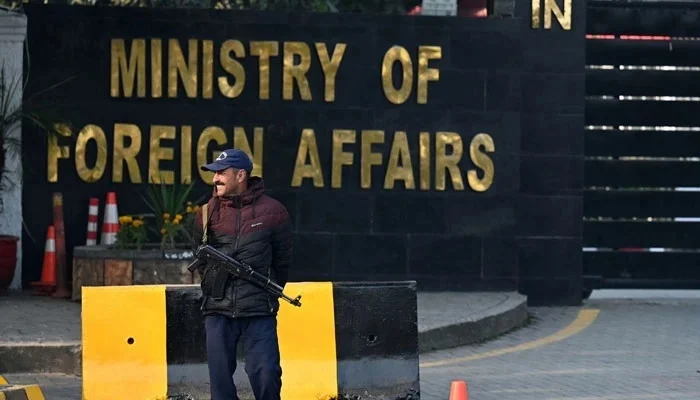

Pakistan’s Foreign Office has firmly rejected Indian claims about the Narowal temple, calling the allegations false and politically motivated. The FO said New Delhi was distorting facts and using cheap gimmicks to target Islamabad over a Hindu temple that was damaged by heavy rains.
Background of the Narowal Temple Dispute
The Hindu temple in Narowal is located in Siraj village and is more than a century old. Local minority groups and Indian officials had raised alarm after reports suggested the structure was demolished. This quickly escalated into a fresh Pakistan India temple dispute, with New Delhi pressing Islamabad for answers.
A minority rights organisation claimed the temple was deliberately razed to make room for the expansion of a nearby seminary. This version of events spread quickly on social media, drawing attention from rights activists and religious minority representatives across the region.
Details of the FO Statement
FO Spokesperson Sajjad Haider Khan issued a strong statement rejecting the Indian claims about the Narowal temple. He said Pakistan categorically rejects what he called false and politically motivated assertions coming out of New Delhi regarding the site.
According to the spokesperson, the temple’s structure was damaged on July 21 due to torrential rains, not through any deliberate act of vandalism. He added that local authorities had already surveyed the rain damage and had begun steps to restore the building.
The Foreign Office also pushed back hard against the Indian Ministry of External Affairs, which had earlier called for a prompt and transparent investigation into what it described as a reprehensible act of vandalism. Islamabad insists this narrative does not match the facts on the ground.
Official Quotes on the Temple Row
The FO spokesperson did not hold back in his remarks on the situation. He said it was shameful that India was distorting facts and resorting to cheap gimmicks over an issue rooted in natural weather damage rather than religious targeting.
He further stated that this deliberate distortion of facts could not distract attention from India’s record of persecution of minorities and attacks against places of worship. The spokesperson said the world must hold Indian leadership accountable for what he described as the weaponisation of Hindutva ideology against Muslim, Sikh and Christian communities.
Regional Impact of the Temple Row
This latest flashpoint adds another layer of tension to an already strained Pakistan India temple dispute narrative that regularly surfaces in bilateral relations. Diplomatic statements like these tend to draw sharp reactions from both sides and often dominate headlines in South Asian media for days.
Minority rights groups in Pakistan continue to watch such episodes closely, since any perceived neglect of religious minority sites can damage the country’s international image. At the same time, Islamabad’s counter-narrative aims to shift attention toward India’s own record on minority treatment.
Conclusion and What Comes Next
The Foreign Office has made clear that restoration work on the Narowal temple is already underway following the rain damage. Whether this satisfies Indian officials or minority rights groups on the ground remains to be seen, and further statements from both capitals are likely in the coming days.
Observers expect this episode to remain a talking point in wider discussions on religious minority rights, with both governments likely to use it to reinforce their respective positions on the international stage.
Frequently Asked Questions
What is Narowal famous for?
Narowal is a district in Punjab, Pakistan, known for its agricultural land, historic sites, and its mixed religious community that includes a small Hindu minority population. The district also holds cultural significance because of old temples and shrines that date back over a century, including the temple in Siraj village that recently became the center of a diplomatic row between Pakistan and India. Narowal is also recognised for producing sports goods and surgical instruments, and it remains an important area for interfaith heritage in the wider Punjab region.
Which temple was destroyed in India?
This particular news story is not about a temple destroyed in India, but rather about a Hindu temple in Narowal, Pakistan, that was damaged due to heavy rainfall. Indian officials had claimed the structure was deliberately demolished, which Pakistan’s Foreign Office firmly denied, describing the claim as false and politically motivated. If the question refers to temple-related incidents inside India itself, those would fall under separate reports and are unrelated to the Narowal case discussed here.
Which part of Mata Sati fell in Pakistan?
According to Hindu mythology, the Shakti Peeth associated with Sati’s body parts includes Hinglaj Mata Mandir, located in the Hingol area of Balochistan, Pakistan. Tradition holds that this is where a part of the goddess Sati’s body fell, making it one of the most revered Shakti Peeth sites for Hindu devotees. This is a separate religious and mythological reference and is not directly connected to the recent Narowal temple dispute, though both relate to Hindu religious heritage present in Pakistan.