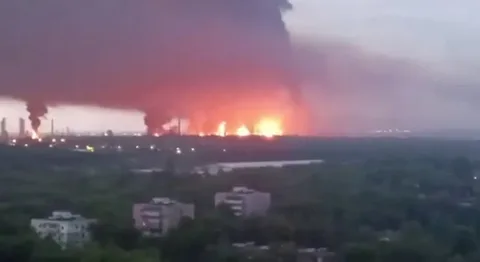
Finland lifted a drone alert this week after unidentified aerial objects were spotted near restricted zones in the country’s eastern and southern regions. The Finland drone alert Ukraine war connection quickly dominated headlines, with citizens and officials asking the same question: is the conflict in Ukraine beginning to spill across Europe’s borders?
Finnish authorities confirmed no drone attack in Finland occurred. No damage was reported. But the incident lasted several hours, triggered Border Guard and Defence Forces deployment, and exposed how thin the line has become between peacetime security and active-conflict anxiety in Nordic Europe.
What Happened in Finland Today?
Radar systems and civilian reports flagged multiple unidentified drones flying over restricted airspace. Finnish monitoring teams scrambled to track the objects. No drones were intercepted and no strikes took place, but the episode sent a clear signal: Finland takes every unexplained aerial incursion seriously.
This is not the first such incident. Since joining NATO in April 2023, Finland has upgraded its air surveillance substantially. Still, drone-related alerts continue to generate public alarm. The reason is geography — Finland shares a 1,340-kilometre border with Russia, the longest of any EU member state. Every unexplained aerial sighting in that context carries political weight.
Ukrainian Drones Finland: What Is the Actual Risk?
No official source confirmed that the drones spotted were Ukrainian military drones. Finland is not a target of Ukrainian operations. The concern is different: errant drone debris from Russia-Ukraine exchanges has previously crossed into third-country airspace. Estonia, Poland, and Romania have all dealt with stray munitions in recent months.
For Finland, the fear is an accident a stray object from either side landing on Finnish soil. Finnish Defence Minister Antti Häkkänen has stated publicly that Finland treats any airspace violation as a serious security matter regardless of where it came from. That is not a diplomatic formality. It reflects real operational policy.
European defence ministers are now discussing NATO-wide airspace protocols for unidentified drone activity. Finland supports collective frameworks but has made clear it will act on direct threats before waiting for alliance consensus.
What Are Finland’s Biggest Security Challenges Right Now?
Finland’s security situation changed sharply in a short period. Three years ago, Finland was militarily non-aligned with significant economic ties to Russia. Today it is a NATO member actively rearming, with defence spending committed above the 2% GDP threshold.
Airspace integrity is the most visible challenge right now. As drone technology becomes cheaper and more accessible, Finland’s airspace is harder to police. Commercial drones, military-grade systems, and hybrid-warfare tools often look identical on basic radar equipment.
Hybrid warfare is a sustained threat. SUPO, Finland’s Security and Intelligence Service, has repeatedly documented Russian hybrid operations targeting Finnish infrastructure, information networks, and public confidence. Disinformation campaigns and border pressure tactics are ongoing.
Undersea infrastructure security is a growing concern. Since unexplained damage to Baltic Sea cables and pipelines in recent years damage that remains officially unsolved Finland and its neighbours now treat any infrastructure incident as potential sabotage by default.
Public confidence is the quieter challenge. Finnish authorities must manage legitimate public anxiety without overreacting in ways that create panic or diplomatic friction. The response this week was measured. Repeated incidents without clear explanations, however, gradually erode trust in the government’s ability to protect the country.
What Is Finland’s Security Model?
Finland’s security model rests on three foundations: a large trained reserve force, deep civil defence integration, and a national culture of resilience.
Unlike most European countries that scaled back their militaries after the Cold War, Finland kept conscription and maintained battle-ready reserve forces. Finland can mobilise around 280,000 soldiers, with wartime strength reaching up to 900,000 when auxiliary forces are included a remarkable capability for a country of 5.6 million people.
Civil defence in Finland is functional, not symbolic. The country has an extensive public shelter network, maintained emergency stockpiles, and a tested system for communicating with citizens during active alerts. When the drone warning went out this week, agencies coordinated without visible confusion. The alert was lifted in an orderly manner once threat assessment permitted it.
NATO membership has added collective intelligence sharing, joint air policing, and formal mutual defence commitments. Finnish officials have been deliberate about maintaining strategic independence within the alliance rather than deferring entirely to NATO infrastructure.
Why This Matters Beyond Finland
The drone incident in Finland is part of a broader European pattern. The Ukraine war is creating security ripple effects far beyond the frontlines, and Nordic countries are absorbing pressure that has no obvious end date.
Drone technology has lowered the cost of aerial operations to the point where non-state actors, criminal organisations, and state-sponsored hybrid units can all operate in ways previously beyond their reach. For countries like Finland positioned close to an active conflict zone, the boundary between peacetime management and wartime threat response continues to narrow.
The end of Finland’s drone alert does not resolve the underlying problem. Finnish authorities are still analysing data from the incident. NATO has been briefed. Whether the objects were errant military hardware, commercial craft flown near restricted zones, or something more deliberate, the response confirmed that Finland’s security apparatus is functional, transparent, and alert.
The harder question how long Finland and its neighbours can absorb this ambient pressure before a more serious incident occurs remains open.