

PAKISTAN CHRONICLE
Reporting by Tariq Khan | Friday, May 29, 2026 | National Affairs & Human Rights
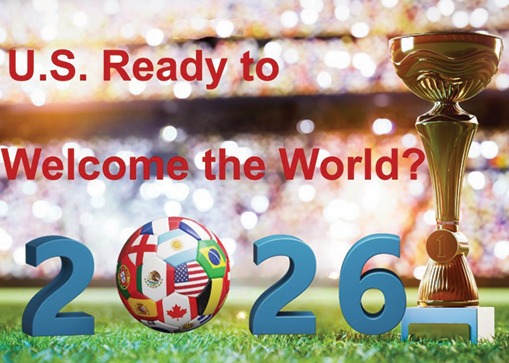
Is the U.S. Ready to Welcome the World? The 2026 FIFA World Cup and America’s Big Test
A national media briefing organized by American Community Media lays bare the immigration crackdowns, human rights violations, worker exploitation, civil liberties threats, and unanswered questions shadowing the largest sporting event in history — as ethnic and community media journalists demand the answers the mainstream press is not asking
The countdown is nearly complete. In a matter of days, the United States will host the 2026 FIFA World Cup — by virtually every measure, the largest and most elaborate sporting event ever staged on American soil. Spread across the United States, Mexico, and Canada, and touching eleven American host cities — including Los Angeles, Houston, Miami, Seattle, Atlanta, Kansas City, Boston, Philadelphia, San Francisco, and the New York/New Jersey region — the tournament is expected to bring millions of international visitors, staggering economic activity, historic television audiences, and a sustained period of intense global scrutiny that few moments in peacetime American history can match.
And yet, as the opening whistle approaches, something far more complicated than celebration is unfolding. A collision between the world’s most watched sporting event and one of the most aggressive immigration enforcement environments in modern American history has left cities, organizations, advocacy groups, governments, and families caught between the spectacle of the beautiful game and the hard realities of life under a crackdown that shows no signs of slowing.
On Friday, May 29, 2026, American Community Media (ACOM) convened a national virtual news briefing titled ‘Is the U.S. Ready to Welcome the World? The 2026 FIFA World Cup and America’s Big Test.’ The hour-long session brought together four of the nation’s most respected voices on immigration, human rights, labor, and civil liberties — and opened the floor to journalists representing ethnic, immigrant, and community media outlets from across the United States, speaking on behalf of Chinese, South Asian, Black, Latino, Indigenous, Korean, Southeast Asian, and other diaspora communities with deeply personal stakes in how this tournament unfolds.
What emerged from that briefing was not a celebration of the upcoming games. It was a reckoning — detailed, urgent, and backed by data — with the gap between what the United States is promising the world and what communities on the ground are actually experiencing.
The Scale of the Moment — and the Stakes
To understand why this briefing matters, it is necessary to appreciate the true scale of the 2026 FIFA World Cup. This is not merely a sports tournament. It is the first World Cup in history to feature 48 national teams, expanded from the previous format of 32. It will be played in stadiums across three countries. It is expected to generate billions of dollars in economic activity. And it will unfold under the gaze of a global audience that is paying close attention not just to what happens on the pitch, but to how the host country conducts itself as a nation.
Eleven American cities have been designated as official host sites: Los Angeles, San Francisco Bay Area, Seattle, Kansas City, Dallas, Houston, Atlanta, Miami, Philadelphia, New York/New Jersey, and Boston. Each of these cities has a significant immigrant population. Each has seen its communities affected by the surge in immigration enforcement operations that has defined the Trump administration’s domestic agenda. And each will now be the site of an event that explicitly invites the world — including people from countries whose citizens have been subjected to travel bans, entry restrictions, or aggressive detention — to come and celebrate.
That contradiction, panelists argued, is not incidental. It is the central challenge of the 2026 World Cup.
The Briefing: Who Was in the Room
American Community Media assembled four expert panelists whose combined expertise spans human rights investigation, children’s rights, immigration policy analysis, civil rights strategy, and labor organizing. Their perspectives were diverse, but their assessments were strikingly aligned.
Minky Worden, Director of Global Initiatives at Human Rights Watch, brought the international perspective. As a journalist-turned-advocate who has covered crises in 90 countries, worked with journalists across the globe as HRW’s Media Director, taught at Columbia University’s School of International and Public Affairs since 2013, and served as an adviser to Hong Kong’s Democratic Party chairman Martin Lee, Worden is one of the world’s foremost experts on how major sporting events intersect with human rights. She is the editor of The Unfinished Revolution (Seven Stories Press, 2012) and China’s Great Leap (Seven Stories Press, 2008), and the co-editor of Torture (New Press, 2005). She is a member of the Council on Foreign Relations and an elected member of the Overseas Press Club’s Board of Governors.
Katherine La Puente, Children’s Rights Senior Coordinator at Human Rights Watch, brought an essential and often-overlooked lens: the particular vulnerability of children in immigration enforcement contexts. Before joining HRW, La Puente coordinated a health and human rights program providing forensic medical and psychological evaluations for people in U.S. immigration proceedings, including families and children. She has conducted programmatic work and research in Ghana, the United Arab Emirates, and Mexico on migration, health care access, and reproductive health. She holds a master’s degree in global health from New York University and speaks English, Spanish, and French.
Jamal R. Watkins, Senior Vice President of Strategy and Advancement at the NAACP, provided the civil rights and civic engagement framework. A Stanford University philosophy graduate with a remarkable record spanning the AFL-CIO (where he served as National Outreach Director), SEIU (where he was Deputy National Political Director), Amnesty International (where he was Managing Director for Campaigns), and City Year Los Angeles (where he served as Deputy Director and Interim Executive Director), Watkins is among the most experienced civil rights strategists in the country. His work with the NAACP includes maximizing African American community participation in democracy, building multiracial coalitions, and responding to systemic threats to civil liberties.
Ariel G. Ruiz Soto, Senior Policy Analyst at the Migration Policy Institute, provided the hard data. His research examines migration policies across the region stretching from Panama to Canada, their intended and unintended consequences for both foreign- and native-born populations, and methodological approaches to estimating the unauthorized immigrant population in the United States. He holds a master’s degree from the University of Chicago’s School of Social Service Administration with an emphasis on immigration policy and service provision, and a bachelor’s degree in sociology from Whitman College.
Also present throughout the session — contributing resources, links, and context in the chat — was Minky Worden herself, who provided real-time research support for journalists seeking to follow up on the issues being discussed.
Unprecedented: Over 120 Organizations Issue Formal Travel Warnings
One of the most striking revelations of the briefing was confirmation that more than 120 civil society organizations — an extraordinary and historically unprecedented coalition — have issued formal travel advisories warning international visitors to the 2026 FIFA World Cup about potential human rights risks linked to aggressive immigration enforcement by U.S. Immigration and Customs Enforcement (ICE).
The coalition includes some of the most respected names in American civil society: the NAACP, the American Civil Liberties Union (ACLU), Amnesty International, and the Dignity2026 campaign, among many others. According to panelists, this is the first time such a broad, multiracial, multi-organizational coalition has felt compelled to warn international visitors about potential human rights abuses linked to immigration enforcement in the context of a major sporting event hosted on U.S. soil.
“This is totally unprecedented. These advisories represent a broad, multiracial coalition saying out loud what many communities already know: the current enforcement climate is dangerous and unwelcoming to millions of people who have every right to be here and every right to enjoy this tournament.”
— Jamal R. Watkins, Senior Vice President of Strategy and Advancement, NAACP
The travel advisory was formally referenced by Minky Worden during the session: ‘Here is the link to the NAACP/ACLU/Dignity2026 Travel Advisory — it is totally unprecedented,’ she told journalists, sharing the direct link to the NAACP’s announcement. The advisory warns fans from communities of color, LGBTQ+ visitors, and nationals from countries subject to U.S. travel restrictions to exercise heightened caution and to be aware of their rights.
Journalist Nestor Fantini directly raised the concern that the travel advisory issued by Amnesty International and other civil society organizations could discourage tourism and negatively affect jobs in the hospitality, service, and entertainment sectors — echoing concerns raised by the U.S. Travel Association. Panelists acknowledged the economic stakes but argued that the responsibility lies with the U.S. government to create an enforcement environment that doesn’t require such warnings in the first place.
The ICE Truce: A Concrete Demand With Political Complexities
Among the most discussed proposals at the briefing was the call for a nationwide ‘ICE Truce’ — a formal, publicly announced suspension of aggressive immigration enforcement operations for the duration of the 2026 FIFA World Cup. The proposal has been championed by Human Rights Watch and articulated in a widely circulated op-ed by Minky Worden published in The Progressive in March 2026.
The case for an ICE Truce rests on a simple but powerful argument: you cannot invite the world to your country for a celebration and simultaneously conduct the kind of enforcement operations that separate families, detain legal visitors, and generate the fear that is currently keeping immigrant communities from attending public events in large numbers. Millions of fans — including many who are authorized to be in the United States — are reportedly afraid to travel to host cities or attend public gatherings because of fear of ICE operations in their vicinity.
Human Rights Watch has documented over 167,000 immigration arrests across World Cup host cities — a figure Worden described pointedly as ‘a terrible way to welcome the world.’ This data, available in a downloadable chart analyzing arrests city by city, illustrates in stark numerical terms the scale of the enforcement environment that international fans will be entering.
Journalist Renee Barbee of La Nueva Voz newspaper asked a pointed and practically important question: ‘Does an ICE truce require Congress approval?’ She noted that immigration enforcement is spiking in her area — Southern California, specifically Pomona — and that the question of whether the executive branch can unilaterally implement a truce, or whether it requires legislative action, has direct implications for how quickly relief could be provided.
Panelists addressed the legal and political dimensions of this question. While the executive branch has broad discretionary authority over immigration enforcement priorities, a formal truce would represent a significant policy shift that the Trump administration has shown no indication of embracing. The political will, panelists made clear, is absent — which is precisely why civil society organizations are demanding it publicly and loudly.
The Human Face of Enforcement: A Family Torn Apart at a FIFA Event
No moment in the briefing was more powerful than the account provided by Katherine La Puente of a Haitian father who was arrested by ICE while attending an earlier FIFA Club World Cup event — a story that previews exactly what advocates fear could happen during the full World Cup. Human Rights Watch has been reporting on this case, and the details are heartbreaking.
The father was arrested at or near the FIFA Club World Cup event. His children — still in the United States — were left separated from him and from their primary breadwinner. As of the date of the briefing, the family remains separated, with the father and children still seeking asylum and struggling through a U.S. immigration system that offers no fast or certain path to reunification.
Journalist Henrietta J. Burroughs asked directly: ‘What happened to the two children whose father was arrested?’ Minky Worden, who answered the question in the chat, confirmed that the family and children are still seeking asylum, still separated from their father, and still awaiting resolution of a case that has already stretched months.
This case is not an abstraction. It is the lived reality of what aggressive enforcement near sporting events produces. And it is the reason why Human Rights Watch, the NAACP, and dozens of other organizations are insisting that explicit protections be put in place before the World Cup begins — not after it ends.
FIFA Bans and Their Consequences for Players and Fans
Journalist Henrietta J. Burroughs raised a series of questions about the FIFA bans currently in place — what they cover, why they were imposed, and what their effect is on players from affected countries. These are not abstract regulatory matters; they have real consequences for national teams and for fans who have traveled from countries whose players face entry difficulties.
A particularly vivid illustration came in the case of a Haitian national team player whose entry into the United States was reportedly delayed just days before the May 29 briefing. Minky Worden shared the link to reporting in the Haitian Times confirming this delay, noting: ‘Some national team players from travel ban countries have had trouble’ — an understatement that masks the enormous administrative and human burden these restrictions impose.
Journalist Burroughs also raised the economic implications of these bans: ‘Considering these bans and the economic effect that will be placed on airports, for example, are companies like the airlines that might be protesting the possible losses?’ This question cuts to the heart of the tension between the economic interests driving the tournament and the enforcement apparatus that is undermining it. Airlines, hotels, and the broader travel and hospitality industry stand to lose significant revenue if international fans are deterred from attending — yet the government has shown little willingness to ease enforcement to protect those economic interests.
Journalist Tariq Khan posed a direct question to Ariel Soto: ‘When will these immigration bans lift after Trump, or anytime soon?’ — a question that reflects the uncertainty hanging over thousands of fans and players from affected countries who are trying to plan their participation in the tournament.
Sex Trafficking: A Documented Risk at Major Sporting Events
Journalist Sunita Sohrabji raised the critical and often-underdiscussed question of sex trafficking: ‘Is there also the danger of increased sex trafficking during the games?’ This is not a speculative concern. Research and advocacy organizations have documented a consistent pattern of increased sex trafficking activity around major international sporting events, driven by the influx of large numbers of visitors, the expansion of informal economies, and the temporary loosening of normal community oversight structures.
Panelists confirmed that advocacy organizations are actively monitoring this threat in the context of the 2026 World Cup. Katherine La Puente, whose research at Human Rights Watch includes sexual and digital violence against children and women, is among those who have been tracking this dimension of the tournament’s human rights implications. The convergence of a massive influx of visitors, the presence of large numbers of migrant workers in informal sectors, and an enforcement environment that may push vulnerable people further underground rather than toward official support systems creates a particularly dangerous combination.
Workers at the World Cup: Exploitation, Unions, and the Fight for Fair Pay
Behind every match, every food concession, every transportation route, and every cleaned stadium is an enormous workforce. Many of those workers are migrants, many are in informal employment arrangements, and many face conditions that fall far short of what a ‘world-class event’ should demand. Journalist Carlos Roa of Te lo Cuento News asked directly: ‘What are the concerns about labor exploitation involving migrant workers in the event?’
Panelists pointed to concrete evidence of labor disputes and worker exploitation already occurring in the lead-up to the tournament. Minky Worden shared reporting from The Athletic on a union complaint filed against FIFA by workers at SoFi Stadium in Los Angeles — one of the premier World Cup venues — over the failure to ensure decent pay and working conditions. The complaint represents the organized labor movement pushing back against FIFA’s record on worker rights, which has been extensively criticized in previous tournaments.
The concern about migrant workers goes beyond formal stadium employment. Thousands of workers in construction, cleaning, hospitality, transportation, and the informal economies that spring up around major events are exposed to wage theft, unsafe conditions, and the additional vulnerability that comes from immigration status. For workers without documentation, complaining about exploitation carries the risk of deportation — a dynamic that creates near-perfect conditions for abuse.
The Cost of the Party: Housing, Displacement, and the Vulnerability of Low-Income Communities
Journalist Aitana Vargas of La Cronista raised a question that cuts to the economic heart of what major sporting events do to the communities that host them: ‘Host cities will see prices spike during the World Cup. Are there any reports on the negative financial impact this event will have on the most vulnerable local communities struggling to make ends meet, afford food, rent, or healthcare?’
This question reflects well-documented patterns from previous mega-events. The Olympics, the Super Bowl, and previous World Cups have all been associated with sharp spikes in housing costs, hotel prices, and consumer goods in host cities during the event period — spikes that disproportionately harm low-income residents, many of whom are immigrants or people of color with limited financial cushions. In host cities already facing severe housing affordability crises — Los Angeles and New York/New Jersey foremost among them — the additional pressure of World Cup demand on the housing market could push vulnerable families toward homelessness.
Human Rights Watch’s documentation of ‘sanitation sweeps’ in Los Angeles — aggressive enforcement operations that effectively criminalize homelessness by destroying encampments and displacing unhoused individuals ahead of the tournament — illustrates what ‘cleaning up’ a city for a major event actually looks like on the ground. Worden shared HRW’s video documentation of these sweeps, describing them as a pattern in which authorities use ‘sanitation’ as legal cover for removing unhoused people from visibility before major events, without providing adequate housing or support services.
Visa Numbers, Fan Attendance, and the Question Nobody Has Fully Answered
Journalist CARLOS MATIAS BAUTISTA asked one of the most basic logistical questions of the briefing: ‘Are there any estimates of how many Latin American fans will attend World Cup matches in the U.S.?’ Latin America is arguably the heartland of global football culture, and the 2026 World Cup — co-hosted in part by Mexico, and featuring cities with enormous Latino populations — was expected to draw unprecedented numbers of Latin American fans to the United States.
Journalist Nora Estrada of Kiosko News pressed further: ‘Is there any way to know how many visas have been requested by foreign fans so far? And from which country have the most visas been requested? Does the number of requests meet expectations?’ These are exactly the kinds of questions that should have clear official answers — and the fact that they apparently do not, or that the answers are not being publicly communicated, is itself a story about the opacity of the planning process.
Journalist Ling Huang asked a policy-focused question that gets at the structural barriers facing international visitors: ‘What specific policy changes or administrative improvements are still needed to ensure that visa delays and border enforcement do not discourage lawful travelers from attending?’ This is not a question about undocumented immigrants. It is a question about legal visitors — people who have applied through proper channels and who are still facing delays, uncertainty, and fear because of an enforcement environment that treats all foreign nationals as potential threats.
The USCIS Rule Change: A Hidden Trap for World Cup Visitors?
Journalist Araceli Martinez of Excelsior California raised a sophisticated and underreported question: ‘Do you think the new USCIS rule requiring residency applicants to leave the country and go through consular processing is related to the possibility that some fans entering on tourist visas for the World Cup might stay in the country?’
Pilar Marrero of American Community Media noted in the chat that this question was most appropriate for Ariel Soto of the Migration Policy Institute. The question raises a genuine policy concern: there are real fears within the Trump administration that large numbers of World Cup visitors on tourist visas may attempt to remain in the United States after the tournament ends. If the new USCIS rule is partly motivated by this concern, it represents a policy response that could have significant unintended consequences — making it harder for people already in legitimate immigration proceedings to pursue their cases, while doing little to address the broader question of temporary visa overstays.
Media Accreditation: FIFA’s Gatekeeping Problem
Journalist Orhan Akkurt raised a critical press freedom concern during the briefing: ‘As comment, FIFA doesn’t help media members to get accreditation for games.’ This is not a minor bureaucratic complaint. Media accreditation is the mechanism by which journalists gain access to events, to players and officials, to press conferences, and to the physical spaces where stories unfold. If FIFA is making it difficult for journalists — particularly those from ethnic, community, and international media — to obtain credentials, it is effectively limiting who can cover the tournament and whose stories get told.
Minky Worden responded directly in the chat: ‘They will, if pressured to! Press freedom is a human right!’ Her response captures both the urgency of the concern and the leverage that organized advocacy can create. Human Rights Watch has consistently argued that FIFA has an obligation to uphold press freedom standards as part of its commitment to human rights, and the 2026 World Cup represents an opportunity to either fulfill or fail that commitment.
The Question of Trump, Politics, and the World Cup’s True Purpose
Journalist Cesar Nucum posed one of the most politically charged questions of the session: ‘Don’t you regard this FIFA World Cup as a diversionary tactic for the Trump administration not to attend to most pressing matters of the state, especially since Trump was already awarded the FIFA Peace Prize last December 2025? Or do you regard this event as much-needed relief from many stressing issues affecting the U.S.?’
This question, while provocative, touches on something real: the political uses of mega-sporting events by governments seeking to project power, legitimacy, and national pride onto the world stage. The awarding of the FIFA Peace Prize to former President Trump in December 2025 — a decision that drew significant criticism from human rights organizations — raises legitimate questions about FIFA’s independence from political influence and its willingness to prioritize human rights concerns over its relationships with powerful political figures.
Journalist Rebecca Bartus echoed this political dimension: ‘Do you expect the Trump Administration to view the World Cup as an opportunity to improve America’s global image as a welcoming nation, or should we really expect these abusive immigration practices to continue?’ Panelists’ responses were measured but clear: there is no indication from the Trump administration’s actions to date that the World Cup will produce a meaningful moderation of immigration enforcement. The enforcement apparatus has been built up systematically, and the political incentives for the administration do not favor relaxing it for the benefit of international sports fans.
What About Immigrants and Their Communities: Is It Safe?
Journalist Sandra Martinez of Peninsula 360 Press asked perhaps the most human question of the entire briefing: ‘Will the World Cup events benefit immigrants, regardless of their immigration status? Will they be able to enjoy a moment of peace amid the violent actions of ICE? In other words, is it safe to enjoy this time?’
This question deserves a direct answer, and the panelists provided one: for many undocumented immigrants and even many people in various stages of legal immigration proceedings, the honest answer is that the current environment does not guarantee safety. Immigrant advocacy organizations are actively working to inform their communities about their rights — journalist Pamela Anchang asked specifically about ‘sensitization among immigrant advocacy groups about the risks’ — but awareness of rights and actual protection of rights are not the same thing in a high-enforcement environment.
The broader point, raised throughout the briefing, is that a World Cup is supposed to be a time when communities come together in celebration. For millions of people in the United States — immigrants, people of color, families with mixed immigration status — the question of whether they can safely attend a public event or travel to a host city is not an abstract policy question. It is a question of daily safety that has profound implications for how the United States will be remembered as a host nation.
The Essential Role of Ethnic and Community Media
One of the most consistent themes of the entire briefing was the irreplaceable role of ethnic, immigrant, and community media in covering the stories that the major national outlets will not tell. The journalists present at this briefing represented publications and broadcasters serving Chinese-American, South Asian-American, Black, Latino, Indigenous, Korean-American, Burmese-American, and many other communities — and their questions reflected a level of specificity and community knowledge that no major national outlet could replicate.
Journalist Carlos Roa of Te lo Cuento News articulated the question directly: What role should ethnic and community media play that mainstream national outlets may overlook? Minky Worden’s response in the chat was specific: These are exactly the stories that won’t be covered — what happens to unhoused people and families during the World Cup sweeps; what happens to workers exploited in stadium and hospitality jobs; what happens to the family separated at the gate of a FIFA event. These are the stories that live inside communities, that are felt personally by readers and viewers, and that require the trust and access that only community media can provide.
The briefing itself — organized by American Community Media with simultaneous interpretation in Korean, Mandarin, and Spanish — was a demonstration of the kind of inclusive, multilingual, community-centered journalism infrastructure that the ethnic media landscape represents. The presence of journalists from La Nueva Voz, Excelsior California, Kiosko News, Phoenix TV, China TV, AMTV, Showbiz India TV, Indian Voices/IndigenousNetwork, Myanmar Gazette, Te lo Cuento News, Rodriguez Media Productions, and Peninsula 360 Press, among others, speaks to the breadth of the ethnic media ecosystem that American Community Media has cultivated.
Key Resources Shared During the Briefing
Minky Worden provided a comprehensive set of resources for journalists throughout the session. These are essential reading for anyone covering the human rights dimensions of the 2026 FIFA World Cup:
HRW Reporters’ Guide / World Cup in a Climate of Fear: https://www.hrw.org/news/2026/04/27/2026-world-cup-tournament-will-kick-off-in-climate-of-fear
HRW: ICE Arrest at FIFA Club World Cup Event: https://www.hrw.org/news/2025/12/03/us-ice-arrest-at-fifa-event-spotlights-dangers-for-world-cup
HRW: World Cup 2 Months Out — FIFA and Host Cities Sideline Rights: https://www.hrw.org/news/2026/04/10/world-cup-2-months-out-fifa-and-host-cities-sideline-rights
Op-Ed: The World Cup Needs an ICE Truce (The Progressive): https://progressive.org/op-eds/the-world-cup-needs-an-ice-truce-worden-20260326/
NAACP/ACLU/Dignity2026 Travel Advisory (120+ orgs): https://naacp.org/articles/naacp-joins-growing-coalition-over-120-organizations-issue-travel-advisory-2026-fifa-world
HRW Report: Deportation of Third Country Nationals in Abusive Conditions: https://www.hrw.org/report/2026/05/27/casting-us-aside-to-die/cuban-and-other-third-country-nationals-deported-from-the
HRW Video: Sanitation Sweeps and Homelessness Criminalization in LA: https://www.hrw.org/video-photos/video/2024/08/14/swept-how-authorities-los-angeles-use-sanitation-sweeps-criminalize
The Athletic: SoFi Stadium Union Complaint Against FIFA: https://www.nytimes.com/athletic/7261918/2026/05/08/sofi-union-workers-union-complaint-fifa/
Haitian Times: Haitian Player Entry Delayed: https://haitiantimes.com/2026/05/28/haitian-player-entry-delayed/
Conclusion: The World Is Watching
The 2026 FIFA World Cup will be judged by more than the matches played on the field. It will be judged by whether international visitors felt welcome or threatened. It will be judged by whether workers who built and staffed the event were paid fairly and treated with dignity. It will be judged by whether immigrant families in host cities spent the tournament in fear or in celebration. It will be judged by whether children were separated from their parents at stadium gates or watched their first World Cup match together as a family.
The panelists at this ACOM briefing — Minky Worden, Katherine La Puente, Jamal R. Watkins, and Ariel G. Ruiz Soto — are not opponents of the tournament. They are advocates for the proposition that the United States can and should live up to the standard of welcome that the world’s most beloved sporting event demands. Whether it will do so remains, at this late moment, genuinely uncertain.
For ethnic and community media journalists — the reporters who spoke at this briefing and the thousands who will cover the tournament from the ground level — the work ahead is clear: tell the stories that would otherwise go untold, hold power accountable in the languages and voices of the communities most affected, and ensure that the full picture of America’s World Cup is part of the permanent record.
SPEAKER BIOGRAPHIES
The following experts participated in the May 29, 2026 national briefing “Is the U.S. Ready to Welcome the World? The 2026 FIFA World Cup and America’s Big Test,” organized by American Community Media.
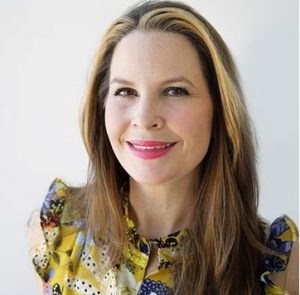 |
Minky Worden
Director of Global Initiatives, Human Rights Watch
Minky Worden develops and implements international outreach and advocacy campaigns at Human Rights Watch. She previously served as HRW’s Media Director, working with journalists in over 90 countries to cover crises, wars, human rights abuses, and political developments worldwide. Worden has taught as an Adjunct Associate Professor at Columbia University’s School of International and Public Affairs (SIPA) since 2013. Before joining HRW in 1998, she lived and worked in Hong Kong as an adviser to Democratic Party chairman Martin Lee and worked at the U.S. Department of Justice as a speechwriter for the Attorney General. A member of the Council on Foreign Relations, Worden speaks Cantonese and German, and is an elected member of the Overseas Press Club’s Board of Governors. She is the editor of The Unfinished Revolution (Seven Stories Press, 2012) and China’s Great Leap (Seven Stories Press, 2008), and the co-editor of Torture (New Press, 2005). |
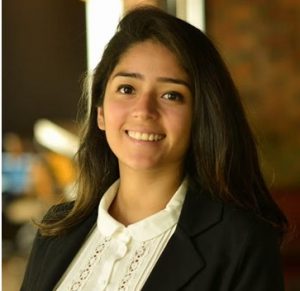 |
Katherine La Puente
Children’s Rights Senior Coordinator, Human Rights Watch
Katherine La Puente is a senior children’s rights coordinator at Human Rights Watch. She has researched and written on sexual and digital violence against children, human rights in mega-sporting events including the World Cup, and immigration in the United States. Before joining HRW, she coordinated a health and human rights program providing forensic medical and psychological evaluations for people in U.S. immigration proceedings, including families and children. She has also conducted programmatic work and research in Ghana, the United Arab Emirates, and Mexico on migration, access to health care, and sexual and reproductive health. She received her master’s degree in global health from New York University. She speaks English and Spanish, and is proficient in French. |
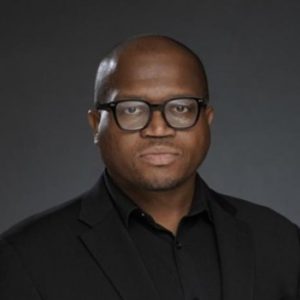 |
Jamal R. Watkins
Senior Vice President of Strategy and Advancement, NAACP
Jamal R. Watkins currently serves as Senior Vice President of Strategy and Advancement at the NAACP, where he previously led civic engagement as Vice President of Civic Engagement. He served as National Outreach Director for the AFL-CIO, strengthening strategic partnerships with the labor movement. Prior roles include Deputy National Political Director at SEIU; Chief of Staff at the Center for Social Inclusion; Managing Director for Campaigns at Amnesty International; and Deputy Director and Interim Executive Director of City Year Los Angeles. He has worked in politics, campaigns, communications, education, human resources, and fundraising. He earned his B.A. in Philosophy (minor: Political Science) from Stanford University and completed graduate-level work at NYU for Speech and Interpersonal Communication. |
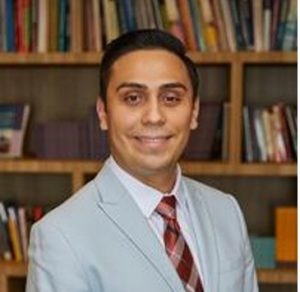 |
Ariel G. Ruiz Soto
Senior Policy Analyst, Migration Policy Institute
Ariel G. Ruiz Soto is a Senior Policy Analyst at MPI, working with the U.S. Immigration Policy Program and the Latin America and Caribbean Initiative. His research examines the interaction of migration policies in the region stretching from Panama to Canada, as well as their intended and unintended consequences for foreign- and native-born populations. He analyzes demographic trends across the region and methodological approaches to estimating the unauthorized immigrant population in the United States. He holds a master’s degree from the University of Chicago’s School of Social Service Administration with an emphasis on immigration policy and service provision, and a bachelor’s degree in sociology from Whitman College. |
Briefing organized by American Community Media (ACOM). Contacts: Sandy Close —