

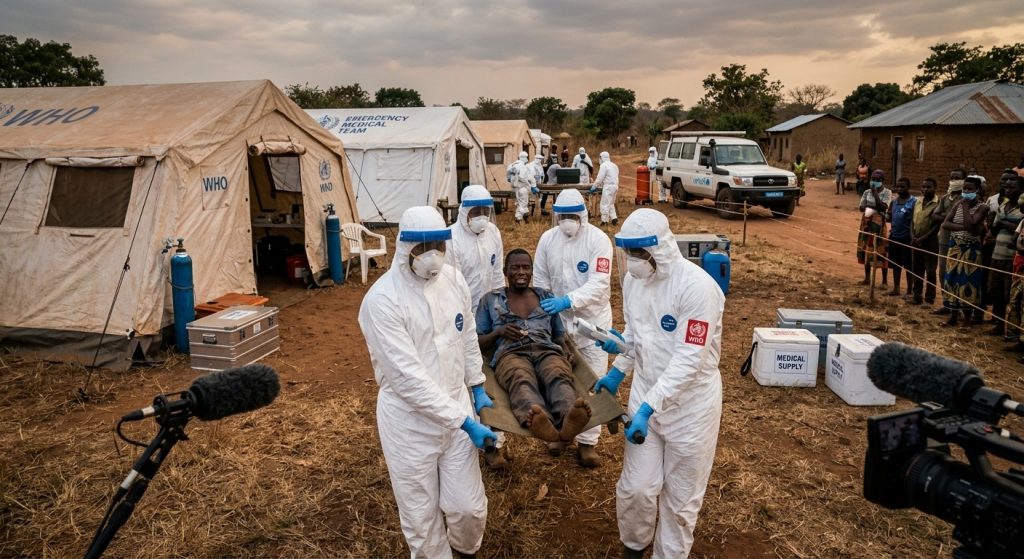

The World Health Organization (WHO) has officially declared the ongoing Ebola outbreak in the Democratic Republic of Congo (DRC) and Uganda a global health emergency following increasing concerns about the rapid spread of the deadly virus across the region.
Health officials say the decision was made after a rise in confirmed Ebola cases and fears that cross-border movement could increase the risk of wider international transmission. Emergency response teams are now working closely with local governments to contain the outbreak and strengthen healthcare systems in affected areas.
According to medical experts, Ebola is a severe and often fatal disease that spreads through direct contact with infected bodily fluids. Symptoms usually include fever, weakness, muscle pain, vomiting, and internal bleeding in severe cases. Quick isolation and medical treatment are considered critical to preventing further spread.
Authorities in both the DRC and Uganda have increased health screenings, public awareness campaigns, and vaccination efforts in high-risk communities. International aid organizations are also providing medical supplies, protective equipment, and emergency support to healthcare workers on the ground.
The WHO stated that declaring a global emergency will help accelerate international coordination, funding, and disease-control measures. Health experts believe rapid action is essential to avoid a larger humanitarian and public health crisis.
Previous Ebola outbreaks in Africa have resulted in thousands of deaths and placed enormous pressure on regional healthcare systems. Officials are now urging neighboring countries to remain alert and strengthen border monitoring procedures to reduce transmission risks.
Global health specialists continue to monitor the situation closely while encouraging the public to follow official medical guidance and avoid misinformation surrounding the outbreak.
The latest development has renewed global attention on epidemic preparedness and the importance of international cooperation during public health emergencies.