Punjab Chief Minister Maryam Nawaz Sharif continues to dominate provincial headlines, both for her administration’s public welfare programmes and for her sharpening political rhetoric against rival parties. With her profile drawing heavy public search interest, this guide separates verified fact from the flood of unofficial claims online: what the real CM Punjab contact number and complaint cell details are, what is publicly known about Maryam Nawaz’s age, family and political career, and why so many of the “contact numbers” and “10,000 scheme” claims circulating on social media cannot be independently confirmed.
Background
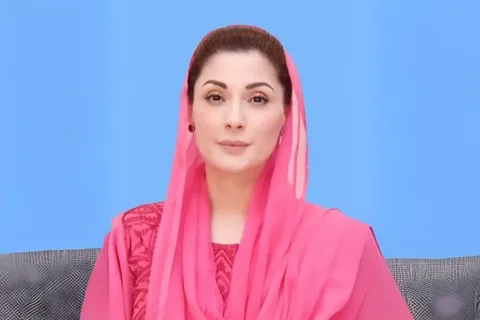
Maryam Nawaz Sharif made history in February 2024 when she became the first woman to serve as Chief Minister of Punjab, and the first woman to hold the position of chief minister in any province of Pakistan since the country’s independence in 1947. As the eldest daughter of three-time former Prime Minister Nawaz Sharif, she had already spent over a decade as one of the most visible figures in the Pakistan Muslim League-Nawaz before taking up the post, having led much of the party’s public campaigning through several turbulent election cycles. Since taking office, her government has rolled out a series of welfare and infrastructure initiatives across Punjab, from electric bus services to cash relief packages for low-income families, while also becoming a central figure in the shifting political alliances between the PML-N, the Pakistan Peoples Party and the Pakistan Tehreek-e-Insaf at the provincial and federal level.
Details
Who is Maryam Nawaz Sharif
Maryam Nawaz Sharif was born on October 28, 1973, in Lahore, making her 52 years old as of 2026. She is the daughter of Nawaz Sharif and his first wife, Kalsoom Nawaz, and comes from the politically influential Sharif family, whose patriarch, Mian Muhammad Sharif, was Maryam’s maternal grandfather. She holds a master’s degree in literature from the University of the Punjab and began actively working in politics in 2012, initially managing her father’s election campaigns before formally entering electoral politics herself. Maryam Nawaz’s husband is retired Captain Muhammad Safdar Awan, a former Pakistan Army officer whom she married in 1992, when she was 19 years old. Safdar previously served as a security officer during her father’s second term as prime minister and later became a PML-N member of the National Assembly in his own right. The couple has three children together: a son, Junaid Safdar, and two daughters, Mehr-un-Nisa and Mahnoor. Maryam assumed office as the 19th Chief Minister of Punjab on February 26, 2024, after securing 220 votes in the 371-member Punjab Assembly in an election that was boycotted by the opposition Sunni Ittehad Council. She also serves as a Member of the Provincial Assembly for constituency PP-159 in Lahore and holds the position of Senior Vice President of the PML-N.
CM Punjab contact number and the official complaint cell
For citizens searching for a CM Punjab contact number, it is important to understand that Maryam Nawaz, like most heads of government, does not maintain a publicly disclosed personal phone number, and no verified official source lists one. What does exist is a structured, official Chief Minister’s Complaint Cell, established specifically so that citizens of Punjab can report civic issues and have them escalated to the relevant government department under the CM’s direct oversight. The verified CM Punjab Complaint Cell helpline number is 0800-02345, operated in coordination with the Punjab Information Technology Board and available to citizens across the province. Complaints can also be submitted through the official web portal at cm.punjab.gov.pk, where citizens can select the relevant government department, describe their issue, and receive a tracking reference to monitor its resolution status. The Chief Minister’s Complaint Cell also maintains an active presence on social media, where it regularly posts updates confirming that reported civic issues, from water supply problems to sanitation complaints, have been resolved by the relevant department.
The truth about the “CM Punjab Complaint Cell WhatsApp number”
Searches for a specific WhatsApp number tied to the CM Punjab Complaint Cell are extremely common, and several unofficial websites have published numbers claiming to serve this purpose. However, these numbers are not confirmed on the Punjab government’s own official channels, and citizens should treat any such WhatsApp number with real caution. As with similar claims involving other government departments, the safest and only verifiable approach is to use the official 0800-02345 helpline or the cm.punjab.gov.pk portal directly, rather than relying on a number copied from a third-party blog or social media post. Government helplines in Pakistan are frequently impersonated by scam accounts seeking personal or financial information, which makes verifying the source before sharing any personal data especially important.
Ongoing political rivalry with PPP and PTI
Maryam Nawaz’s public statements against both the Pakistan Peoples Party and the Pakistan Tehreek-e-Insaf have remained a consistent feature of Punjab’s political landscape through 2025 and into 2026. A dispute between the PML-N and its coalition partner the PPP, which began over flood compensation methods last September, escalated into a broader disagreement over water rights on the Indus River and the long-contested Cholistan canals project, with Maryam publicly declaring she would not apologise for her remarks during the row. More recently, following the first phase of Azad Jammu and Kashmir elections, Maryam Nawaz publicly urged the PPP to accept the PML-N’s strong showing in the polls, continuing a pattern of sharp public exchanges between the two coalition partners even as they remain formally allied at the federal level. Her rhetoric against the PTI has been more consistently combative, frequently linking the party to the events of May 9, 2023, and repeatedly rejecting any softened political approach toward its leadership.
Quotes
Maryam Nawaz has been consistently direct in her public remarks throughout the recent tensions with her coalition partner and the opposition. During the height of the dispute over Indus water rights and the Cholistan canals project, she told a public gathering in Faisalabad that Punjab’s water resources belonged to the province and its people, framing the canal project as a matter of provincial ownership rather than a point open to negotiation with coalition allies. When pressed by PPP leaders to soften her tone during the same period, she made clear she had no intention of backing down, stating plainly that she would never apologise for her remarks and that she would respond in kind to any further criticism directed at her or her government.
Following the first phase of the Azad Jammu and Kashmir elections, in which the PML-N secured a strong majority of contested seats, Maryam Nawaz publicly urged the PPP to accept the outcome gracefully rather than allege irregularities, describing her party’s performance as an “outstanding victory” and calling on her coalition partner to acknowledge the result rather than contest it. Her language toward the PTI has remained considerably sharper and more consistent over time. In addressing the events of May 9, 2023, she has repeatedly told public audiences that those responsible for the unrest “are in jail and their future is dark,” and in more recent addresses to party lawyers and lawmakers, she has accused the PTI of building its entire political identity around securing top government appointments rather than substantive policy work. Taken together, her public statements reflect a consistent pattern: measured but firm language toward a coalition partner she still needs politically, paired with considerably harsher, more combative rhetoric reserved for the opposition PTI.
Impact
For ordinary citizens, the practical impact of this coverage extends well beyond political theatre. It centers on knowing which channels are genuinely official when they need help from the provincial government, and that distinction carries real financial and personal-safety consequences. Misinformation around contact numbers, whether for the Complaint Cell or for welfare schemes bearing the Chief Minister’s name, creates a tangible risk that citizens will share personal information, CNIC numbers, banking details, or even direct payments with unofficial or fraudulent contacts posing as government representatives. This is not a hypothetical concern: the sheer volume of competing, unverified websites offering different SMS codes and application portals for schemes like the Rs 10,000 Ramzan relief package shows how easily a well-intentioned welfare programme can become a vector for scams targeting exactly the low-income households it was designed to help.
On the political front, the continuing friction between coalition partners PML-N and PPP carries its own weight for provincial and national governance. Punjab remains Pakistan’s most populous and politically consequential province, and any sustained rift between the two largest parties in the ruling coalition has knock-on effects for legislative business at the federal level, including budget approvals and coordination on national issues such as flood response. Maryam Nawaz’s sustained criticism of the PTI, meanwhile, continues to shape the broader opposition narrative heading into future election cycles, reinforcing dividing lines that have defined Punjab’s political landscape since the 2024 elections. Taken together, both threads, the practical service-delivery concerns and the ongoing coalition tensions, point to the same underlying reality: Punjab’s government remains under close public and political scrutiny, and how it communicates with citizens matters just as much as the policies themselves.
Conclusion
As Maryam Nawaz continues to expand Punjab’s welfare and infrastructure programmes while navigating an increasingly complicated relationship with coalition partners and opposition parties alike, public interest in her office and its official communication channels is likely to remain high in the months ahead. Her government’s welfare branding, from the Ramzan relief packages to the Dhee Rani marriage support programme, suggests further citizen-facing initiatives are likely to be announced through 2026 and into 2027, each of which will almost certainly generate its own wave of both genuine public interest and unofficial, potentially misleading imitator content online. On the political side, the PML-N’s relationship with the PPP appears likely to remain uneasy rather than openly hostile, given that both parties continue to need each other to maintain their respective governments at the provincial and federal level, while Maryam Nawaz’s approach to the PTI shows no sign of softening ahead of future electoral contests. For citizens navigating this landscape, the most important takeaway remains a practical one. Anyone seeking to reach the provincial government, whether to file a complaint, check on a welfare scheme, or verify a piece of news attributed to the Chief Minister, should continue relying only on the verified 0800-02345 helpline and the cm.punjab.gov.pk portal, while treating unverified WhatsApp numbers, third-party “scheme” websites, and unofficial job or benefit portals with appropriate caution until confirmed through the Punjab government’s own official sources. As Punjab’s political and welfare landscape continues to evolve, that basic habit of verification is likely to remain the single most useful piece of guidance for citizens trying to separate genuine government communication from the noise surrounding it.
Frequently Asked Questions
What did Maryam Nawaz do for Punjab?
Since taking office in February 2024, Maryam Nawaz’s provincial government has launched a range of public welfare and infrastructure initiatives across Punjab. These include electric bus services in cities such as Faisalabad and Muzaffargarh, cash relief packages distributed during Ramadan to low-income households, the Punjab Dhee Rani programme supporting the weddings of deserving daughters with a government-funded gift, and continued investment in clean drinking water and waste management projects across both urban and underdeveloped districts of south Punjab. Her administration has also positioned itself around a broader “Nigehban” welfare branding covering multiple relief and support schemes aimed at low-income families across the province.
How can I check my eligibility for the Maryam Nawaz 10,000 scheme in 2026?
The Rs 10,000 relief initiative associated with Maryam Nawaz was a seasonal Ramadan relief package rolled out by the Punjab government during Ramzan 2026, which fell in February and March of that year, meaning its original application window has already closed for the year. Because dozens of unofficial websites have published conflicting instructions, different SMS short codes, and differing eligibility criteria for this scheme, citizens should treat any specific number or portal found through a general web search with caution. The safest way to check eligibility for any current or future Punjab government relief scheme bearing the Chief Minister’s name is to go directly to the official Punjab Socio-Economic Registry system or the verified cm.punjab.gov.pk portal, rather than relying on third-party guides, since only the government’s own registry can confirm genuine eligibility and prevent citizens from submitting personal data to unverified sites.
Who is the first female CM of Punjab?
Maryam Nawaz Sharif is the first female Chief Minister of Punjab, having taken oath on February 26, 2024. She is also the first woman to hold the position of chief minister in any province of Pakistan since the country gained independence in 1947. She secured her position with 220 votes in the Punjab Assembly, in an election boycotted by the opposition Sunni Ittehad Council, and became the 19th person overall to hold the office of Chief Minister of Punjab.