
Pakistan’s federal government has approved the deployment of 3,000 Federal Constabulary personnel to Balochistan in the most significant Balochistan security news development of 2026 — a direct response to the Balochistan Liberation Army’s March 11 coordinated attack on the Jaffar Express passenger train in Bolan district that killed at least 31 people and injured over 100 others. The Balochistan security news of the 3,000-strong federal deployment came out of an emergency security meeting in Quetta chaired by Interior Minister Mohsin Naqvi and attended by the Balochistan Chief Minister, provincial security officials, and senior military commanders. The Balochistan security news also included a major expansion of FIA operations in the province, a social media crackdown targeting BLA propaganda networks, and a formal government declaration that the Balochistan security challenge would be met with the full institutional force of the Pakistani state.
Background: Why Is the Balochistan Security News So Critical in 2026?
The Balochistan security news context in 2026 is shaped by an escalating campaign by the Balochistan Liberation Army — Pakistan’s most active and internationally designated terrorist organisation — that has targeted infrastructure, security forces, and now civilian passenger trains in Pakistan’s largest and most resource-rich province.
Balochistan constitutes 44 percent of Pakistan’s total land area and is home to the China-Pakistan Economic Corridor’s most critical infrastructure investments — the Gwadar deep sea port, major highway projects, energy pipelines, and the mining sector installations that Pakistan hopes will drive its economic transformation. The Balochistan security news therefore carries economic implications that extend well beyond the province itself — threatening CPEC investments valued at over $62 billion.
The Balochistan Liberation Army is a militant separatist organisation that has been active since the 2000s — waging an armed insurgency demanding independence for Balochistan from Pakistan. The Balochistan security news of recent years has been defined by the BLA’s shift from targeting security forces to conducting mass casualty attacks on civilian infrastructure — a strategic escalation that has made Balochistan security news one of the most watched terrorism and security stories in South Asia.
The Balochistan news today live coverage of the March 11 Jaffar Express attack represents the most devastating single attack in Balochistan security news since the BLA’s August 2024 coordinated attacks on multiple targets that killed over 70 people in a single day.
Details: Balochistan Security News — 3,000 Federal Deployment Full Story
Balochistan Security News — The Jaffar Express Attack That Triggered the Deployment
The Balochistan security news of the 3,000-strong federal deployment is a direct response to the most audacious BLA attack in years. On March 11, 2026, the Jaffar Express passenger train was travelling from Quetta to Peshawar through the Bolan Pass — one of the most strategically sensitive and historically significant mountain passes in Balochistan — when BLA militants attacked the train with explosives and armed gunmen.
The Balochistan security news of the Jaffar Express attack revealed a sophisticated BLA operational capability — militants stopped the train by triggering a track explosion, then boarded the stationary coaches and separated passengers. According to the Balochistan security news from initial reports, BLA militants took approximately 214 passengers hostage before a military rescue operation over the following 24 to 30 hours recovered the majority of passengers and killed BLA militants in the operation.
The Balochistan security news final death toll from the Jaffar Express attack was at least 31 people — including passengers killed in the initial attack and security forces killed in the rescue operation. The Balochistan security news of the attack generated immediate national outrage — and the Quetta Balochistan news coverage showed scenes of grief at the railway station as bodies of victims were received by their families.
Balochistan Security News — The Emergency Quetta Meeting
The Balochistan security news of the 3,000-strong federal deployment emerged from an emergency security meeting held in Quetta on March 14, 2026. Interior Minister Mohsin Naqvi chaired the meeting — which was attended by Balochistan Chief Minister Sarfraz Bugti, Inspector General Police Balochistan, FIA Director General, relevant military commanders, and provincial intelligence officials.
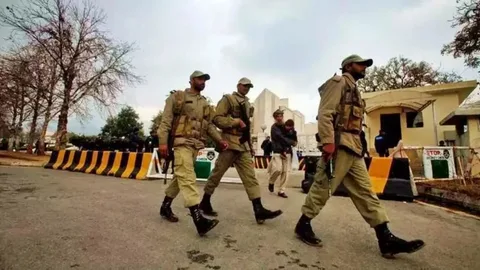
The Balochistan security news from the Quetta meeting covered three main decisions. First, the immediate deployment of 3,000 Federal Constabulary personnel to reinforce Balochistan’s security presence — particularly along the railway network, CPEC corridors, and areas identified as BLA operational zones. Second, a major expansion of FIA Counter Terrorism Wing operations in Balochistan — including new operations in Turbat, Gwadar, and Quetta to disrupt BLA financing, recruitment, and logistics networks. Third, a coordinated social media and digital enforcement operation to identify and shut down BLA propaganda and recruitment networks operating through Pakistani and international platforms.
Balochistan Security News — Who Are the 3,000 Federal Constabulary Personnel
The Balochistan security news of the federal deployment involves the Federal Constabulary — a paramilitary force under the Ministry of Interior that serves as a federal security resource deployable to any province at the federal government’s direction. The Federal Constabulary has previously been deployed in Balochistan security news contexts — providing additional manpower to augment provincial police and Frontier Corps in high-risk areas.
The Balochistan security news 3,000-strong deployment is significant because it represents federal commitment of resources directly to Balochistan’s security challenge — complementing the Pakistan Army’s Operation Azm-e-Istehkam, which was launched in mid-2024 as a comprehensive counterterrorism operation across Pakistan’s troubled areas including Balochistan. The Balochistan security news federal deployment adds a civil law enforcement dimension to what has previously been primarily a military operation.
Balochistan Security News — The BLA’s Escalating Campaign
The Balochistan security news context requires understanding the BLA’s strategic evolution. The Balochistan Liberation Army has operated for over two decades — initially targeting gas pipeline infrastructure and isolated security force positions. The Balochistan security news of the past three years shows a deliberate BLA strategic shift toward high-casualty civilian attacks designed to generate maximum media coverage and demonstrate that the Pakistani state cannot protect ordinary citizens in Balochistan.
The Balochistan security news of major recent BLA attacks includes the August 2024 simultaneous attacks on multiple targets across Balochistan — in which BLA units simultaneously struck police stations, road convoys, and railway infrastructure in a coordinated Balochistan security news event that killed over 70 people. The Balochistan security news of the March 2026 Jaffar Express attack escalates this further — demonstrating BLA capability to take hostages, sustain a multi-day confrontation with security forces, and generate sustained international media coverage.
The Balochistan news today live coverage of every major BLA attack has been amplified through BLA’s sophisticated social media operations — which the Balochistan security news Quetta meeting specifically identified as a target for the FIA’s expanded operations.
Quetta Balochistan News — The Capital’s Security Posture
The Quetta Balochistan news following the Jaffar Express attack shows a city and provincial capital on high alert. Quetta Balochistan news security posture has been elevated — with additional checkpoints established on major entry routes, intelligence-led operations in Quetta’s suburbs where BLA support networks have previously been identified, and coordination between Quetta Balochistan news security agencies increased.
The Quetta Balochistan news of the post-attack government response includes Chief Minister Sarfraz Bugti’s statement that Balochistan will not be surrendered to terrorists — and his direct appeal to the families of BLA members to bring their sons home from the mountains before military operations intensify.
Balochistan News Today Urdu — What the Local Community Is Saying
The Balochistan news today Urdu coverage in local Quetta and Balochistan media reflects deep community anger at the Jaffar Express attack — with Balochistan news today Urdu editorials and commentary across local newspapers condemning the targeting of ordinary passengers who were commuting between Pakistan’s provinces for work, family visits, and medical care.
Balochistan news today Urdu community voices have called for both stronger security action against the BLA and for greater attention to Balochistan’s long-standing political grievances — including concerns about resource exploitation, missing persons cases, and the slow pace of development that has contributed to the alienation on which BLA recruitment depends. The Balochistan news today Urdu coverage reflects a community that wants both security and justice — not a choice between the two.
Quotes
Interior Minister Mohsin Naqvi, at the Quetta Balochistan news security meeting March 14, 2026: “Three thousand Federal Constabulary personnel will be deployed across Balochistan immediately. This government will not allow terrorists to hold our trains, our roads, or our people hostage. The full force of the state will be directed at dismantling the BLA’s operational networks.”
Balochistan Chief Minister Sarfraz Bugti, on the Balochistan security news following the Jaffar Express attack: “I appeal to the families of those who have joined the BLA — bring your sons home. The military operation will intensify. Those who continue on this path of destruction have chosen their fate. Those who step back can still be saved.”
Pakistan Army statement, on the Jaffar Express rescue operation in the Balochistan security news: “Security forces conducted a professional rescue operation that freed over 200 hostages and neutralised multiple BLA militants. The operation demonstrates the security forces’ capability and commitment to protecting Pakistani citizens in Balochistan.”
BLA spokesperson (through their media channel), on the Jaffar Express attack: “The Jaffar Express attack demonstrates that Baloch freedom fighters can strike where and when they choose. Until Pakistan ends its occupation of Balochistan and releases political prisoners, our operations will continue.”
Human Rights Watch, on the Balochistan security news cycle: “The BLA attack on civilian passengers is a war crime that must be condemned without reservation. But Pakistan’s response to the Balochistan security crisis must also address the enforced disappearances, extrajudicial killings, and political marginalisation that feed insurgency recruitment. Security alone will not resolve the Balochistan conflict.”
CPEC Authority spokesperson, on the Balochistan security news economic implications: “The security of CPEC infrastructure in Balochistan is non-negotiable. The federal deployment and FIA expansion will reinforce protection of the investments that are critical to Pakistan’s economic future.”
Impact: What the Balochistan Security News Means
For Pakistan’s Counter-Terrorism Strategy
The Balochistan security news of the 3,000-strong federal deployment represents a significant escalation of the federal government’s direct engagement in Balochistan’s security crisis. The Balochistan security news deployment complements the ongoing Operation Azm-e-Istehkam military operations — adding civil law enforcement capacity through the Federal Constabulary and intelligence capacity through the expanded FIA Counter Terrorism Wing. The Balochistan security news strategy appears designed to attack BLA networks simultaneously on military, law enforcement, financial, and digital fronts.
For CPEC and Pakistan’s Economic Future
The Balochistan security news has immediate implications for Pakistan’s most significant economic project. Every Balochistan security news incident that targets infrastructure, workers, or transportation routes in Balochistan adds to the risk premium that Chinese investors and contractors attach to CPEC operations — potentially delaying or reducing investment flows that Pakistan urgently needs. The Balochistan security news of the federal deployment is partly a signal to Chinese partners that Pakistan is committed to protecting the CPEC corridor.
For Balochistan’s Civilian Population
The Balochistan news today live coverage consistently shows that the province’s civilian population is caught between BLA violence and security force operations — with both sides generating civilian casualties and displacement. The Balochistan security news of the federal deployment must be accompanied by renewed commitment to addressing the political grievances — missing persons, resource sharing, development investment — that sustain the BLA’s recruitment base. Security operations without political resolution cannot produce durable Balochistan security news improvements.
For Pakistan’s Regional Image
The Balochistan security news international coverage — particularly following the Jaffar Express hostage crisis — has drawn renewed attention to Pakistan’s most persistent internal security challenge. The Balochistan security news is watched closely by India, Afghanistan, and regional powers who have interests in Pakistan’s internal stability. The federal deployment and the FIA social media crackdown also reflect awareness that the Balochistan security news information dimension — BLA propaganda reaching international audiences — is a strategic challenge that requires a coordinated response.
Conclusion
The Balochistan security news of 3,000 federal personnel deploying to Pakistan’s largest province reflects the severity of a crisis that the Jaffar Express attack has brought to national and international attention in stark, human terms. Thirty-one people killed. Over 200 people taken hostage. A passenger train stopped in a mountain pass and turned into a battlefield.
The Balochistan security news demands both a security response and a political one. The federal deployment addresses the immediate capacity gap. The FIA expansion addresses the financial and digital networks that sustain the BLA. The Quetta Balochistan news of Chief Minister Bugti’s appeal to BLA families acknowledges — however implicitly — that security operations alone cannot resolve a conflict rooted in political grievances that are decades old.
The Balochistan news today live coverage, the Quetta Balochistan news from community voices, and the Balochistan news today Urdu editorial consensus all say the same thing: Balochistan deserves both security and justice. The federal deployment is the security part. Pakistan is still working on the justice part.
FAQs
What are the security issues in Balochistan?
Balochistan is one of those areas where terrorism has hit the hardest not only in terms of the death toll and the destruction of infrastructure but also in terms of the composition of elements that result in terrorism: religion, ethno- lingual differences, internal and international politics and so on.
What is Section 144 in Balochistan?
Section 144 of the Code of Criminal Procedure (CrPC) empowers district administration to issue orders in public interest that may place a ban on an activity for a specific period of time. Such a ban is enforced by the police who register cases under section 188 of the Pakistan Penal Code against violations of the ban.
What is the current situation in Balochistan?
In Pakistan, violence against civilians continues unabated in Balochistan. A leading human rights organisation in the country today brought to light the extrajudicial killing of another civilian and the enforced disappearance of two others across the province at the hands of Pakistani forces.